






Oriental Relief Wall Plaque
An oriental relief wall plaque brings rich texture and intricate carved detail to a room, drawing the eye with stories captured in wood, bronze, and stone.
Oriental Relief Wall Plaque
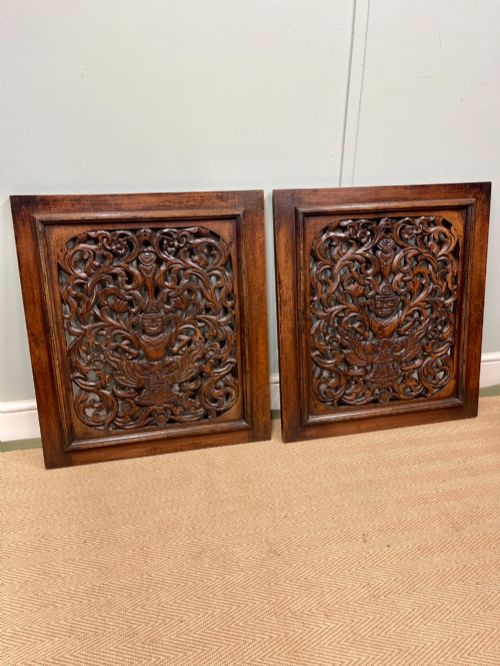
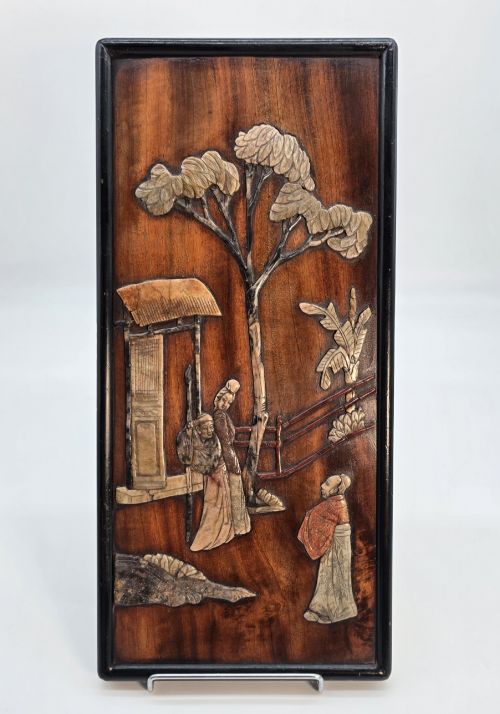
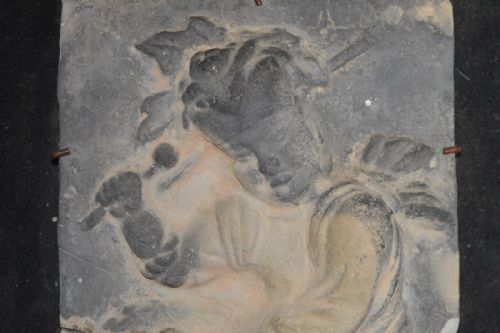
An oriental relief wall plaque is a sculptural wall hanging originating from traditions across China, Japan, Burma, and broader Southeast Asia. When searching for an oriental relief wall plaque, buyers encounter everything from temple panels and funereal tiles to carved wooden depictions of figures like Daruma and bronze temple fittings.
The pieces on offer span from the eighteenth century through the Victorian era and into the early twentieth century. Wooden plaques and panels dominate the selection, often appearing in matched pairs or grouped sets alongside bronze and carved stone framed pictures.
Origins stretch across Qing Dynasty China, the Japanese Meiji period, and nineteenth century Burma, reflecting diverse regional craftsmanship. Forms range from vertical panels and rectangular plaques to architectural fragments and bronze door plates repurposed as wall art.
How they were made
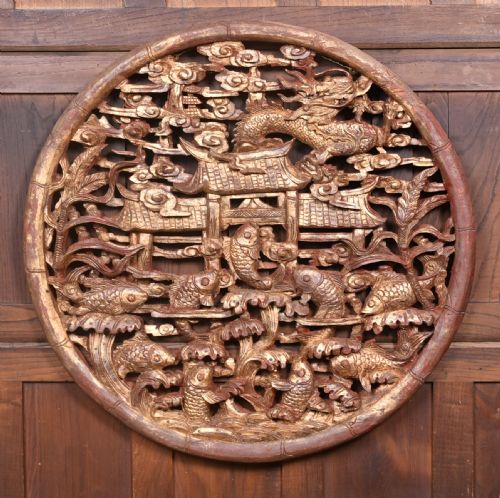
Makers shaped these works primarily from dense timbers such as teak, hardwood, and softwood, often enhancing the carved surfaces with gold leaf or lacquer. Woodcarvers utilised deep relief techniques to build complex, multi-layered scenes filled with figures and foliage that catch the light.
Bronze and soapstone also feature prominently, cast or carved with equal precision to render mythical beasts like Foo dogs alongside human portraits. Many wooden panels began life as architectural elements in temples and domestic halls before finding new purpose as wall hangings.
Oriental Relief Wall Plaque Retail Price Guide 2026
Typical asking prices for oriental relief wall plaque among the pieces listed under this phrase on Sellingantiques today, from the lower quarter to the upper quarter. They describe what is for sale here now, not the wider market.
Materials across this selection include teak, hardwood, softwood, lacquer, gold leaf, bronze, and soapstone.
What varies in quality
The distinction between ordinary and exceptional carving lies in the depth of the relief and the crispness of the detail. Master carvers achieved remarkable spatial illusion in wood and stone, rendering facial expressions and drapery folds with absolute clarity.
Condition and completeness also dictate distinction, particularly with older panels that retain their original gilding or lacquer surfaces. Matched pairs and cohesive multi-piece sets command greater attention than isolated fragments due to their decorative symmetry.
The Oriental Relief Wall Plaque Glossary
- Relief
- A sculptural technique where elements remain attached to a solid background of the same material. High relief projects significantly from the surface, creating strong shadows and depth.
- Meiji Period
- A period of Japanese history spanning from 1868 to 1912, marked by the opening of trade and a surge in refined decorative arts. Works from this era often display immense technical precision.
- Qing Dynasty
- The last imperial dynasty of China, ruling from 1644 until 1912. Carvings from this period frequently draw upon traditional motifs, historical narratives, and Buddhist iconography.
- Foo Dog
- A traditional Chinese architectural guardian lion, often depicted in pairs to protect a structure. In wall plaques and door hardware, they appear rendered in fierce, stylised relief.
- Daruma
- The zen patriarch depicted in Japanese art as a bearded figure absorbed in meditation. Carved representations capture his intense focus and distinctive flowing robes.
Oriental Relief Wall Plaque: Frequently Asked Questions
How do I hang a heavy wooden wall plaque safely?
Heavy wooden panels require secure wall fixings suited to the specific weight of the timber and stone involved. Professional picture hangers or mirror plates screwed directly into structural wall studs provide the necessary support.
Position the plaque away from direct heat sources and strong sunlight to protect aged wood, lacquer, and gold leaf from cracking or fading over time.
Can I tell the difference between Chinese and Japanese panels?
Chinese panels often feature deep, multi-layered wooden carvings depicting historical narratives, auspicious symbols, or symmetrical floral arrangements within architectural framing. Japanese pieces from periods like the Meiji era frequently focus on asymmetrical nature studies, folklore, or distinct regional folk art traditions.
Examining the underlying timber and the specific style of the carved figures helps clarify the regional origin of each piece.
What is the best way to clean carved wooden plaques?
Dust carved wooden surfaces gently with a soft, dry brush to remove particles settled within the deep recesses of the relief. Avoid using wet cloths, harsh chemical polishes, or modern detergents that can strip aged finishes and delicate gold leaf.
Keeping the surface dry preserves the natural patina built up over centuries of handling and exposure.
Were these panels originally made for European homes?
Most of these carved panels and plaques were created for domestic or religious architecture in Asia, such as temples, ancestral halls, and traditional residences. Many were later exported during the nineteenth and early twentieth centuries to satisfy European demand for oriental art.
Some items, like bronze door plates and funereal tiles, served entirely functional or ritualistic purposes before entering the decorative market.