


Oriental Metal Table Lamps
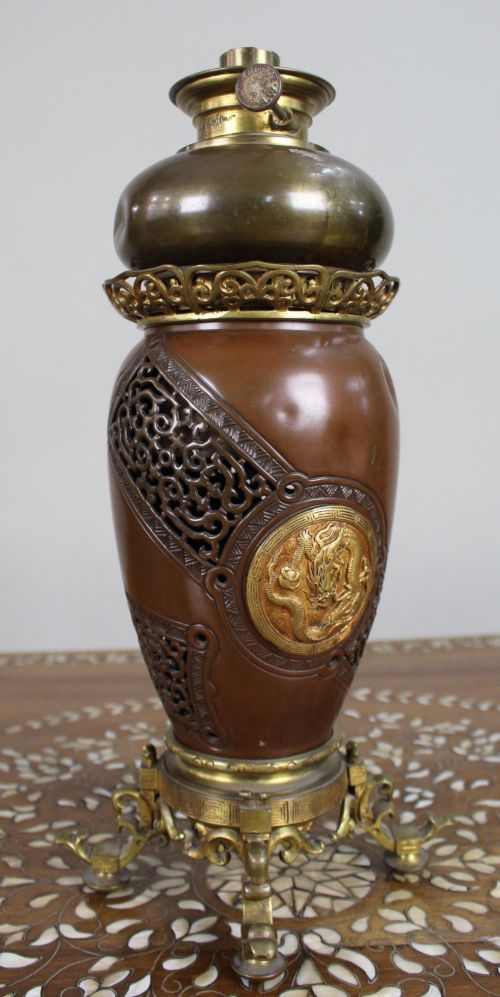
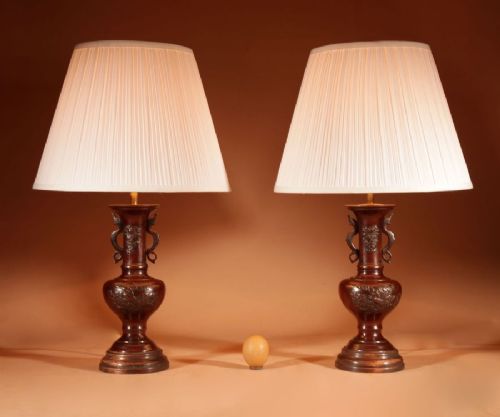
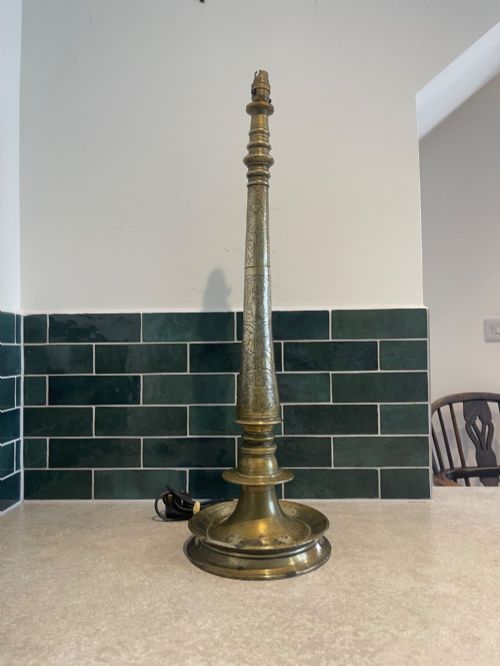
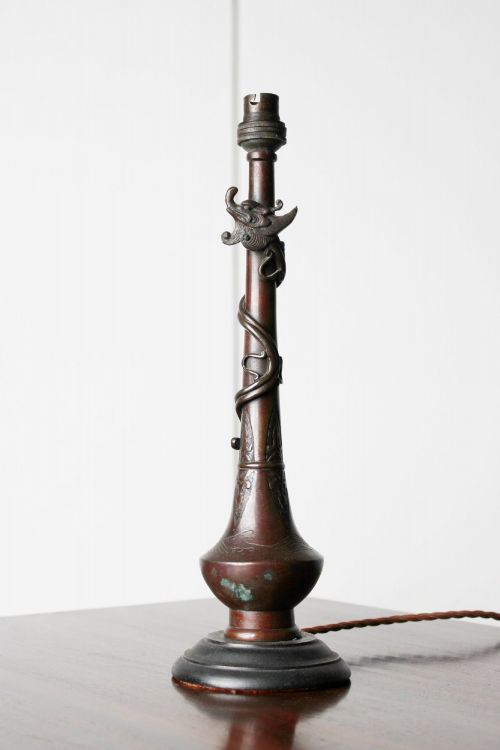
Oriental metal table lamps bring together patinated bronze, brass, and enamel across Chinoiserie and Meiji designs.
Oriental Metal Table Lamps
Oriental metal table lamps take forms shaped by nineteenth and early twentieth century tastes, including converted oil lamps and mounted vases. When you search for oriental metal table lamps, you find pieces drawing on Japanese Meiji, Chinese, Anglo-Indian, and French Chinoiserie aesthetics.
The selection here includes solid bronze, brass, patinated white metal, and toleware alongside cloisonne enamel variations. Many examples incorporate fabric shades or retain their original proportions from Victorian, Edwardian, and later periods.
These light fittings transition easily into modern interiors while holding the weight and finish of earlier craftsmanship. Their surfaces show the distinct patination accumulated over decades of use.
Materials and construction methods
Makers utilised cast bronze, brass, and patinated white metal as structural foundations for these lamps. Metalworking techniques range from Meiji period bronze casting to pressed brass and detailed ormolu mounts.
Enamel work appears on cloisonne vases adapted into lamps, fusing coloured vitreous pastes within wire cells upon metal bases. Lacquer and toleware finishes provide alternative surfaces on black and gold items.
Earlier pieces often began life as oil lamps or decorative vases before receiving twentieth century electrical conversions. Wood components occasionally support the metal bodies at the base.
Some vases spent a century holding nothing more demanding than dust before finally getting wired for a brighter future.
Evaluating the standard of execution
Quality rests in the crispness of the metal casting and the depth of the original patination. Finer bronze and brass examples display sharp relief work and secure joins without crude modern intervention.
In cloisonne and enamelled pieces, the regularity of the wire cells and the richness of the colour palette determine the standard. Superior items maintain intact enamel surfaces with minimal losses to the vitreous infill.
The integrity of the conversion work and the proportion between the metal body and the overall lamp structure dictate visual balance. Original mounts and unified components separate exceptional pieces from assembled alternatives.
The Oriental Metal Table Lamps Glossary
- Chinoiserie
- European interpretation and imitation of Chinese and East Asian artistic traditions. This style influences the decoration of metal bodies and lacquered surfaces.
- Meiji Period
- The era of Japanese history spanning from 1868 to 1912. Pieces from this time frequently feature detailed bronze casting.
- Cloisonne
- An enamelling technique where metal wire is soldered to a base to form compartments filled with paste and fired. This method decorates several vase-lamps in the collection.
- Ormolu
- Gilded bronze applied as a decorative mount or foot. It frames porcelain and metal bodies on French and European pieces.
- Toleware
- Enamelled or lacquered sheet metal items. These lamp bodies display black and gold lacquer finishes.
Oriental Metal Table Lamps: Frequently Asked Questions
Are these lamps converted from older items?
Many examples began as oil lamps or decorative vases before being wired for electricity.
This adaptation allows antique vessels to function safely as modern lighting without losing their original character.
How do I clean patinated metal?
Dust gently with a soft dry cloth to preserve the accumulated surface finish.
Avoid abrasive cleaners or chemical polishes that strip away historical patination and ageing.
What styles dominate these designs?
The selection spans Japanese Meiji bronzes, Chinese cloisonne, and European Chinoiserie interpretations.
Each style reflects Western fascination with Eastern ornamentation during the Victorian and Edwardian periods.
How do I match a shade to the base?
Consider the weight and metal tone of the lamp body when choosing fabric proportions.
Neutral or textured shades allow intricate bronze work and enamel detailing to remain the focal point.