
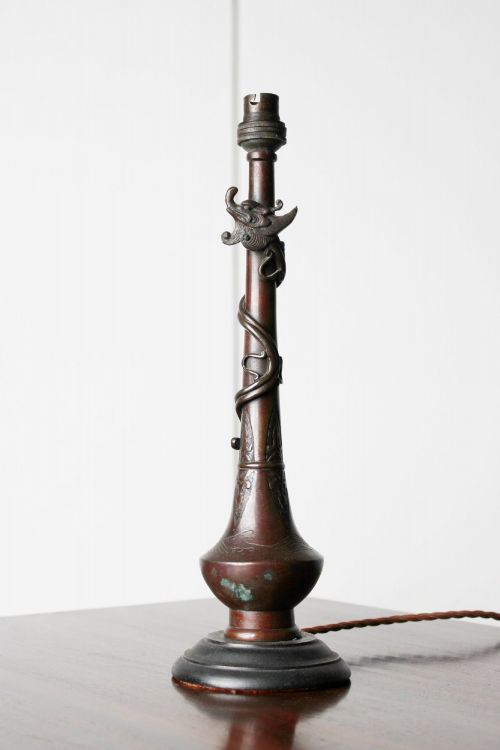
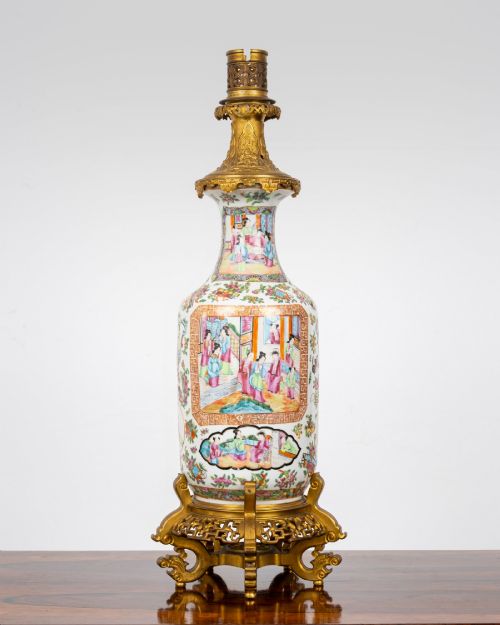


Chinoiserie Bronze Table Lamp
These chinoiserie bronze table lamps combine European metalwork with Asian porcelain and lacquer to bring colour and texture into a room.
Chinoiserie Bronze Table Lamp
When you search for chinoiserie bronze table lamps, you find a striking mixture of European decorative mounts and imported Asian vessels. The 19th century dominates this selection, bringing together porcelain, bronze, ormolu, and patinated white metal into functional lighting.
Most pieces pair Chinese or Japanese vases with metal bases and collars, though a few Edwardian and 1930s examples show later interpretations of the style. Alongside the lamps, occasional side tables appear in lacquer finishes.
The aesthetic draws heavily on French Rococo Revival tastes alongside Chinese Export and Japanese Edo period traditions. These objects transform antique vessels into everyday lamps without losing their original character.
Materials and construction
Makers utilised cast bronze, ormolu, brass, and patinated white metal to form mounts, handles, and bases. These metal elements were shaped to secure porcelain bodies made of Famille Rose, Famille Verte, Imari, and Blue and White ceramics.
Porcelain vessels from centres like Canton or Paris were drilled and fitted with electrical wiring during conversion or initial manufacture. Gilding and patination techniques were applied to the metal mounts to complement the painted details on the porcelain.
Listings span periods from the 18th century through to 1930, featuring porcelain, gilt bronze, and cloisonne enamel.
Quality differences
The standard of a lamp rests largely on the integration between the metalwork and the ceramic body. Finer pieces feature bespoke ormolu mounts that follow the exact contours of the vase without obscuring painted enamel details.
The weight and crispness of the bronze casting distinguish higher grades from simpler production. Quality also shows in the depth of the porcelain glaze and the precision of the hand-painted motifs.
Samson Porcelain
The Chinoiserie Bronze Table Lamp Glossary
- Ormolu
- Gilt bronze produced by applying a mercury and gold amalgam to a bronze object. This technique creates a durable, rich golden surface typical of fine mounts.
- Famille Rose
- A palette of opaque Chinese ceramic glazes dominated by pink enamel. It developed during the Qing dynasty and appears frequently on 19th-century export porcelain.
- Cloisonne
- Enamelwork created by soldering metal wires to a metal base and filling the resulting compartments with coloured paste. The piece is then fired and polished smooth.
- Imari
- Japanese porcelain decorated in underglaze blue, iron red, and gold. This style originated in Arita and heavily influenced European taste.
- Chinoiserie
- European decorative style reflecting Chinese artistic traditions. It flourished during the 18th and 19th centuries across furniture and metalwork.
Chinoiserie Bronze Table Lamp: Frequently Asked Questions
Are these lamps converted antique vases?
Many examples are historic vases that were fitted with mounts and wired as lamps during the 19th or early 20th century. This practice allowed earlier porcelain to serve a functional purpose in period interiors.
Some pieces were assembled as lamps later in their history while others were designed with mounts from the outset. The wiring is usually updated for modern use while preserving the historic body.
How do I clean the metal mounts?
Dust bronze and ormolu mounts gently with a dry microfibre cloth to remove surface dirt. Avoid chemical polishes which can strip the original patination and gilding.
Keep moisture away from the wired components and the antique ceramic surfaces. Professional advice should be sought if deeper cleaning is required.
How do I match a lamp to my decor?
Consider the scale of the room and the height of surrounding furniture before placing a large vase lamp. The rich colours in the porcelain pair well with neutral walls and dark wood surfaces.
Fabric shades can be chosen to pick up secondary tones from the painted ceramic glaze. Placing them on side tables creates a warm focal point in a reception room.
How can I tell the period?
Dating relies on the style of the metal mounts, the type of ceramic body, and manufacturing marks where present. 19th-century pieces often display French Rococo Revival or Chinese Export characteristics.
Earlier 18th-century pieces show different mounting techniques and heavier hand-chased bronze work. Examining the base and interior wiring access points also provides clues to the manufacturing date.