




Antique Asian Accent Lamps
These antique asian accent lamps bring rich texture and heritage into a room, spanning periods from the Victorian era through the early twentieth century.
Antique Asian Accent Lamps
When you search for antique asian accent lamps, you encounter a selection spanning the nineteenth century, the Victorian era, and decades into the twentieth century. The listings feature objects adapted as table lamps alongside various tables including side tables, plant stands, and nests of tables.
The forms originate from specific cultural contexts, encompassing the Qing Dynasty, Chinese export pieces, and the Japanese Meiji period. Many listings pair these lamps with complementary hardwood furniture such as lamp hangers and carved occasional tables.
Makers and artisans utilised traditional regional motifs, resulting in pieces that function as both illumination and sculptural focal points within a room. The selection balances converted vessels with smaller accent furniture designed to hold lighting.
How they were made
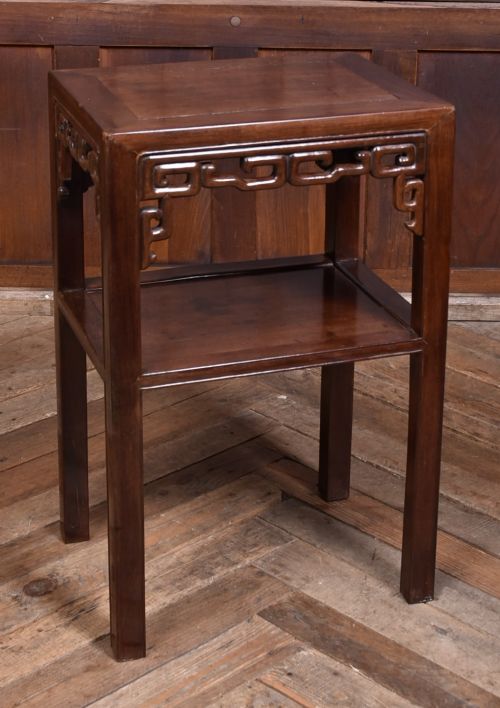
Construction relies heavily on dense timbers such as hardwood, rosewood, elm, and root wood, often shaped through hand carving. Artisans employed traditional joinery and finishing techniques appropriate to each region and period.
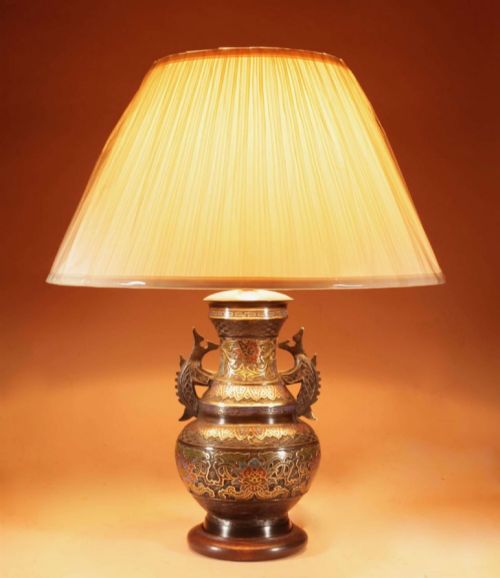
Metalwork and decorative surfaces incorporate bronze, brass, champlevé, and enamel. Cloisonné and lacquer techniques further define the decorative vocabulary seen across the pieces.
Listings feature items spanning the nineteenth century, the Victorian period, and the nineteen-twenties, constructed from hardwood, bronze, and enamel.
What varies in quality
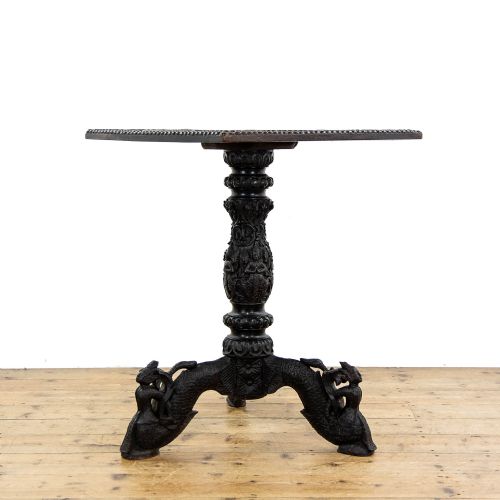
Quality rests in the crispness of the hand carving on woodwork and the precision of cloisonné or enamel application on metal vessels. Finer examples display meticulous attention to detail in the execution of motifs such as dragons and floral patterns.
The integrity of the material choice, from dense hardwoods to heavy bronze castings, distinguishes higher tier items. Preservation of original surface patination and lacquer work also elevates the standing of an individual piece.
The Antique Asian Accent Lamps Glossary
- Cloisonné
- Enamelling technique where thin metal wires form raised cells on a metal body to hold coloured pastes before firing. This method creates intricate patterns across vase lamps and decorative vessels.
- Champlevé
- Enamelling method where troughs or cavities are gouged into a metal surface to receive enamel colours. It produces robust, textured patterns on bronze items.
- Meiji Period
- Japanese historical era spanning from 1868 to 1912, noted for Satsuma ceramics and fine metalwork. Pieces from this time often exhibit distinct artistic refinements.
- Qing Dynasty
- The final imperial dynasty of China, lasting from 1644 to 1911, associated with elaborate carvings and formal hardwood furniture. It represents a major source era for these listings.
- Ebonised
- Wood finished with a dark stain or pigment to imitate ebony. This treatment appears on nineteenth century elm and structural components.
Antique Asian Accent Lamps: Frequently Asked Questions
How are antique asian accent lamps powered?
Many of these pieces began life as vases, urns, or structural elements before later conversion into electrical table lamps.
Wiring is typically updated to meet modern standards while retaining the original body and decorative form.
What materials are common in these lamps?
Construction frequently involves cast bronze, brass, and enamelwork alongside structural hardwood supports.
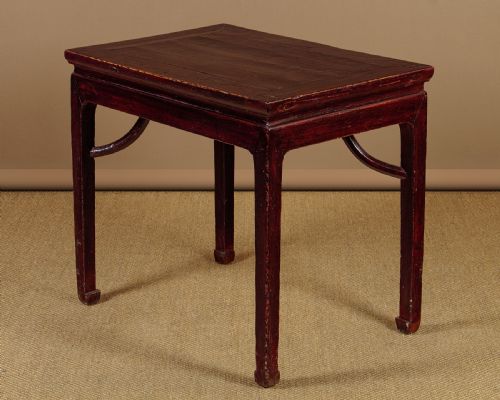
Surface decoration incorporates traditional techniques such as cloisonné, champlevé, and red lacquer.
How do I date a Meiji period lamp?
Dating relies on stylistic markers associated with late nineteenth and early twentieth century Japanese craftsmanship.
Signatures on Satsuma pottery and the specific casting quality of bronze elements help establish the era.
Where should I place an accent lamp?
These lamps suit side tables, plant stands, and occasional tables where they provide concentrated task or ambient lighting.
Pairing them with matching Chinese elm or hardwood furniture creates a cohesive display within a room.