



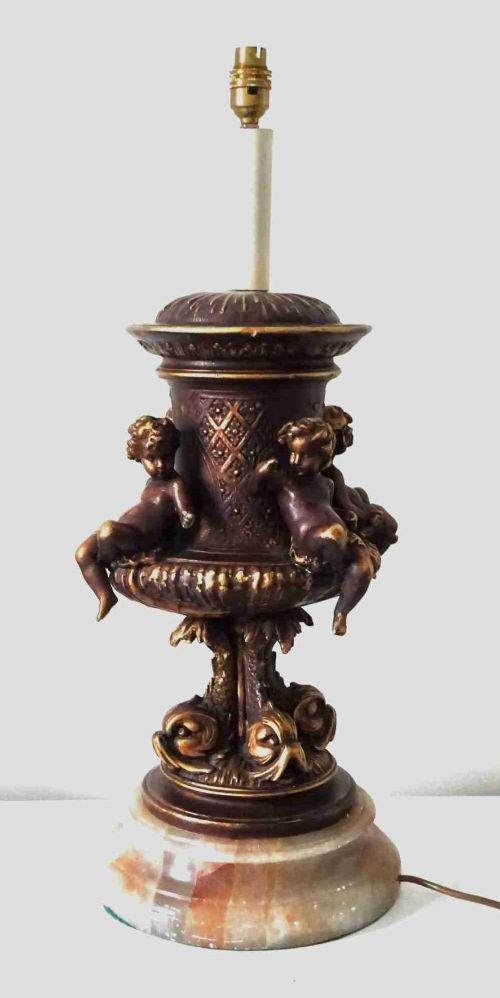
Cast Bronze Urn Lamp
These cast bronze urn lamp designs bring substantial weight, classical dignity and warm illumination into a room.
Cast Bronze Urn Lamp
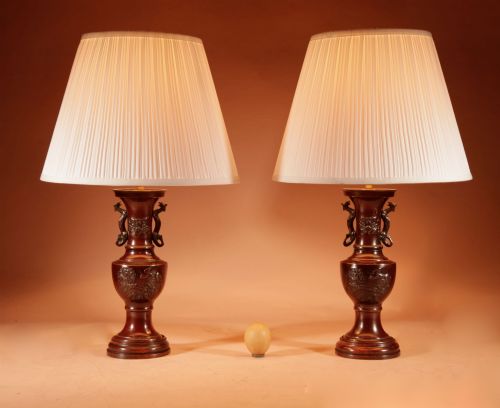
A cast bronze urn lamp takes a classical vessel or vase form and adapts it for interior lighting. You encounter pieces spanning the nineteenth century through the early twentieth century, drawing on Japanese Meiji export styles as well as French classical and neoclassical revivals.
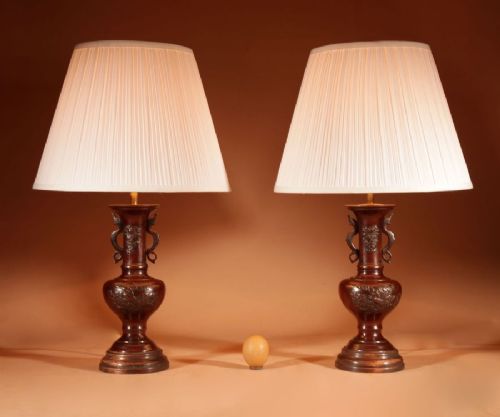
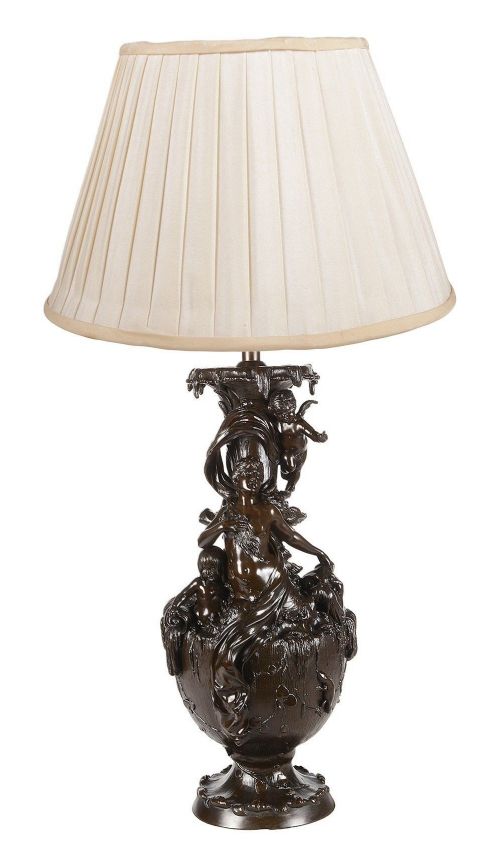
The most common examples on this page are Japanese bronze table lamps, often dating from the Meiji period or early nineteen-hundreds. Alongside these, you find European interpretations incorporating marble bases, cherubs, and mythological figures such as the goddess Amphitrite.
How they were made
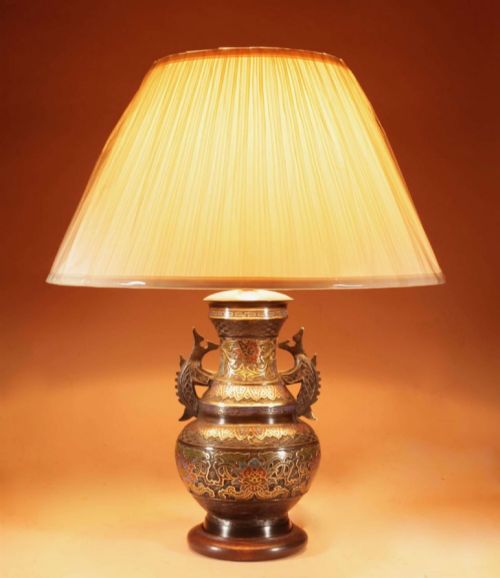
The primary structure relies on metalcasting, utilising bronze or gilt metal to shape detailed urns, ewers, and figurative bodies. Many pieces incorporate patinated bronze surfaces, sometimes enriched with champlevé enamel work or paired with contrasting marble plinths.
Makers often adapted existing bronze vases, ewers, or decorative vessels into lamps during periods of conversion, mounting them on solid bases and adding fabric shades. The metalwork displays traditional casting and chasing techniques suited to both Oriental export pieces and European classical revival workshops.
Several heavy bronze urns started life as nineteenth-century vases before someone sensibly gave them a light-bulb.
What varies in quality
The distinction between standard examples and superior pieces rests upon the crispness of the casting and the depth of the finish. Finely chased details, substantial patinated bronze, and integrated marble bases signal careful workmanship rather than mass production.
Proportion and decorative harmony dictate the overall success of the piece. Lamps that retain their original architectural integrity, balanced mounts, and high-grade materials command greater appreciation than later conversions with heavier alterations.
The Cast Bronze Urn Lamp Glossary
- Cast bronze
- Metal formed by pouring molten bronze into a mould to create solid or hollow sculptural shapes. This technique allows for intricate surface detail and lasting structural weight.
- Champlevé
- An enamelling technique where troughs or cells are hollowed out of the metal surface and filled with vitreous enamel before firing. It frequently appears on Japanese export pieces from the Meiji period.
- Patinated bronze
- Metal treated with chemicals, heat, or natural ageing to produce a specific surface colour and texture. A fine patina enhances the visual depth of the sculptural form.
- Neoclassical
- A style drawing inspiration from the classical art and architecture of ancient Greece and Rome. It emphasises symmetry, restraint, and classical motifs like urns and draped figures.
Cast Bronze Urn Lamp: Frequently Asked Questions
What periods do these lamps come from?
The pieces span the nineteenth century and the early decades of the twentieth century. You find examples dated from nineteen hundred, nineteen ten, nineteen twenty, and nineteen thirty.
Alongside these exact dates, items originate from the Japanese Meiji period and various European neoclassical revival movements. Each period brings distinct design characteristics to the bronze urn and ewer forms.
Where were these bronze lamps made?
Origins divide primarily between Japanese workshops producing export bronzes and European makers crafting classical revival pieces. Japanese Meiji period pieces are particularly prominent among the selections.
European examples often reflect French classical tastes, featuring cherubs, dolphins, and mythological figures mounted on marble bases. Both origins utilise traditional metalcasting methods.
What materials are combined with the bronze?
Bronze serves as the primary material for the main urn or figurer, but makers frequently incorporated other elements. Marble frequently provides a heavy, stable base for French and classical revival designs.
Other materials include gilt metal, brass, wood, and champlevé enamel. Fabric is also present, typically in the form of associated lampshades completing the fixture.
How do I identify a Meiji period lamp?
Japanese Meiji period lamps date from eighteen sixty-eight to nineteen twelve, reflecting the fine metalworking traditions of Japan during that era. They often feature intricate surface textures, decorative handles, and distinctive patination.
Many of these pieces began as decorative vases before being converted into table lamps. Their aesthetic leans towards Oriental motifs and refined casting techniques.