

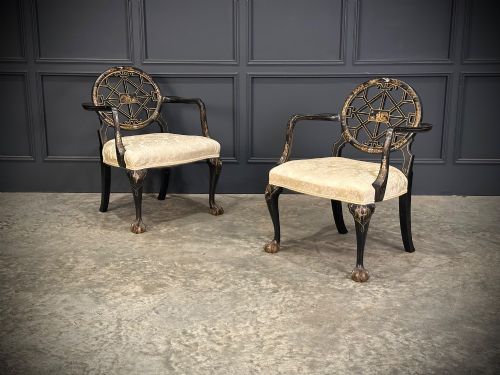
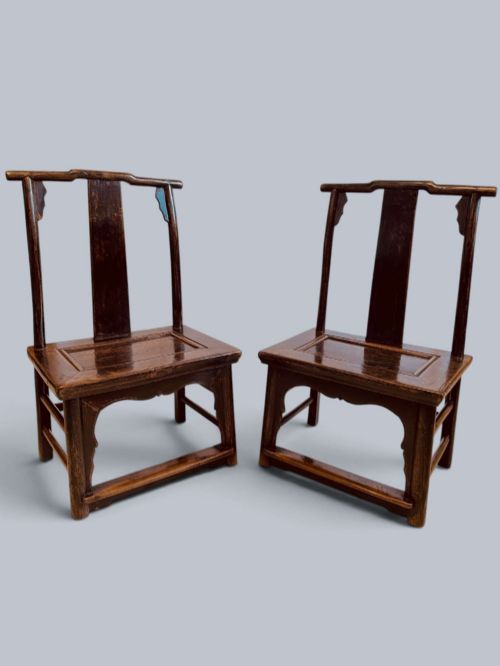
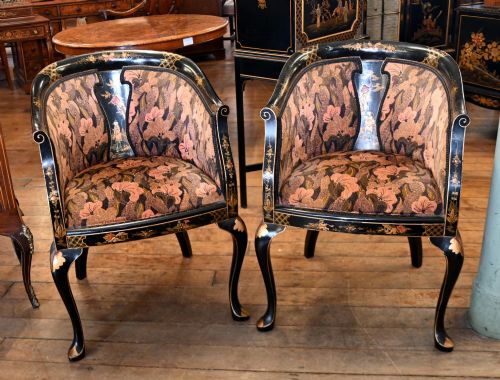
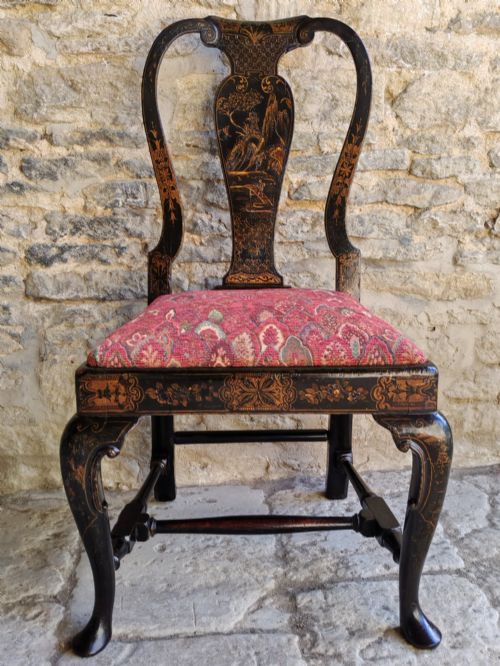


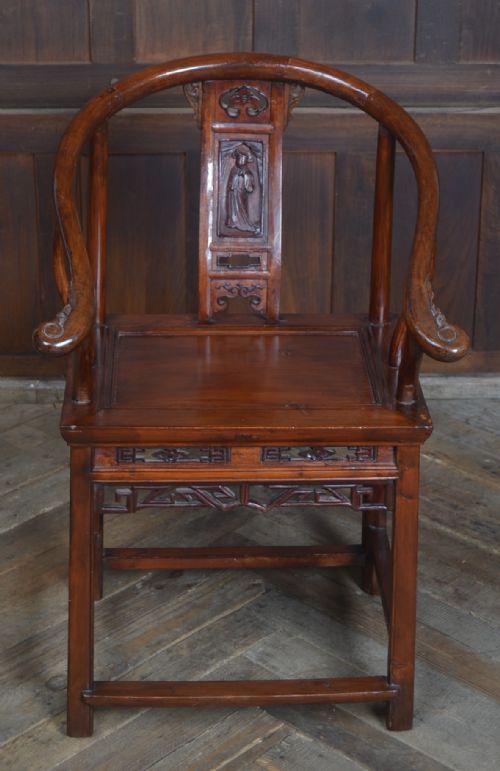


Oriental Lacquered Chair
An oriental lacquered chair brings rich historic surface and hand-carved detail into a room, offering both seating and striking decorative presence.
Oriental Lacquered Chair
An oriental lacquered chair is a seating piece finished with protective and decorative tree sap or paint layers, ranging from simple side chairs to substantial armchairs. These pieces span the eighteenth century to the twentieth century, drawing on Chinese Qing Dynasty traditions alongside British Chinoiserie and Victorian interpretations.
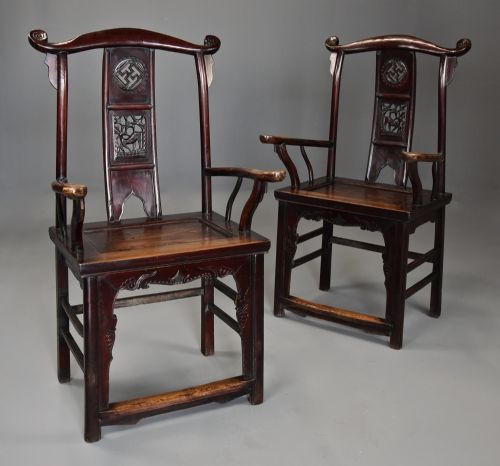
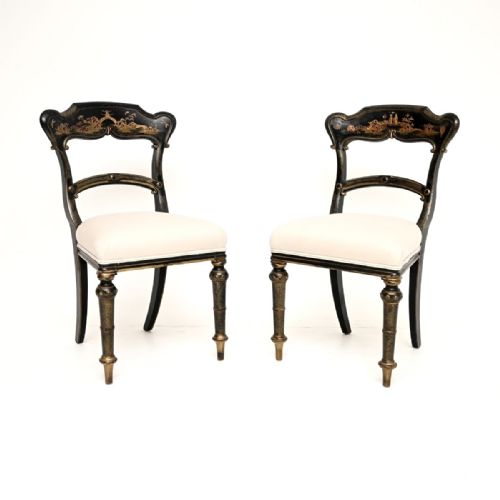
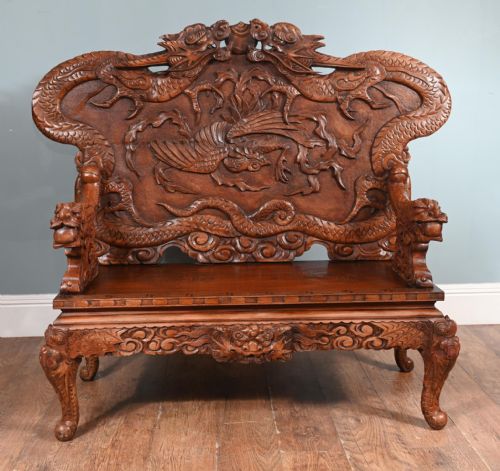
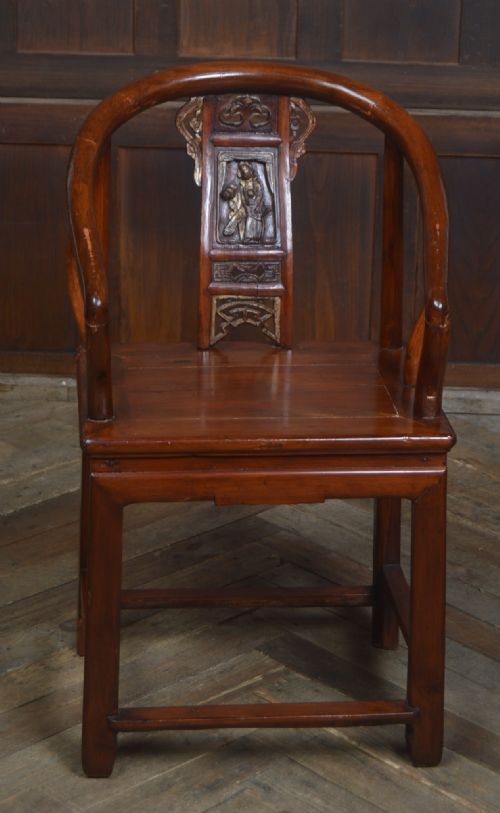
The most common forms on this page include armchairs and side chairs constructed from elm, hardwood, or japanned wood. Buyers also encounter benches, bergere armchairs, and matching bedroom chairs reflecting diverse periods from the 1860s through the Edwardian era.
Regional and stylistic variations shape the selection, uniting English Chinoiserie interpretations with authentic Chinese yokeback armchairs and cinnabar lacquer benches. Each piece displays distinct cultural craftsmanship adapted for domestic seating across different centuries.
How they were made
The construction relies on solid timbers such as Chinese elm, walnut, and general hardwood joined to form stable chair frames. Artisans shaped these woods into specific forms like yokeback armchairs, elbow seats, and benches.
Surfaces received successive coats of lacquer, sometimes incorporating gilt details, cinnabar carving, or japanned finishes. Certain examples also integrate cane panels and woven fabric inserts into the seat structures.
Oriental Lacquered Chair Retail Price Guide 2026
Typical asking prices for oriental lacquered chair among the pieces listed under this phrase on Sellingantiques today, from the lower quarter to the upper quarter. They describe what is for sale here now, not the wider market.
A wedding chair sits quietly among the offerings, waiting to bring matrimonial luck and vibrant red lacquer into a modern hallway.
What varies in quality
Quality rests in the preservation of the original lacquer surface and the depth of carved detail on elements like cinnabar seats and yokeback crests. Pieces retaining their initial red or black pigment layers demonstrate superior preservation compared to heavily restored examples.
The structural integrity of the underlying hardwood or elm frame dictates the durability of the seating. Finer examples maintain tight joinery and well-integrated cane or fabric components that support daily use.
The Oriental Lacquered Chair Glossary
- Lacquer
- A durable finish applied in multiple layers from natural tree sap or resin. It creates a smooth, protective surface often coloured red or black.
- Chinoiserie
- European artistic style reflecting Chinese motifs and decorative techniques. It appears frequently in English furniture from the eighteenth and nineteenth centuries.
- Yokeback
- A traditional Chinese chair design featuring a curved top rail resembling a ox yoke. This form provides ergonomic support for the sitter's upper back.
- Cinnabar
- A bright scarlet mineral pigment used to colour carved lacquer surfaces. Artisans carve deep relief patterns directly into the thick layers of this red material.
- Japanned
- European imitation of East Asian lacquerwork produced using shellac and varnish. This technique mimics oriental finishes on native timbers such as walnut or beech.
- Bergere
- An enclosed upholstered armchair with cane or wicker sides. Twentieth-century iterations often combine this French seating form with lacquered wooden frames.
Oriental Lacquered Chair: Frequently Asked Questions
How do I clean an oriental lacquered chair?
Dust the surface regularly with a soft, dry cloth to prevent particle buildup. Avoid harsh chemical cleaners, alcohol, or excessive moisture that can damage the historic finish.
For stubborn marks, use a slightly damp cloth with mild soap, drying the wood immediately afterwards. Preserving the original lacquer requires gentle, non-abrasive maintenance.
Can I use these chairs for daily seating?
Many sturdy hardwood and elm armchairs tolerate regular domestic use when placed on even flooring. Lighter side chairs and antique bergere models require more mindful sitting to protect delicate cane and lacquer.
Assessing the frame stability helps determine whether a specific piece suits active placement or lighter decorative duty. Most historic chairs benefit from occasional rather than heavy constant use.
What is the difference between Chinese and Chinoiserie chairs?
Authentic Chinese chairs originate from Eastern workshops, often utilising indigenous woods like elm and traditional joinery methods. Qing Dynasty examples and yokeback forms stem directly from these cultural manufacturing traditions.
Chinoiserie chairs represent European interpretations created by Western cabinetmakers applying oriental motifs. English makers used japanning techniques to replicate eastern lacquer aesthetics on domestic furniture frames.
How do I identify the period of a lacquered chair?
Examine the timber species, construction joinery, and the style of the lacquer decoration to gauge the era. Eighteenth-century pieces often display refined Chinoiserie motifs, whereas Victorian and Edwardian examples show heavier proportions or distinct revival styles.
Comparing the wear patterns and pigment types against documented historical periods provides further clues to dating. Each era from the 1860s onward introduced specific hardware and manufacturing signatures.