
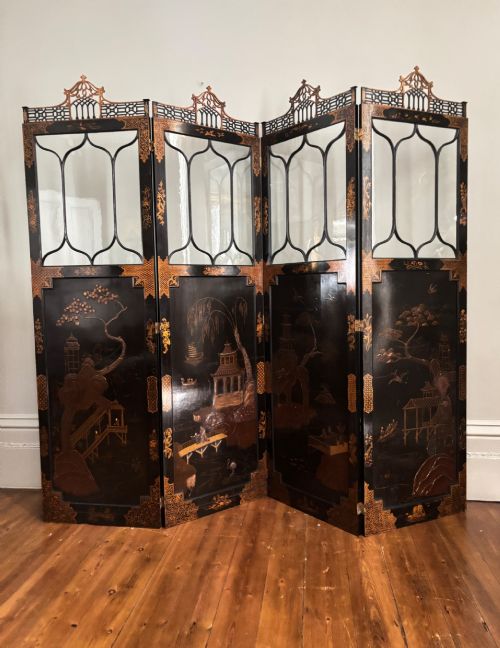
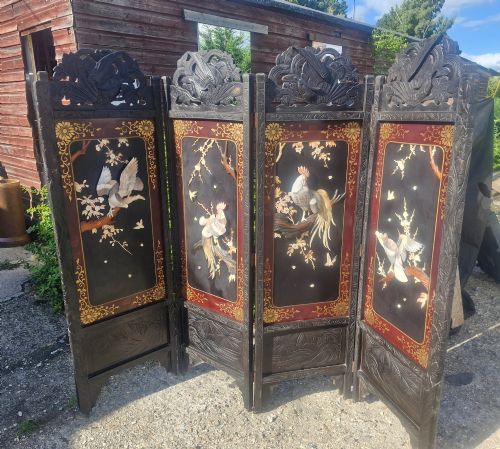
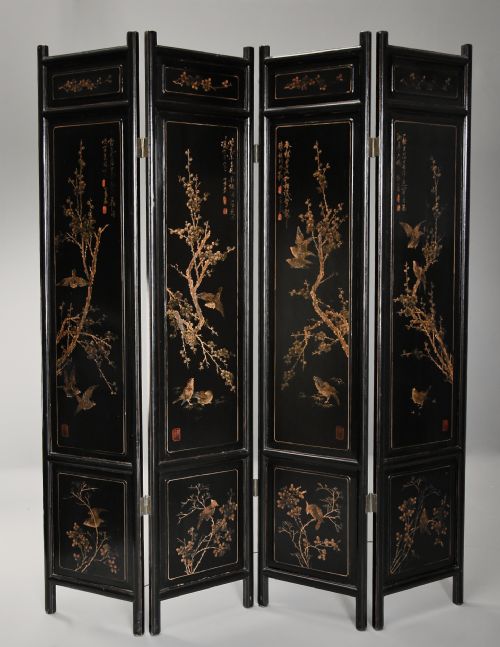



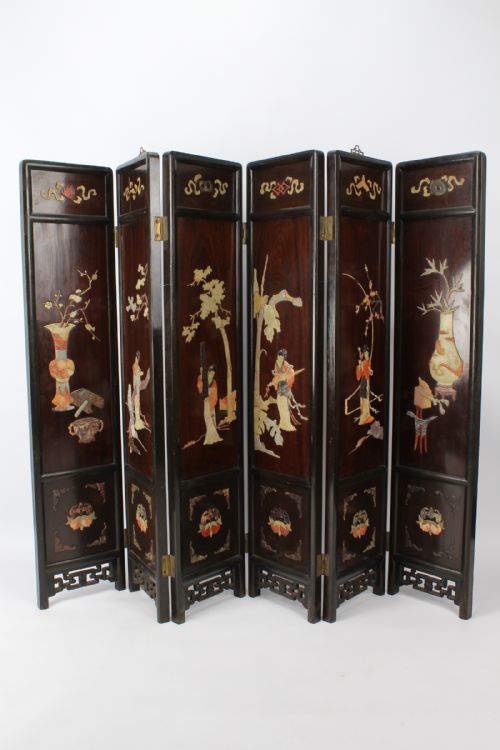


Oriental Folding Room Divider
An oriental folding room divider brings flexible partition and rich surface pattern to a room, drawing on centuries of craftsmanship from China, Japan, Burma and India.
Oriental Folding Room Divider
An oriental folding room divider splits a large interior or creates a private corner using hinged panels of wood, lacquer and textile. The pieces met here span the eighteenth century to the mid-twentieth century, with a strong representation of early twentieth-century examples.
The forms range from grand eight-fold coromandel lacquer screens down to compact three-fold dressing screens and low fire screens. Makers utilised styles such as Chinoiserie, Chinese Qing Dynasty, Anglo-Indian and Japanese Meiji to shape these panels.
Most examples function as freestanding room dividers, while others serve specifically as photographic props or decorative focal points. The physical structure relies on multiple hinged leaves that fold flat for storage or angle to stabilize the screen.
How they were made
Construction rests primarily on hardwood and lacquered wood frames, built as multi-fold panels joined by metal hinges. Artisans applied layers of lacquer to build deep, dark surfaces that receive carving, painting or gilding.
Decoration incorporates carved bone figures, hardstone inlay, brass fittings and delicate fretwork panels. Textile screens utilise silk and cotton elements, stretching fabric across internal wooden frameworks to filter light and colour.
Several Victorian folding screens earned a second life as photographic backdrops before returning to domestic rooms.
What varies in quality
Quality shows in the depth and precision of the carving, particularly where bone, hardstone or deep lacquer work define the surface figures. Finer panels display crisp fretwork and secure, well-balanced hinge systems that support heavy leaves without sagging.
The finish of the lacquer and the complexity of the painted or inlaid scenes separate standard decorative panels from exceptional historical pieces. Material choice also dictates standing, with dense hardwoods and multi-layered coromandel lacquer representing significant labour.
The Oriental Folding Room Divider Glossary
- Coromandel
- A type of Chinese incised lacquer ware where the surface is coated in dark lacquer, carved into designs, and filled with colours or gold. This technique produces rich, textured panels seen on many large folding screens.
- Chinoiserie
- European decorative style reflecting Chinese artistic influences, popular across furniture and screens. It employs motifs of landscapes, figures and pavilions.
- Meiji
- A period in Japanese history spanning the late nineteenth and early twentieth centuries, known for intricate decorative arts. Pieces from this era often feature detailed lacquer and bone inlay.
- Fretwork
- Ornamental design created by cutting patterns through wood. This technique adds lightness and geometric detail to Indian and Chinese screen panels.
- Dressing screen
- A smaller multi-fold screen traditionally used for privacy while changing clothes. These versions are lighter and easier to reposition within domestic spaces.
Oriental Folding Room Divider: Frequently Asked Questions
How do I place a room divider?
Angle the hinged leaves slightly to ensure stability on a flat floor, keeping the screen away from direct heat sources that might dry the wood or lacquer.
Allow enough clearance around the panels so the folds operate freely without straining the hinges.
What materials make up these screens?
The primary structure relies on wood, lacquered wood and hardwood frames, often enhanced with brass hardware, bone, hardstone, and silk or cotton textiles.
Surface decoration combines carved lacquer, paint, gilding and fretwork depending on the regional style.
How do I clean lacquered wood?
Dust the panels regularly with a soft, dry lint-free cloth to prevent particulate accumulation on the delicate lacquer surface.
Avoid chemical polishes, abrasive cloths or excess moisture, which can damage the aged finish and embedded inlays.
How do I distinguish regional styles?
Chinese screens frequently feature deep coromandel lacquer, dragon carvings or Qing Dynasty motifs, whereas Japanese examples often incorporate delicate painted details or bone figures.
Indian and Burmese pieces tend to display pronounced fretwork or distinct regional lacquering techniques.