

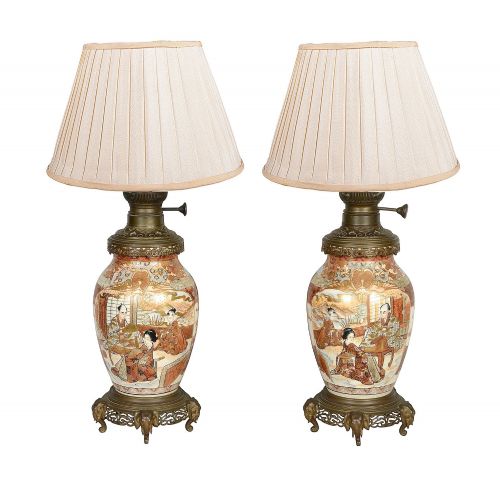



Oriental Figural Lighting
Oriental figural lighting brings characterful lamps into a room, combining Chinese and Japanese porcelain and carved wood with period wiring.
Oriental Figural Lighting
Oriental figural lighting consists of table lamps fashioned from 19th century and early 20th century Chinese and Japanese vessels, figures, and carved root wood. These pieces transform ginger jars, turquoise glaze porcelain, crackleware vases, and Satsuma pottery into functional household illumination.
The versions most commonly met on this page include pairs of Satsuma and Famille rose lamps, alongside substantial Chinese root wood figures. Makers utilised existing antique vases and carved wood, mounting them with brass and pairing them with fabric and silk shades.
These items span several periods, from the Qing dynasty and Meiji period through to the 19th century and 1920. Collectors encounter them as single statement pieces or matched pairs ready for placement on side tables.
How they were made
Artisans constructed these lamps by adapting preexisting Asian ceramics and intricate root wood carvings for electrical or oil use. Porcelain vessels such as Famille rose ginger jars and turquoise glaze vases received brass mounts to secure fittings and wiring.
Root wood figures were selected for their organic, twisted forms and carved carefully to accommodate internal or external lamp wiring. Textile shades in fabric and silk were subsequently added to complete the transformation from decorative vessel to functional table lamp.
Oriental Figural Lighting Retail Price Guide 2026
Typical asking prices for oriental figural lighting among the pieces listed under this phrase on Sellingantiques today, from the lower quarter to the upper quarter. They describe what is for sale here now, not the wider market.
Root wood carvers worked with eccentric natural snags so intently that tree roots ended up looking remarkably like wise old sages.
What varies in quality
The refinement of the underlying porcelain painting and the complexity of the root wood carving dictate the standing of a piece. Satsuma pottery with intricate enamel work and finely articulated Famille rose vases sit at the higher end of the range.
The harmony between the antique vessel and its brass mounts affects the overall success of the conversion. Matched pairs with uniform glazing and balanced proportions command greater attention than mismatched assemblages.
The Oriental Figural Lighting Glossary
- Satsuma
- A type of Japanese earthenware featuring a crackled cream-coloured glaze decorated with enamels and gilding. These wares were frequently wired into table lamps during the early 20th century.
- Famille rose
- A palette of Chinese porcelain enamels dominated by opaque pink, introduced during the Qing dynasty. The term translates to pink family and describes the soft floral and figural motifs found on these lamps.
- Crackelware
- Pottery or porcelain featuring a network of fine cracks intentionally created in the glaze during firing. This finish appears on several Chinese vases adapted into lighting.
- Root wood
- Gnarled and twisted subterranean tree roots sculpted by Chinese artisans into figures and naturalistic stands. Carvers followed the eccentric natural grains to suggest human or animal forms.
Oriental Figural Lighting: Frequently Asked Questions
How do I date these lamps?
Dating relies on examining the characteristics of the underlying porcelain body, glaze, and hand-painted enamel style. The accompanying brass mounts and wiring methods also provide clues to whether the conversion occurred in the 19th century or the 1920s.
Changes in ceramic production techniques across the Qing dynasty and Meiji period help differentiate older vessels from later adaptations. Consulting the specific period markers in each listing clarifies the age of the base object.
Are these lamps safe to use?
Most antique lamps require professional rewiring to meet modern electrical safety standards before daily domestic use. Buyers should have a qualified electrician inspect the brass fittings and internal cord pathways.
Preserving the original ceramic body or root wood carving is standard practice during rewiring. Modern plugs and safer internal components allow collectors to enjoy these items safely in living spaces.
How do I clean an antique lamp?
Dusting porcelain bases and carved root wood regularly with a soft, dry cloth prevents the buildup of grime. Avoid harsh chemical cleaners that might damage delicate overglaze enamels or dry out aged timber.
Fabric and silk shades require gentle brush attachments on a vacuum or specialised textile cleaning. Taking care around brass mounts ensures the metal retains its patinated surface.
Can I replace the lampshades?
Replacing lampshades is straightforward provided the new shade matches the fitter size and proportion of the base. Selecting silk or fabric shades in neutral tones often complements the busy patterns of Satsuma and Famille rose ceramics.
Proportion remains the main consideration when changing shades on figural root wood or ginger jar lamps. Ensuring the shade does not overwhelm the ceramic body maintains the visual balance of the piece.