








Oriental Export Desk
Oriental export desk pieces bring intricate craftsmanship and global trade history into a room, offering functional workspaces rooted in centuries of cross-cultural exchange.
Oriental Export Desk
An oriental export desk serves as a dedicated writing surface created in Asian workshops specifically for Western markets, merging traditional Eastern construction methods with forms suited to European and British interiors. The pieces on this page span the eighteenth and nineteenth centuries, alongside later nineteenth and early twentieth-century examples.
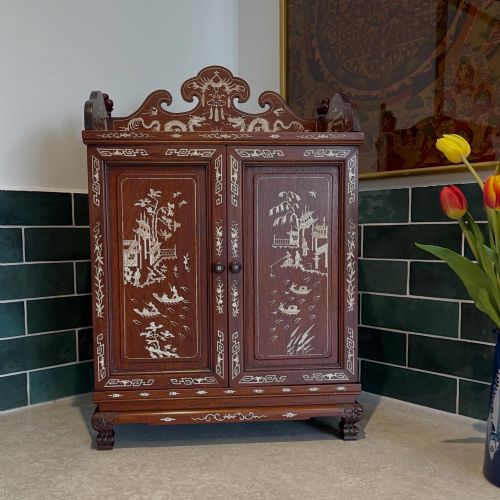
Buyers will encounter desks fashioned primarily from dense hardwoods like padouk and rosewood, as well as occasional lacquer finishes. These writings surfaces often feature intricate carving and fitted compartments designed for correspondence and storage.
The styles range across Chinese export designs and Japanese production from the Meiji period, reflecting the specific regional aesthetics commissioned by foreign merchants and travellers. Each piece bridges domestic utility with distinct decorative traditions.
How they were made
Maker workshops utilised dense regional hardwoods such as padouk, rosewood, and elm to construct sturdy foundational frames that resisted warping. Traditional joinery techniques allowed panels and structural joints to expand and contract naturally without metal fasteners.
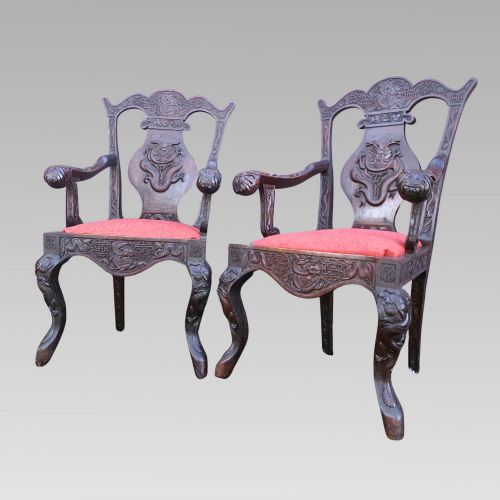
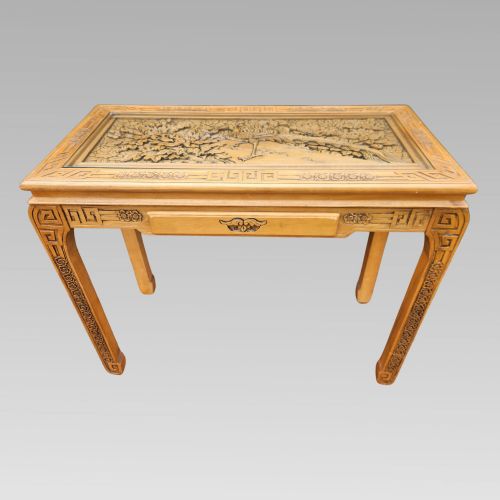
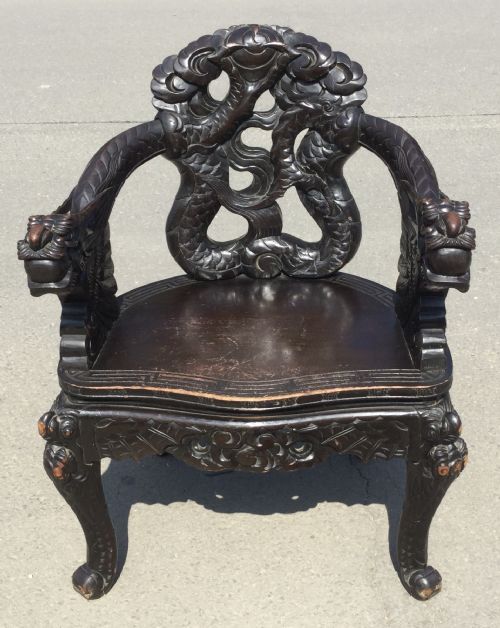
Surface decoration frequently involved intricate hand-carving depicting dragons, foliage, and narrative scenes into the solid wood. Selected pieces incorporated black lacquer finishes, metal mounts, and mother of pearl inlay to build rich visual depth.
Oriental Export Desk Retail Price Guide 2026
Typical asking prices for oriental export desk among the pieces listed under this phrase on Sellingantiques today, from the lower quarter to the upper quarter. They describe what is for sale here now, not the wider market.
Listings feature eighteenth and nineteenth-century periods, alongside Victorian, Meiji, and early twentieth-century examples constructed from hardwood, brass, fabric, and glass.
What varies in quality
The standard of a piece depends on the crispness and depth of the hand-carved detailing across the hardwood structure. Superior examples display precise joinery and well-preserved surface finishes that retain their original character.
Proportion and balance dictate the aesthetic success of the writing surface, with finer items maintaining harmonious lines and integrated storage compartments. The integrity of the timber and the subtlety of decorative mounts distinguish standard utility furniture from masterwork pieces.
The Oriental Export Desk Glossary
- Padouk
- A heavy, durable tropical hardwood prized for its reddish hue and dense grain structure. It was frequently utilised by nineteenth-century cabinet makers for export furniture.
- Canton
- A major Chinese port city associated with the production of decorated lacquerware, porcelain, and furnishings destined for Western trade. Items from this region often display distinct regional ornamentation.
- Export
- A term describing goods manufactured in Asia specifically for purchase and transport to European and American markets. These objects balanced domestic craftsmanship with foreign tastes.
- Hardwood
- Timber derived from broad-leaved trees that yields dense, durable boards suitable for fine furniture construction. Common examples in these listings include rosewood and elm.
Oriental Export Desk: Frequently Asked Questions
What is an oriental export desk?
An oriental export desk is a writing table manufactured in Asian workshops during the eighteenth, nineteenth, or early twentieth centuries for buyers in Western markets. These items combine traditional regional joinery and carving with European furniture forms.
They function as practical writing stations while displaying the distinctive decorative arts of Chinese and Japanese craftsmen from historical trading periods.
How do I date these desks?
Dating relies on examining the timber species, construction methods, and decorative motifs relative to known historical periods. Nineteenth-century examples often utilise dense padouk or rosewood alongside specific carved export styles.
Changes in hardware, lacquer techniques, and secondary woods help narrow the production era when documentation is absent.
What woods were used for desks?
Cabinet makers utilised dense tropical timbers including padouk, rosewood, and elm to ensure structural stability and durability. These hardwoods supported deep hand-carving and resisted the strains of long-distance transport.
Secondary woods were occasionally employed for internal drawer linings and hidden framework components.
How should I care for hardwood?
Preserve antique hardwood by maintaining stable room humidity and avoiding direct sunlight that can dry out the timber. Dust the surface regularly with a soft, dry cloth rather than applying heavy commercial polishes.
Occasional waxing with a suitable conservation-grade product helps protect the original finish without building up unwanted residue.