



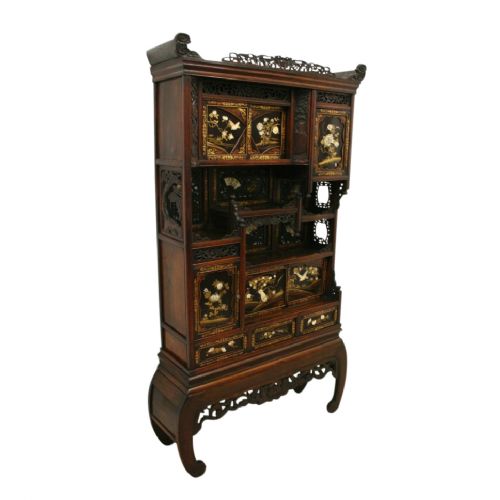


Oriental Display Unit
An oriental display unit brings intricate craftsmanship and structured elegance to a room, offering asymmetric shelves and cabinets designed to showcase treasured possessions.
Oriental Display Unit
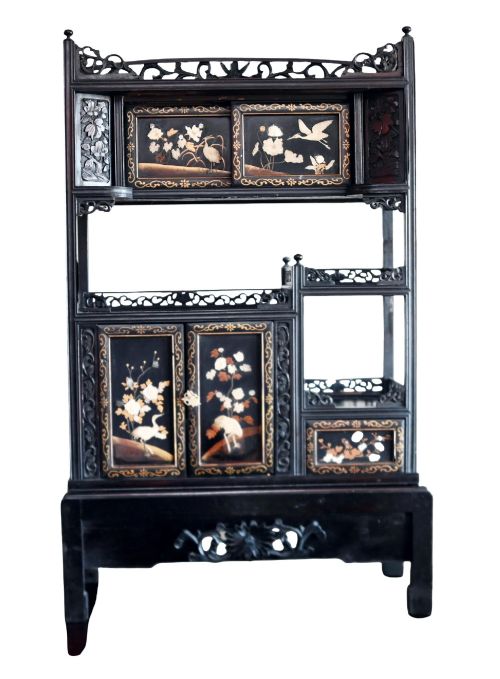
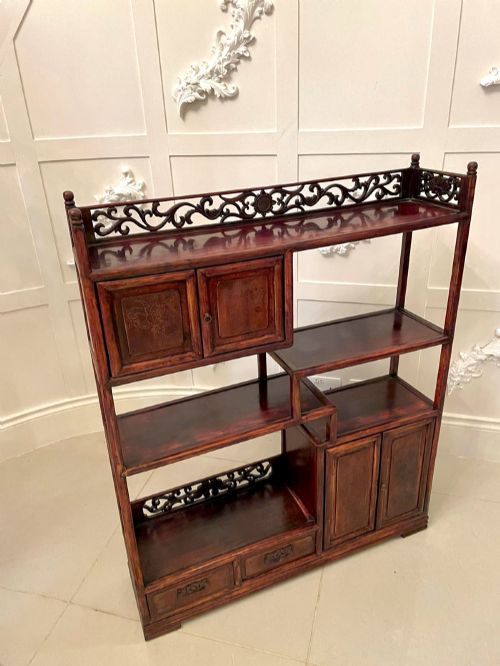
When searching for an oriental display unit, a buyer encounters pieces originating from Chinese Qing and Japanese Meiji traditions alongside European interpretations like Chinoiserie and Aesthetic Movement pieces. These works encompass display cabinets, corner cabinets, corner cupboards, whatnots, and display shelves.
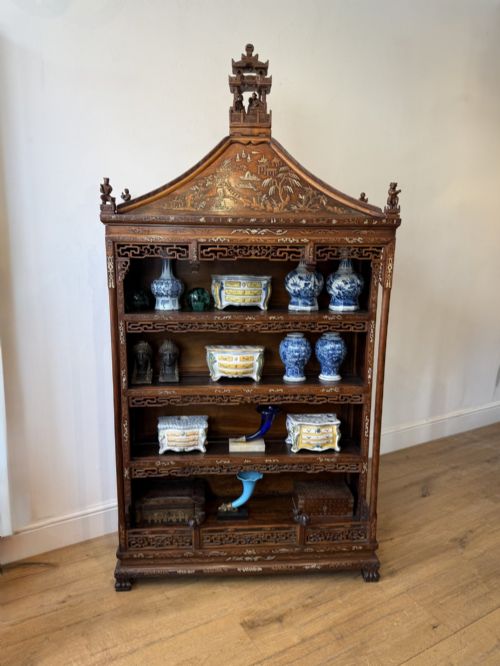
The forms range from dwarf side-cabinets and large Japanese cabinets to pagoda display cabinets and bamboo cabinets dating from the eighteenth century through to the early twentieth century.
How they were made
Makers utilised dense hardwoods, teak, rosewood, and bamboo as structural foundations, frequently applying ebonised finishes to achieve a deep, dark surface. Lacquer also appears across the selection as a primary coating for cabinets and corner cupboards.
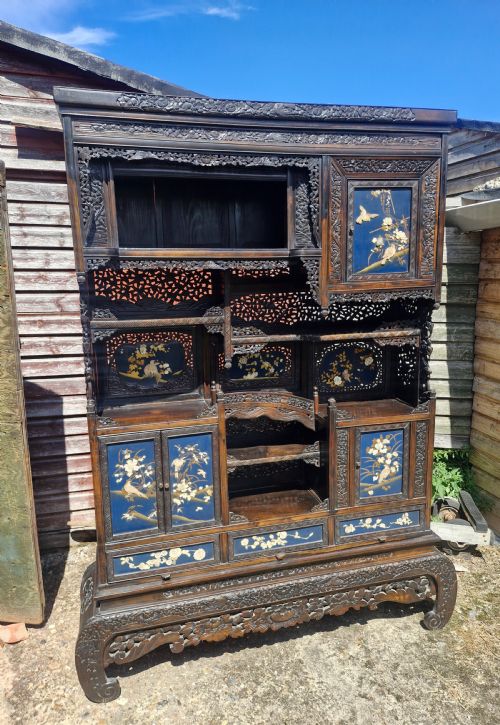
Decoration relied on intricate carving, bone inlay, and mother-of-pearl ornamentation set into the wood or lacquer. Brass mounts and hardware provided functional closures and structural accents on doors and drawers.
Oriental Display Unit Retail Price Guide 2026
Typical asking prices for oriental display unit among the pieces listed under this phrase on Sellingantiques today, from the lower quarter to the upper quarter. They describe what is for sale here now, not the wider market.
Listings feature hard woods, lacquer, brass, and bone inlay applied across nineteenth and early twentieth century Chinese and Japanese forms.
What varies in quality
The distinction between tiers rests upon the depth and precision of the carving, the complexity of the internal shelving arrangements, and the integrity of the joinery. Pieces displaying profuse, hand-carved detailing and well-balanced asymmetric compartments command attention.
Material selection also dictates distinction, where solid hardwoods and carefully applied mother-of-pearl or bone inlay demonstrate superior execution compared to simpler constructions.
The Oriental Display Unit Glossary
- Shodana
- A traditional Japanese display cabinet featuring irregular, asymmetric shelving designed for exhibiting art objects. These cabinets often stand on integrated or separate wooden stands.
- Chinoiserie
- A European artistic style reflecting Chinese aesthetic motifs, commonly applied to furniture such as corner cupboards during the eighteenth and early twentieth centuries.
- Whatnot
- An open piece of furniture with multiple tiers of shelves used for displaying ornaments or books. Examples in this category include Burmese teak constructions.
- Ebonised
- Wood finished with a dark stain or paint to imitate ebony. This treatment was particularly popular during the Aesthetic Movement.
- Qing Dynasty
- The final imperial dynasty of China, spanning from the seventeenth to the early twentieth century. Furniture from this period frequently utilises dense hardwoods and elaborate carving.
Oriental Display Unit: Frequently Asked Questions
What is a shodana cabinet?
A shodana is a traditional Japanese display cabinet characterised by asymmetric shelving and compartments. These pieces were designed specifically for holding small art objects and decorative items.
They often incorporate stands, carved panels, and sliding doors, reflecting the refined craft traditions of the Meiji period.
How do I place an oriental display unit in a modern room?
These cabinets work effectively as focal points against neutral walls where their intricate carving and form can stand out. They suit living spaces, studies, or hallways.
Use the shelves to display ceramics, glassware, or small sculptures, allowing the staggered compartments to create visual balance.
What is the difference between Chinese and Japanese display cabinets?
Chinese display cabinets often feature structured hardwood frames, deep carvings, and symmetrical or architectural layouts like pagoda designs. Japanese shodana cabinets tend to prioritise asymmetric shelving arrangements.
Both traditions utilise materials such as mother-of-pearl inlay and ebonised wood, but their structural proportions and decorative motifs differ distinctly.
How do I identify a Chinoiserie corner cupboard?
A Chinoiserie corner cupboard is a European piece decorated with European interpretations of Chinese motifs, often finished in lacquer or painted surfaces. These cupboards fit directly into room corners.
They frequently date from the Edwardian era or the eighteenth century, combining traditional European cabinetry forms with oriental decorative styles.