



Oriental Corner Cabinet
These oriental corner cabinet pieces bring rich painted lacquer and fitted shelving to empty wall angles, offering practical storage with distinct decorative presence.
Oriental Corner Cabinet
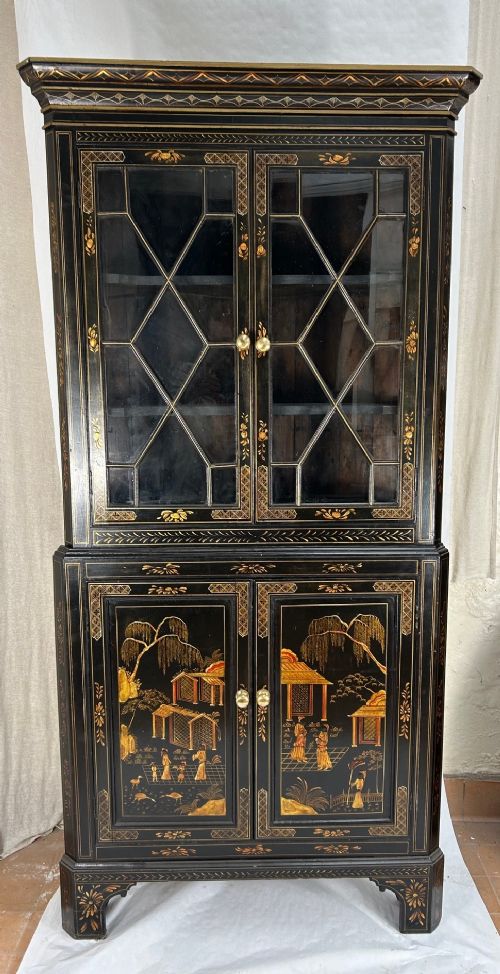
An oriental corner cabinet utilises awkward room angles to display ceramics and house daily items while adding distinct period character. The selection on this page centres primarily on Chinoiserie and Georgian Chinoiserie styles, alongside Edwardian and Victorian interpretations.
Makers shaped these tall or wall-mounted cupboards to fit snugly into corners, frequently employing two doors to conceal internal shelving. The forms range from simple pine and elm carcases to elaborate display units designed to catch the eye.
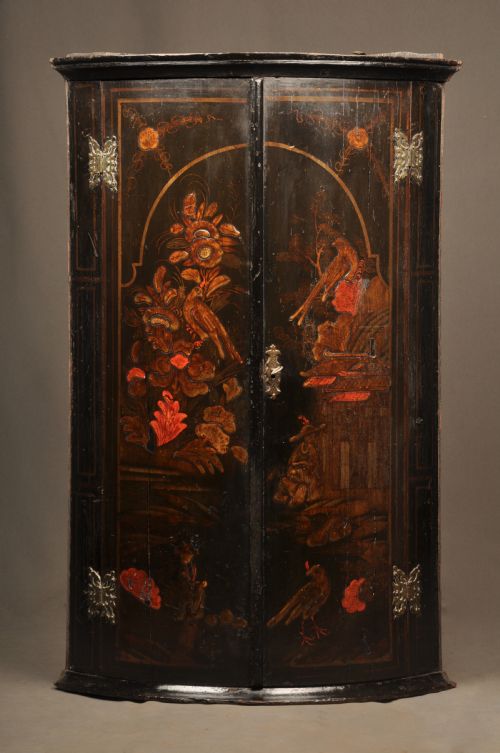
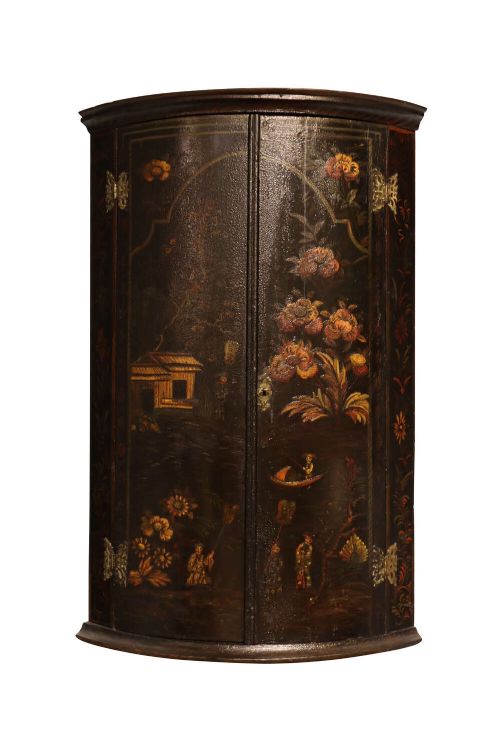
The aesthetic draws heavily on Asian decorative arts adapted by British and European workshops over successive centuries. Buyers encounter black lacquer, red paint and gilt finishes that transform utility furniture into striking focal points.
How oriental corner cabinet items were constructed
Craftsmen built the underlying carcase using timber such as pine and elm, applying veneers or solid panels to form the triangular body. Brass hardware, including hinges and escutcheons, reinforced the joints and added metallic contrast to the painted surfaces.
The distinctive surface decoration relied upon layered lacquer, paint and gilt to build up raised pictorial scenes of figures, landscapes and flora. Artisans applied successive coats, rubbing them down to achieve a smooth finish before adding intricate hand-painted details.
Oriental Corner Cabinet Retail Price Guide 2026
Typical asking prices for oriental corner cabinet among the pieces listed under this phrase on Sellingantiques today, from the lower quarter to the upper quarter. They describe what is for sale here now, not the wider market.
Listings feature periods spanning the eighteenth century through to the Edwardian era, alongside materials including lacquer, brass, elm, and glass.
What varies in the quality of oriental corner cabinet pieces
The depth and intricacy of the lacquer work dictate the visual success of the piece, distinguishing master-painted examples from simpler decorative efforts. Finely rendered gilt details and well-balanced pictorial compositions elevate the overall artistic merit.
The structural integrity of the timber carcase and the original condition of the brass fittings heavily influence the desirability of each cupboard. Pieces retaining their early paint surfaces without heavy modern intervention command stronger interest from collectors.
The Oriental Corner Cabinet Glossary
- Chinoiserie
- European artistic imitation of Chinese and East Asian motifs, popular in furniture decoration from the seventeenth century onwards. This style employs whimsical figures, pavilions and landscapes rendered in paint and lacquer.
- Japanned
- A European imitation of Japanese and East Asian lacquerwork, created by applying successive coats of varnish and heat-curing them. The technique produces a hard, glossy surface often decorated with raised metallic designs.
- Lacquer
- A durable resinous finish applied to wood to create a smooth, protective and highly decorative surface. It forms the foundation for intricate painted and gilt pictorial work.
- Gilt
- Application of gold leaf or gold paint to highlight carved or painted details on furniture. This technique adds brightness and contrast against dark lacquer backgrounds.
- Bandaji
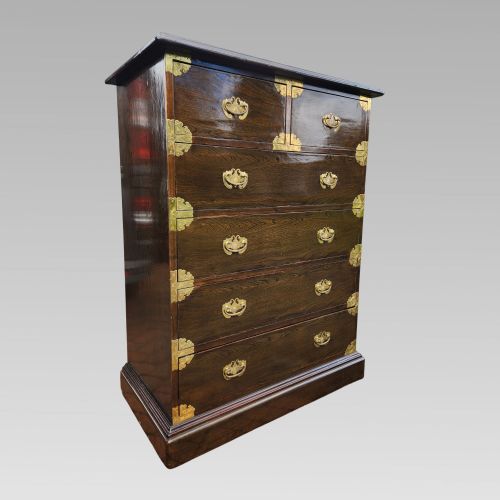
- A traditional Korean storage chest featuring prominent brass strapwork and corner plates. These pieces utilise woods such as elm to create robust domestic furniture.
Oriental Corner Cabinet: Frequently Asked Questions
Where should an oriental corner cabinet go?
These cupboards suit empty room angles where standard rectangular furniture wastes floor space. They bring focus to forgotten corners in dining rooms, hallways or living areas.
Position them away from direct sunlight to protect delicate painted lacquer surfaces from fading over time. Ensure the wall angles are square so the triangular carcase fits flush against the plaster.
How do I date an oriental corner cabinet?
Examine the underlying timber construction, secondary woods and the style of the brass hardware to determine age. Eighteenth-century examples often feature distinct carcase construction methods compared to Edwardian or Victorian revivals.
Look closely at the lacquer application and pigment wear to gauge the period. Stylistic shifts in Chinoiserie motifs also help separate Georgian pieces from later nineteenth-century interpretations.
Are oriental corner cabinets purely decorative?
While famous for their striking painted exteriors, these pieces provide practical enclosed storage behind fitted doors. Interior shelves accommodate glassware, books or collection items safely.
Display variants allow owners to exhibit ceramics and ornaments behind glass panels while keeping dust at bay. The triangular footprint maximises interior capacity without dominating the room's floor plan.
How do I care for lacquer surfaces?
Dust regularly with a soft, dry cloth to prevent abrasive particles from scratching the glossy finish. Avoid using modern chemical polishes or damp cloths that might soften fragile historical lacquer.
Maintain stable indoor humidity and temperature levels to prevent the wood beneath from expanding and cracking the painted surface. Gentle handling preserves the delicate gilt details for future years.