


Oriental Camphor Chest
An oriental camphor chest provides aromatic storage and durable travel utility, combining dense timber with practical brass hardware.
Oriental Camphor Chest
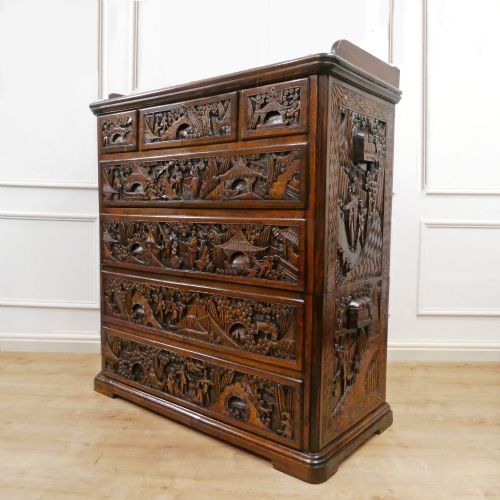
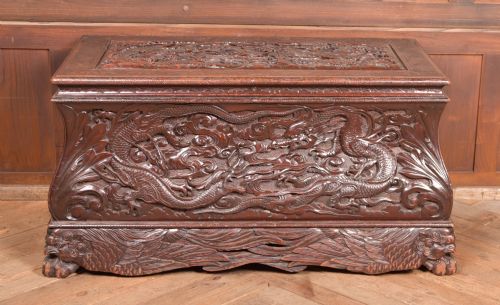
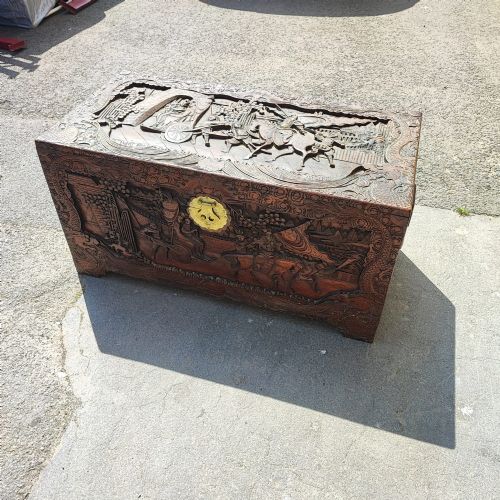
An oriental camphor chest serves as a sturdy storage trunk, blanket box, or coffer, often designed for travel and trade across the 19th and early 20th centuries. These pieces appear in forms ranging from plain campaign trunks to heavily carved Chinese export boxes and limed oak hybrid designs.
The most common examples on this page date from the 19th century through the 1930s, reflecting traditional Chinese craftsmanship made for international trade. Buyers frequently encounter pieces featuring relief-carved exterior panels, recessed campaign handles, and hinged lids built for domestic utility.
Beyond standard blanket boxes, variations include cabinets on chests, smaller proportioned luggage cases, and leather-bound China trade trunks. These utilitarian forms adapted over decades, shifting from utilitarian maritime transport to decorative interior furniture.
How They Were Made
Makers constructed these chests primarily using fragrant camphor wood, frequently combining it with secondary timbers like teak, maple, and oak. The aromatic nature of the primary wood served a practical purpose by deterring insects from stored textiles and garments.
Metal reinforcement played a vital structural role, employing brass hardware, corner brackets, and bound edges to withstand long-distance maritime transport. Artisans also applied exterior pigment, polychrome paint, or leather coverings to specific trade trunks.
Carved decoration relied on manual chiselling to create deep relief scenes across the lid and panels. Joinery techniques prioritized box construction robust enough to endure heavy handling and shifting cargo loads.
Storage forms span simple blanket boxes, campaign trunks, and sophisticated cabinet-on-chest configurations.
What Varies in Quality
The depth and intricacy of the hand-carved panels distinguish finer examples from simpler utilitarian boxes. Crisp execution in floral or figural motifs reflects a higher standard of workshop output.
Hardware execution and material selection separate standard production from superior pieces. Original brass fittings, leather bindings, and robust secondary timbers like teak contribute to a higher tier of construction.
Proportion and scale also dictate quality, as smaller, well-balanced chests or larger scaled export trunks demonstrate intentional design. The presence of retained original pigment or specialised cabinetry elements elevates a piece above standard blanket boxes.
The Oriental Camphor Chest Glossary
- Camphor wood
- A durable, aromatic timber native to Asia that repels insects and forms the structural base of these chests. Its distinct scent remains recognizable decades after manufacture.
- Campaign trunk
- A portable chest built with recessed brass handles and reinforced corners for military or maritime travel. These items needed to withstand rigorous journeys.
- China trade
- A historical term for goods produced in China specifically for export to Western markets during the 19th century and earlier. Such items often merge Eastern woodworking techniques with Western tastes.
- Chinoiserie
- European artistic interpretation of Chinese and East Asian decorative styles, sometimes applied to furniture surfaces. It appears on select brass-covered camphor chests.
- Blanket box
- A deep storage chest traditionally used for linens, woollens, and garments. These trunks relied on hinged lids for easy top-loading access.
Oriental Camphor Chest: Frequently Asked Questions
What is an oriental camphor chest used for?
These chests served primarily for storing garments, blankets, and textiles while protecting them from moths and dampness. The natural oils in the timber provide a distinct fragrance that acts as a natural insect deterrent.
Today, owners utilise them as coffee tables, accent furniture, and practical storage trunks in living spaces and bedrooms. Their robust construction allows them to function as both decorative surfaces and deep storage receptacles.
How do I identify the age of a camphor chest?
Dating relies on examining the construction style, hardware, and decorative motifs present on the trunk. Nineteenth-century examples often feature heavy brass bound corners and campaign handles, while pieces from the 1920s and 1930s frequently incorporate deep relief carving or Art Deco influences.
Material combinations also offer clues, as early 20th-century workshops sometimes paired camphor with teak or maple. Documentation or specific design traits help narrow the period of manufacture.
Do these chests still smell of camphor?
Most surviving examples retain a subtle fragrance, though the intensity varies depending on age and environmental exposure. The natural oils embedded within the wood fibres continue to release scent over generations.
Lightly sanding the interior can revive the aroma if the scent has faded significantly. This characteristic scent remains a defining feature of authentic camphor wood furniture.
Were these chests made for export?
Many of these trunks were produced in Chinese port cities specifically for international trade and Western travellers. Makers adapted traditional joinery and carving techniques to satisfy the demands of foreign buyers returning home by ship.
This exchange created a distinct category of export furniture that blended Eastern materials with forms popular in Europe and America. These pieces document maritime trade routes and global design influences of the era.