


Orange Table Lamp
An orange table lamp brings warmth and vibrant colour into a room, drawing the eye with rich hues and striking historic forms.
Orange Table Lamp
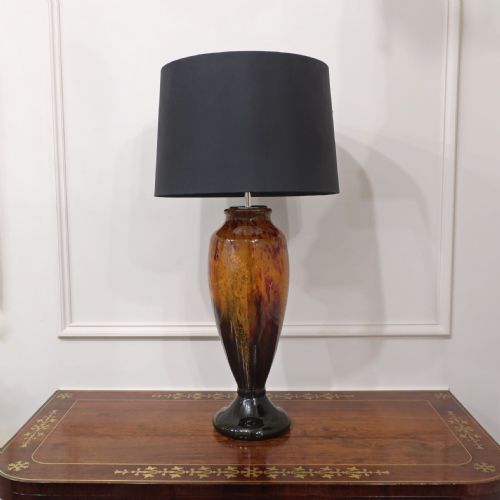
When you search for an orange table lamp, you encounter a striking array of historic lighting and converted vessels spanning several centuries. The selection ranges from early Japanese export porcelain to French Art Deco glass, uniting diverse eras through a shared palette.
You are most likely to meet vibrant Japanese Kutani and Imari porcelain vases converted into lamps, alongside French mottled glass shades resting on wrought iron bases. These pieces combine utility with distinct artistic traditions from Europe and East Asia.
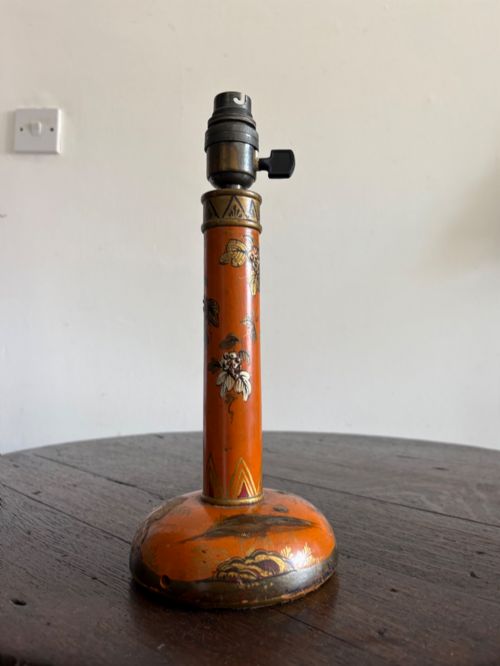
The forms vary from classical baluster vases to geometric Art Deco silhouettes and Chinoiserie lacquer work. Each piece brings a distinct character to an interior, whether through hand-painted floral motifs or rich glass enamelling.
How they were made
The construction of these lamps relies on traditional ceramic and metalworking techniques, utilising porcelain bodies shaped on the potter's wheel and fired at high temperatures. Hand-painted pigments and enamels are applied with precision before a final glaze seals the surface.
Glass lamps utilise methods such as acid-etching, enamelling, and mottling to create rich textures and colour depth within the material. Wrought iron and brass mounts provide sturdy structural support, shaped by hand to complement the curves of the glass or ceramic body.
Materials recorded across the selection include brass, porcelain, fabric, wood, wrought iron, silk, glass, and mottled glass.
What varies in quality
The distinction between tiers of quality rests in the crispness of the hand-painted detail and the depth achieved in the glass or glaze. Superior porcelain displays refined potting with well-balanced proportions and clear, vibrant pigments that remain stable across the surface.
Metal and glass components show variation in the complexity of their forging and shading, where skilled manipulation of wrought iron or layered glass creates a more sophisticated presence. The integration of period mounts and shades also influences the overall coherence of the piece.
Charles Schneider·Daum·Degue·Fukagawa
The Orange Table Lamp Glossary
- Imari
- A style of Japanese export porcelain characterised by a distinctive palette of underglaze blue, iron red, and gilt highlights. Pieces from this tradition often feature dense floral and geometric panels.
- Kutani
- A traditional Japanese style of coloured porcelain known for bold pictorial designs and rich enamel painting. These wares typically display vibrant palettes suited to decorative display.
- Baluster
- A vertical architectural form with a swelling lower portion tapering towards the top. This shape is frequently seen in the profile of tall ceramic vases.
- Chinoiserie
- European artistic styles reflecting Chinese decorative motifs and techniques, popular in furniture and lacquer work. It employs whimsical scenes and vibrant colours.
- Mottled glass
- Glass created by fusing different coloured powders or frit into the molten batch to produce a patchy, cloud-like appearance. This technique diffuses light softly.
Orange Table Lamp: Frequently Asked Questions
Are these lamps converted from old vases?
Many examples began life as decorative porcelain vases or ginger jars before receiving electrical fittings later in their history. This conversion allows historic ceramic forms to find a practical purpose in modern interiors.
Makers often adapted these vessels carefully to preserve the original body without causing permanent damage to the historic material.
How do I clean an antique glass shade?
Dust the surface regularly with a soft, dry cloth to prevent grime accumulation on textured or enamelled areas. Avoid harsh chemical cleaners that might damage the delicate enamel work or antique metal fittings.
For deeper cleaning, use a damp cloth with mild soap, drying the surface immediately afterwards with a lint-free towel.
Where should I place a large porcelain lamp?
These tall pieces require a sturdy surface such as a sideboard, large console table, or a spacious desk where their height can be properly accommodated. Ensure the furniture can support the combined weight of the ceramic base and any heavy metal mounts.
Position the lamp away from busy traffic areas to protect delicate hand-painted surfaces and trailing cords from accidental knocks.