






Orange Armchair
An orange armchair brings instant warmth to a room, offering rich colour alongside historic form from the eighteenth century to the twentieth.
Orange Armchair
An orange armchair spans several centuries of British and continental design, ranging from Georgian wing backs to later twentieth-century seating. These pieces combine traditional wooden frames with vibrant upholstery choices that breathe new life into older forms.
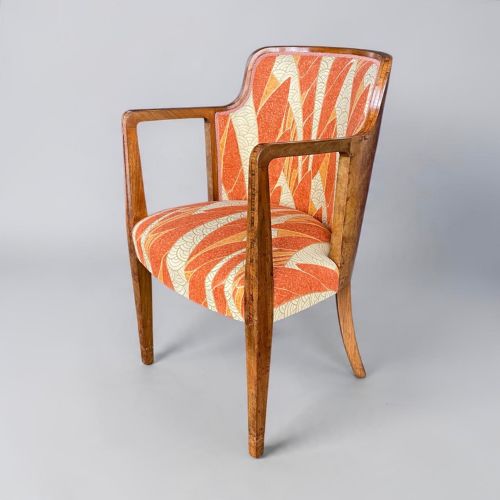
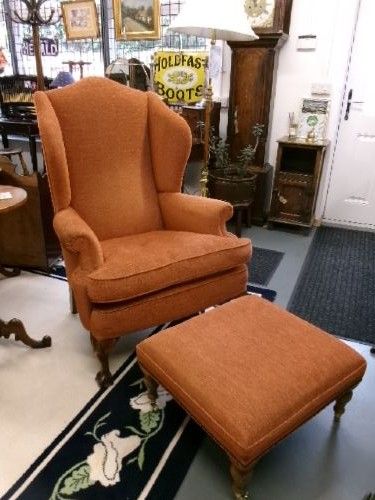
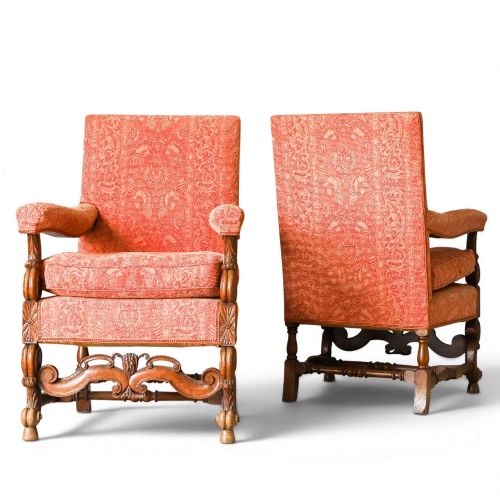
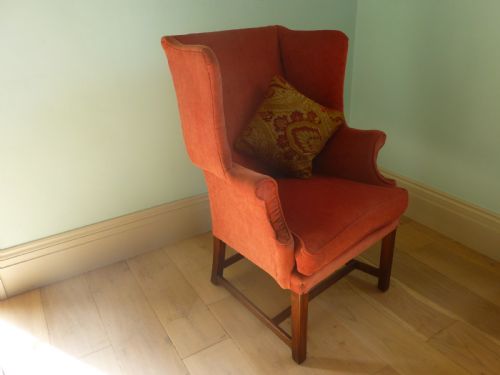
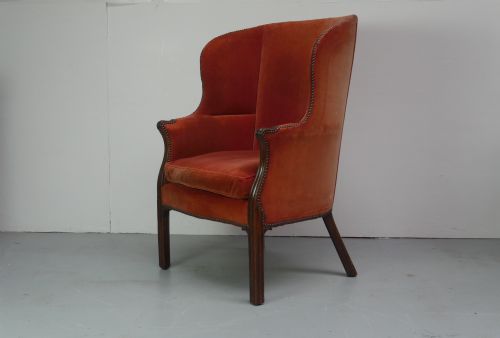
The versions most commonly met on this page include nineteenth-century wing back chairs in burnt orange chenille twill, alongside Georgian style wing armchairs and walnut frames from the 1930s. Each example pairs period woodwork with distinctive orange textiles.
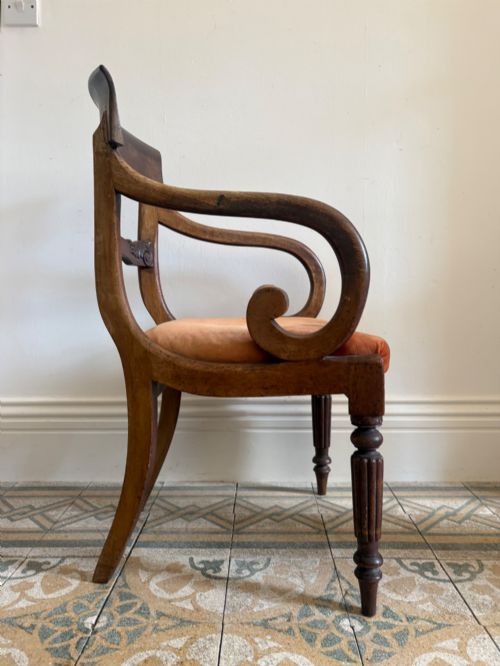
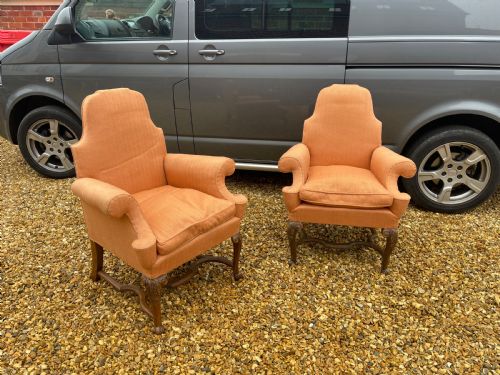
Buyers encounter open arm chairs with drop-in velvet seats from the Regency era, as well as button back occasional chairs upholstered in orange velvet. These combinations demonstrate how historic seating adapts to bold, modern palettes.
Materials and Construction
Frames rely on sturdy timbers such as mahogany, walnut, oak, and giltwood, providing the structural backbone for these historic chairs. Joinery techniques reflect the prevailing cabinet-making standards of each distinct period.
Upholstery relies on rich textiles including velvet, chenille twill, and standard fabric, secured with traditional stuffing methods. Metal details such as brass fixtures occasionally accent the wooden frames and support structures.
Orange Armchair Retail Price Guide 2026
Typical asking prices for orange armchair among the pieces listed under this phrase on Sellingantiques today, from the lower quarter to the upper quarter. They describe what is for sale here now, not the wider market.
Listings feature periods spanning from the 18th century through to the 1930s, utilising materials such as mahogany, walnut, oak, brass, and velvet.
Distinctions in Quality
The standard of timber carving and the integrity of the wooden frame dictate the foundational worth of each piece. Finer examples display crisp detail in walnut, mahogany, or giltwood without structural compromise.
The execution of the upholstery, from the precision of button-backing to the weight of the velvet or chenille, determines the visual impact and tactile success of the chair.
The Orange Armchair Glossary
- Wing back armchair
- A high-backed seat featuring protective side panels designed to shield the sitter from drafts. These forms date back to the seventeenth century and remain enduringly popular.
- Chenille twill
- A textured woven fabric with a caterpillar-like pile that adds depth and durability to upholstery. It offers a soft handle alongside robust performance.
- Drop-in seat
- A removable upholstered frame that fits snugly into the rails of an open arm chair. This method simplifies reupholstery and maintenance.
- Giltwood
- Timber treated with a thin layer of gold leaf or metallic gilt paint for decorative splendour. It was particularly favoured in grand Georgian and revival interiors.
- Cockpen chair
- A distinctive open armchair featuring Chinese Chippendale style lattice work back splats. These lightweight chairs became fashionable in elite homes during the eighteenth and early twentieth centuries.
Orange Armchair: Frequently Asked Questions
How do I place an orange armchair in a room?
An orange armchair acts as a natural focal point in a neutral or earth-toned interior. Pair it with complementary wood finishes to tie the room together.
Allow enough surrounding space for the silhouette of the chair, particularly winged or open-arm designs, to be appreciated fully without clutter.
Are these chairs comfortable for daily use?
Period armchairs vary in ergonomics depending on their original intended function, whether for formal conversation or relaxed reading. Many feature deep padding and supportive wing backs.
Consider the seat height and depth relative to your own comfort preferences before selecting a specific historic form.
How do I identify a Georgian style piece?
Georgian style seating typically exhibits restrained classical proportions, elegant cabriole or straight legs, and quality timber frames in mahogany or walnut. Revival pieces often emulate these exact proportions.
Examine the joinery and timber grain to understand whether a chair belongs to the eighteenth century or a later revival period.