

Open Wood Bookshelf
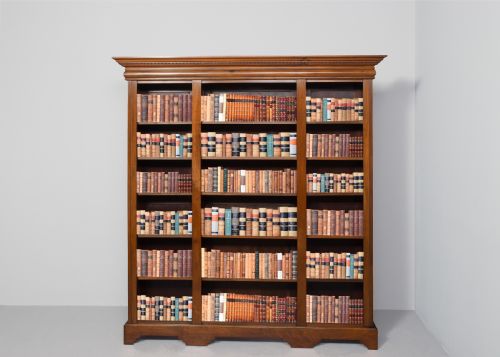
An open wood bookshelf brings immediate warmth and order to a room, offering ready access to volumes while displaying fine timber grain.
Open Wood Bookshelf
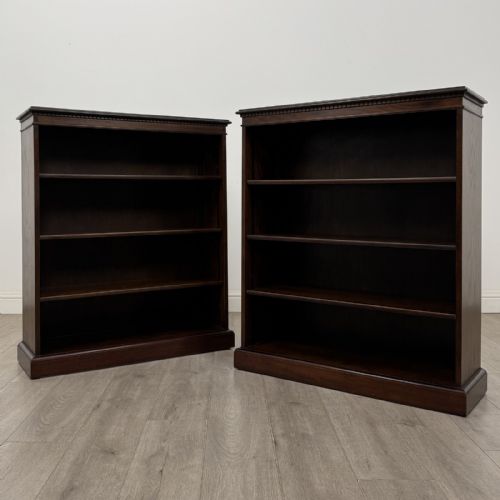
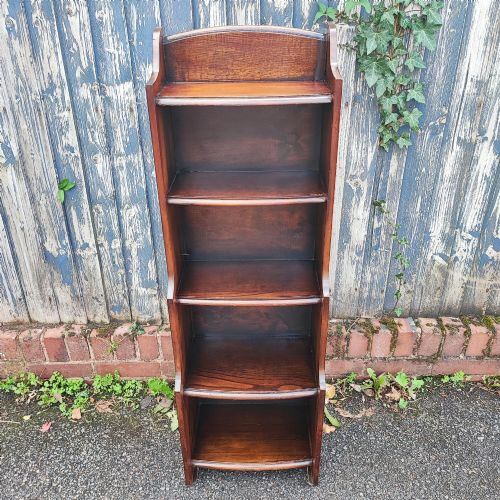
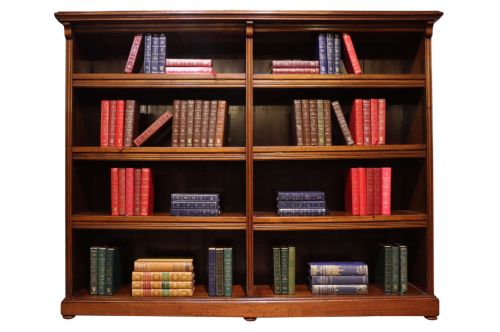
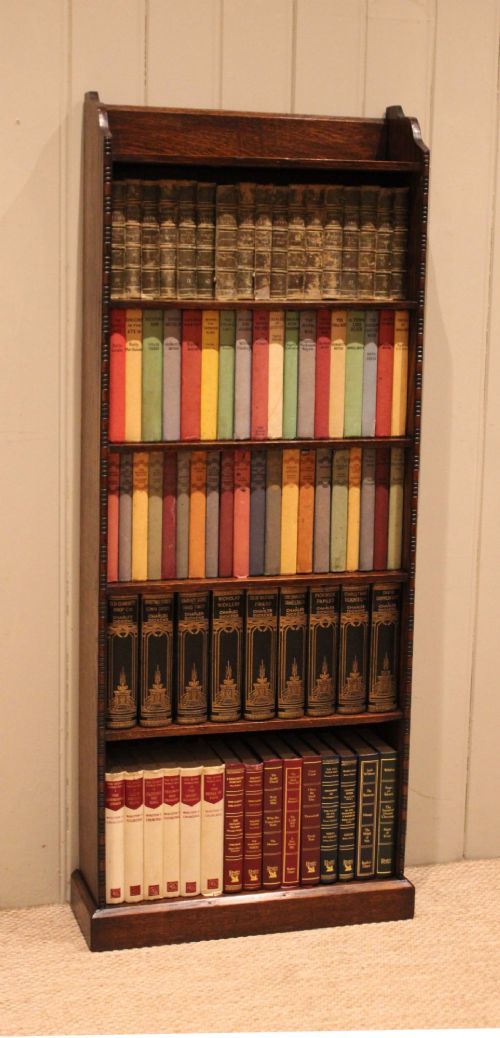
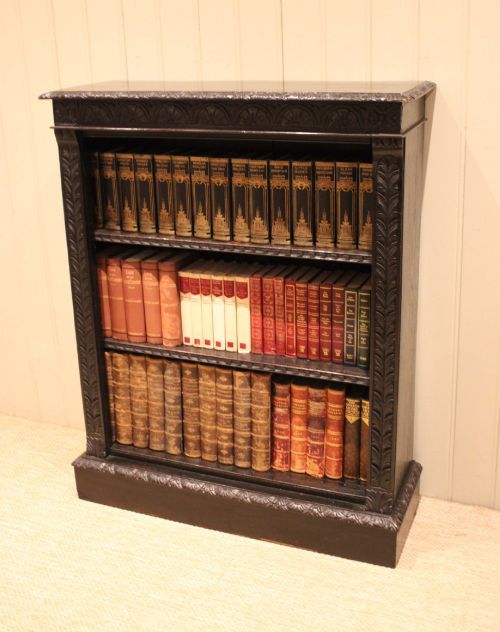
When you search for an open wood bookshelf, you encounter pieces designed to hold libraries without the barrier of glass doors. These items appear across the Victorian, Edwardian, and early twentieth-century periods, spanning styles from Arts and Crafts to Regency and Neoclassical Empire.
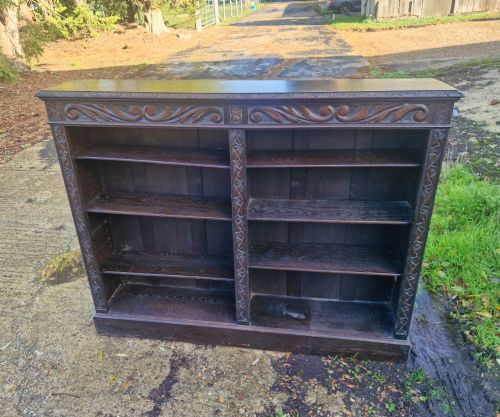
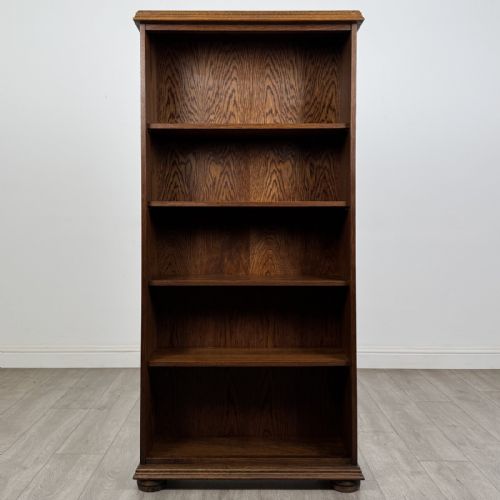
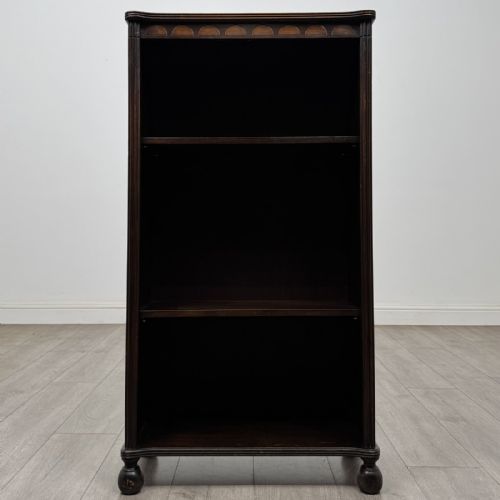
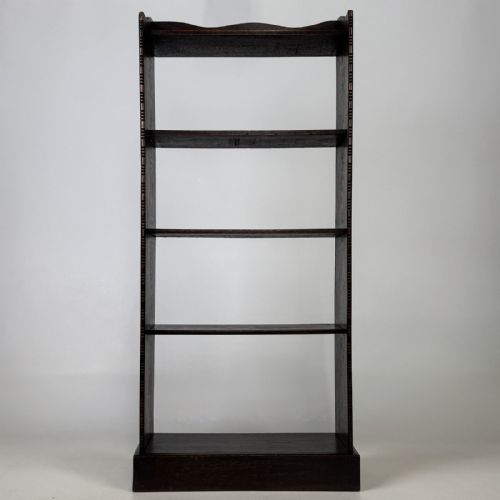
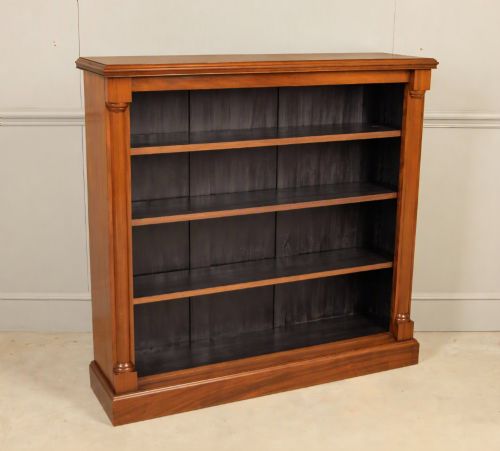
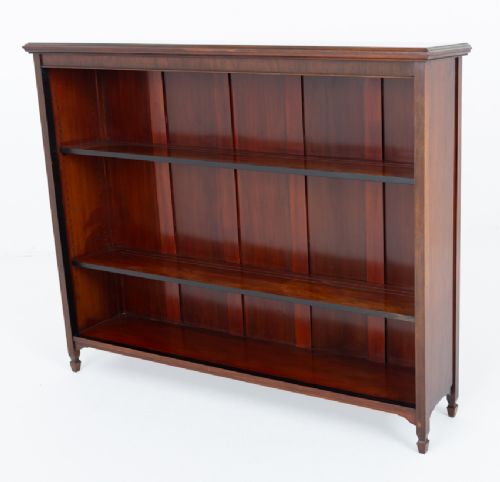
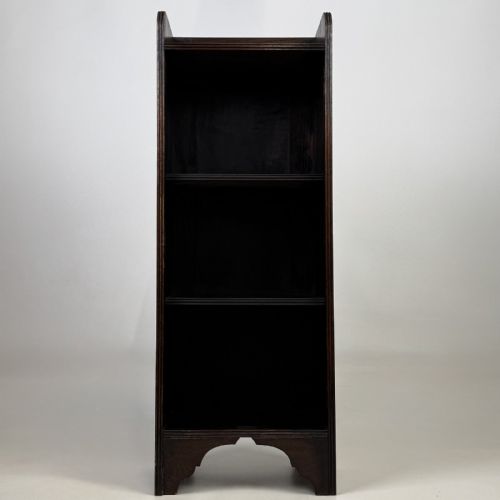
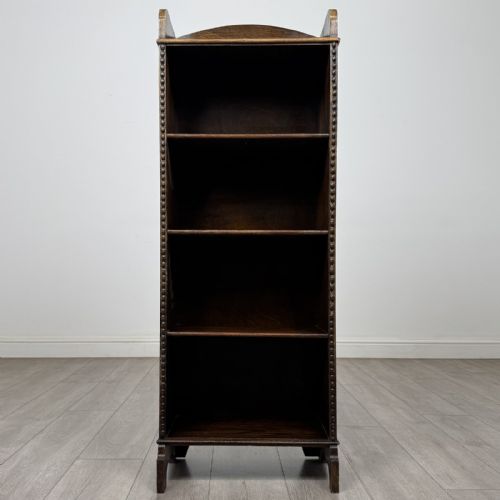
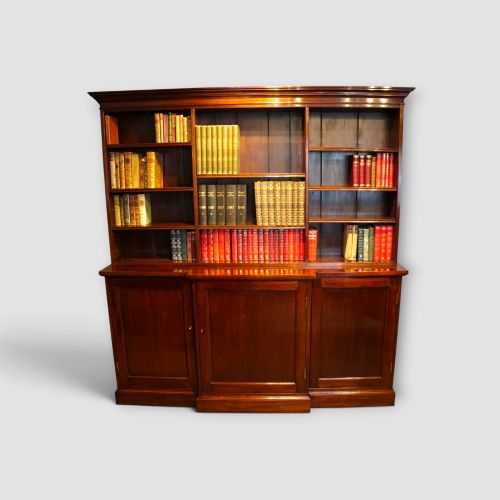
The version you are most likely to meet on this page is a mahogany or oak bookcase featuring adjustable shelves, standing on a plinth base or bracket feet. Formats range from tall slim structures and low dwarf cabinets to wall-hanging shelves and breakfront designs.
Originating from British workshops and cabinet makers, these pieces serve as practical furniture for living spaces and studies. They present straightforward vertical storage combined with period details such as dentil cornices, raised galleries, and brass castors.
Materials and Construction
Makers utilised dense hardwoods including mahogany, oak, walnut, rosewood, satinwood, and ash to build durable frames that could support heavy rows of books. Surfaces often highlight natural grain patterns, sometimes enhanced with inlaid details or ebonised finishes.
Structural joinery relies on traditional techniques to form sturdy uprights and fixed or adjustable shelving. Brass hardware, such as castors and shelf supports, provides functional mobility and mechanical adjustment.
Open Wood Bookshelf Retail Price Guide 2026
Typical asking prices for open wood bookshelf among the pieces listed under this phrase on Sellingantiques today, from the lower quarter to the upper quarter. They describe what is for sale here now, not the wider market.
One low dwarf bookcase includes a carved green man mask, watching over the library from beneath the bottom shelf.
Distinctions in Quality
The distinction between standard utility furniture and superior cabinet work rests on timber selection and timber preparation. Higher quality examples employ carefully matched veneers or solid mahogany and oak with crisp, deep carving.
Refinement shows in mechanical details such as smoothly functioning adjustable shelf mechanisms and robust structural joinery. Decorative elements like dentil cornices, raised galleries, and bracket feet indicate greater attention from the maker.
Gillows
The Open Wood Bookshelf Glossary
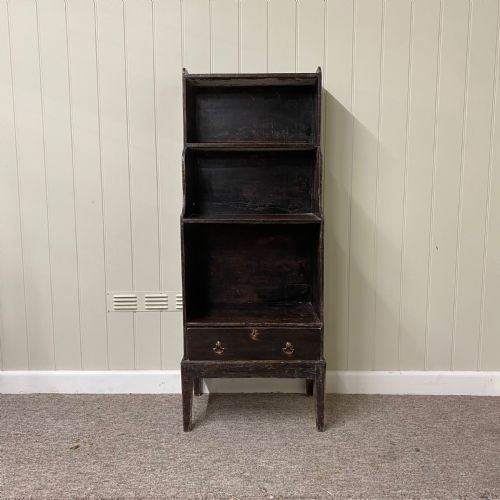
- Waterfall bookcase
- A tiered shelving unit where each lower shelf projects further than the one above, creating a stepped profile.
- Breakfront
- A piece of furniture featuring a central section that projects forward from the flanking wings.
- Dentil cornice
- An architectural moulding decorated with a series of small, rectangular tooth-like blocks.
- Raised gallery
- A low decorative railing or rim fitted to the top surface of a piece to prevent items from sliding off.
- Bracket feet
- Simple, architectural feet that meet in a corner, supporting the base of cabinet furniture.
Open Wood Bookshelf: Frequently Asked Questions
How do I adjust the shelves?
Many period bookcases feature adjustable shelves supported by brass pins or rack-and-pinion mechanisms inside the uprights. You simply lift the shelf to clear the supports and reposition them at the desired height.
Older wooden tracks may require gentle handling to avoid binding within the cabinet walls.
Are these pieces suitable for heavy books?
Solid mahogany and oak construction provides strong weight-bearing capacity for standard library collections. Adjustable wooden shelves distribute loads effectively across sturdy internal supports.
Overloading very long shelves can cause bowing over time, so spacing books evenly helps preserve the timber.
How do I distinguish Edwardian from Victorian pieces?
Victorian bookcases often display heavier carved details, darker oak finishes, and robust plinth bases. Edwardian examples tend to introduce lighter satinwood inlays, raised galleries, and bracket feet.
Proportions also shift, with Edwardian pieces frequently adopting slimmer, more restrained profiles.
Where should I place a wall-hanging shelf?
Wall-hanging shelves require secure attachment to solid wall studs or masonry to support the weight of timber and books safely. They work well above desks, sideboards, or seating areas to utilise vertical wall space.
Ensure the mounting hardware matches the substantial weight of Victorian or Edwardian hardwood construction.