
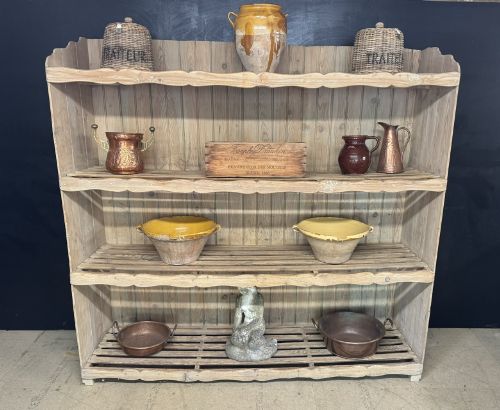

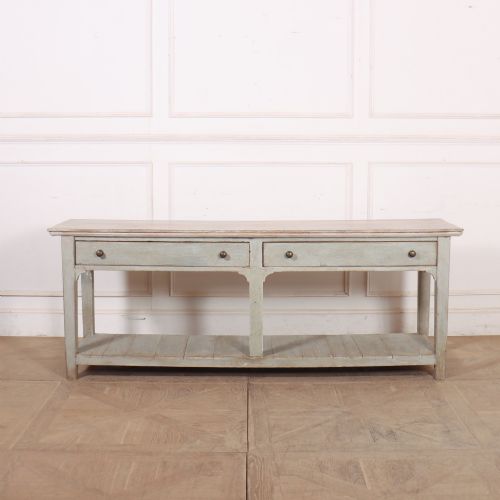


Open Pine Dresser
An open pine dresser brings honest utility and warmth to a room, offering display shelves above and storage below.
Open Pine Dresser
An open pine dresser combines kitchen storage with display, featuring open shelving above and cupboards or drawers below. When you search for an open pine dresser, you encounter pieces designed for daily domestic use in rural and provincial homes.
The pieces on this page span the eighteenth and nineteenth centuries, taking forms such as potboard bases, Welsh dressers, and farmhouse cupboards. Regional variations include examples from English counties, Scotland, Wales, Ireland, and France.
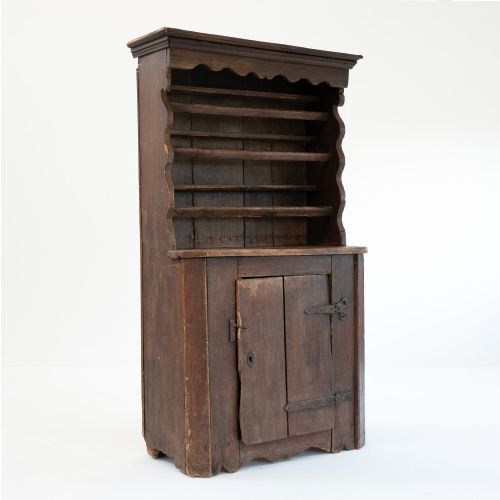
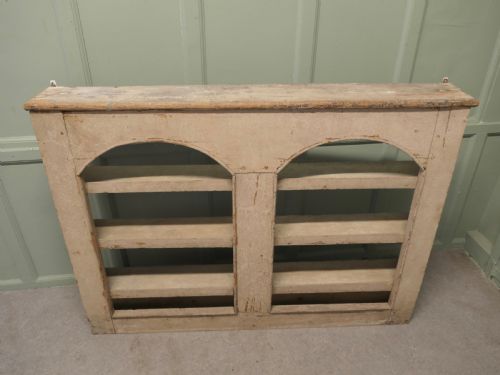
Most examples rely on softwood construction, sometimes enhanced with painted finishes, distemper, or original patinas that show decades of household service. The upper sections typically present plate racks or open shelves for tableware and kitchenalia.
How they were made
Makers constructed these pieces primarily from pine, occasionally incorporating oak for structural elements or work surfaces, alongside brass or wrought iron hardware. Surfaces often received coats of paint, distemper paint, or were left as stripped pine.
Construction techniques prioritized robust daily use, utilising pegged joints, dovetailed drawer construction, and solid board backs for the open shelving units. The application of multiple layers of paint or historical finishes created the patinas seen on surviving examples.
The site's inventory includes regional styles from England, Scotland, Wales, Ireland, and France.
What varies in quality
Quality in these pieces rests upon the integrity of the original structure and the survival of early or untouched surfaces. Pieces retaining original paint or undisturbed patinas command greater interest than those stripped or overly restored.
Proportion and regional character also define the standard, with vernacular details such as potboard bases, breakfront drawers, or distinct regional mouldings elevating a piece above standard utilitarian examples.
The Open Pine Dresser Glossary
- Potboard dresser
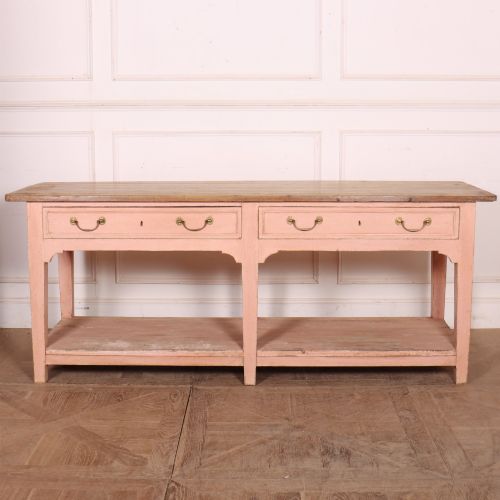
- A dresser base featuring an open lower shelf traditionally used for storing heavy pots and pans. This platform sits just above the floor, supported by sturdy stile feet.
- Welsh dresser
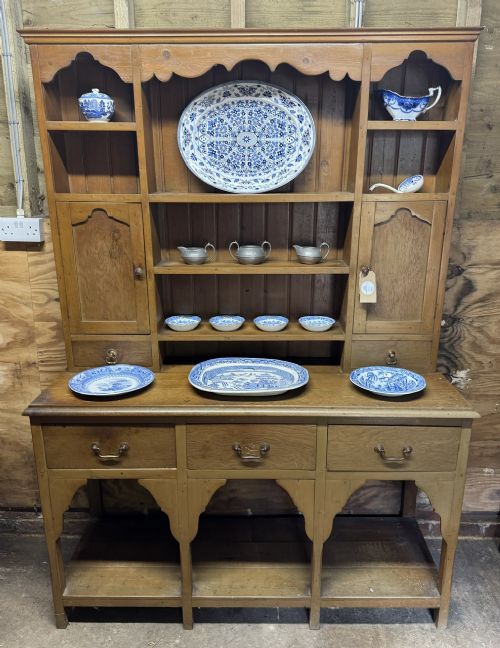
- A traditional form featuring upper open shelves integrated with a lower base of drawers and cupboards. They often display regional variations in the configuration of the rack and drawers.
- Distemper paint
- A water-based paint mixture utilising glue or size as a binder, commonly found on early country furniture. It dries to a matte finish that wears softly over time.
- Vernacular furniture
- Domestic pieces made by local craftspeople using regional traditions rather than high-style metropolitan designs. These objects reflect the practical needs and materials of their specific locale.
Open Pine Dresser: Frequently Asked Questions
How do I clean an old pine surface?
Dust regularly with a dry, soft cloth and avoid modern aerosol polishes that leave silicone residues. For stubborn marks, a slightly damp cloth with mild soap can be used, followed immediately by thorough drying.
Preserving the existing patina means avoiding harsh chemical strippers or abrasive scrubbers. Natural beeswax applied sparingly can nourish dry timber without harming historical finishes.
What is the difference between a dresser base and a full dresser?
A dresser base consists solely of the lower cabinet section, featuring drawers, cupboards, or an open potboard without upper shelving. They function well as sideboards or kitchen prep tables.
A full dresser includes both the lower storage base and an upper section fitted with open shelves or plate racks. This upper superstructure is designed specifically for displaying ceramic plates and kitchenware.
Where were regional pine dressers made?
Regional dressers emerged from rural workshops across England, Scotland, Wales, Ireland, and France. West Country, Welsh, and Irish examples often display distinct construction methods and proportions.
Local timber availability and domestic customs shaped the design of each piece. Provincial makers adapted standard forms to suit the specific storage needs of local farmhouses and cottages.
Can I use a kitchen dresser in a living room?
These pieces integrate easily into living spaces, dining rooms, or hallways to display books, collections, or decorative ceramics. The open shelving provides practical display space outside the kitchen.
Their substantial presence anchors a room, while the lower cupboards conceal clutter. Ensuring the piece is secured to the wall prevents tipping, particularly in rooms frequented by children.