

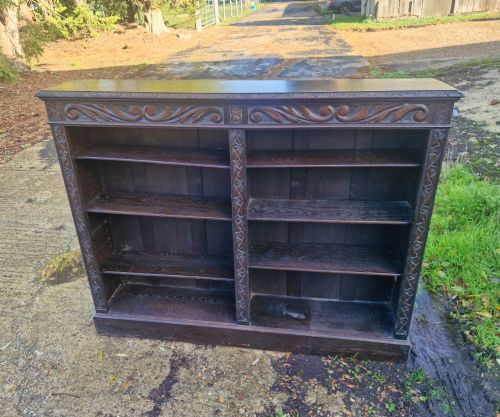
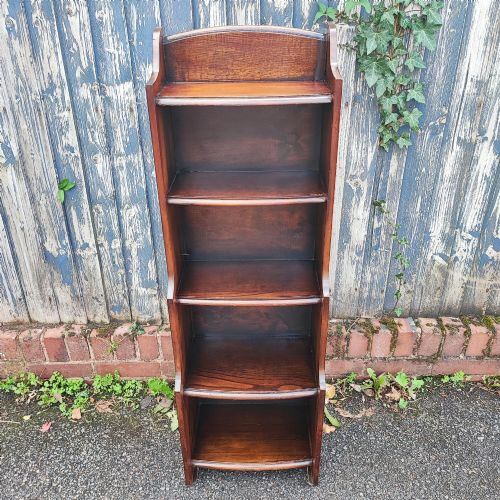
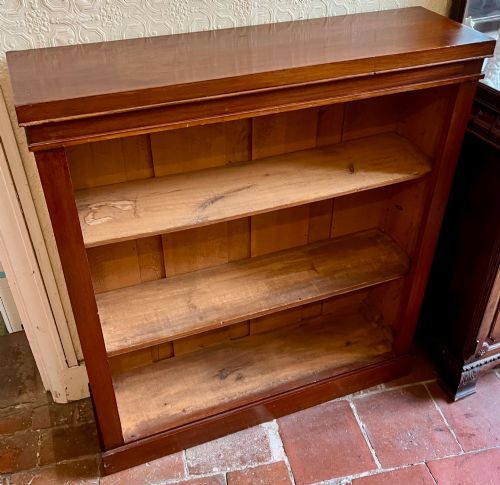
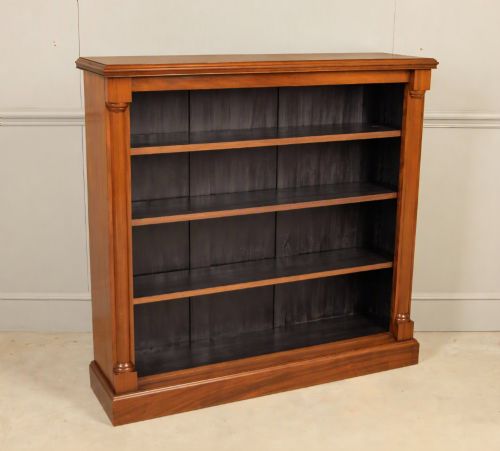
Open Front Wood Bookcase
An open front wood bookcase brings warmth and accessible storage to a room, offering immediate display space for a growing library.
Open Front Wood Bookcase
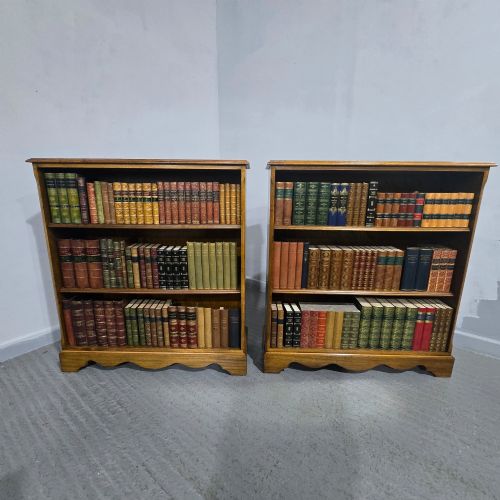
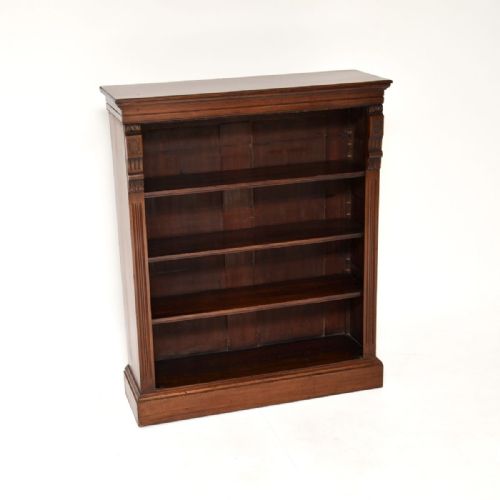
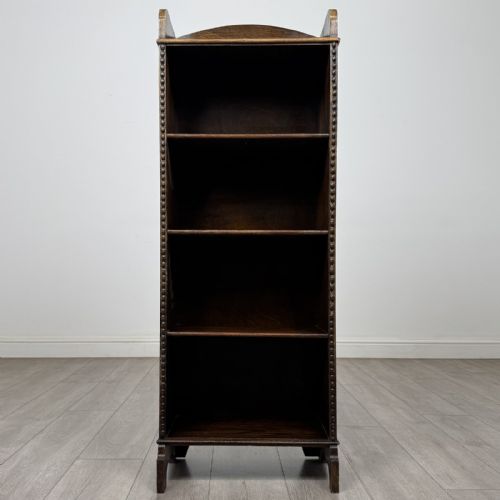
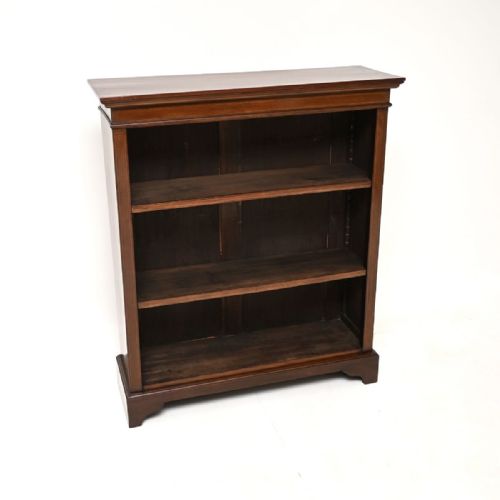
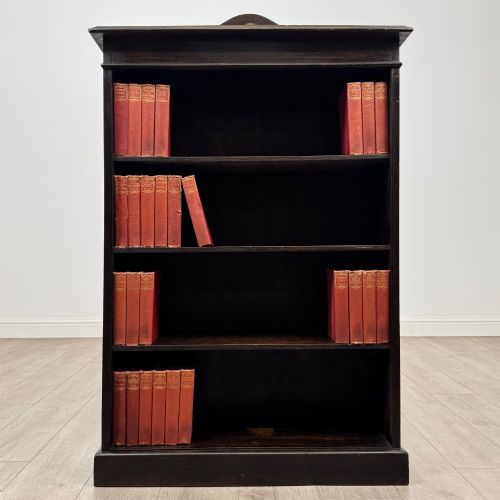
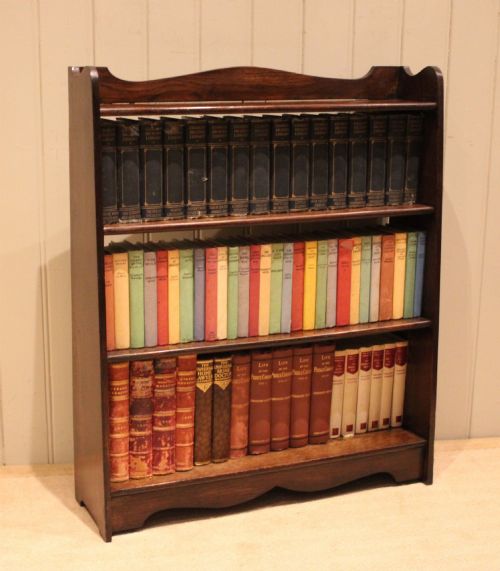
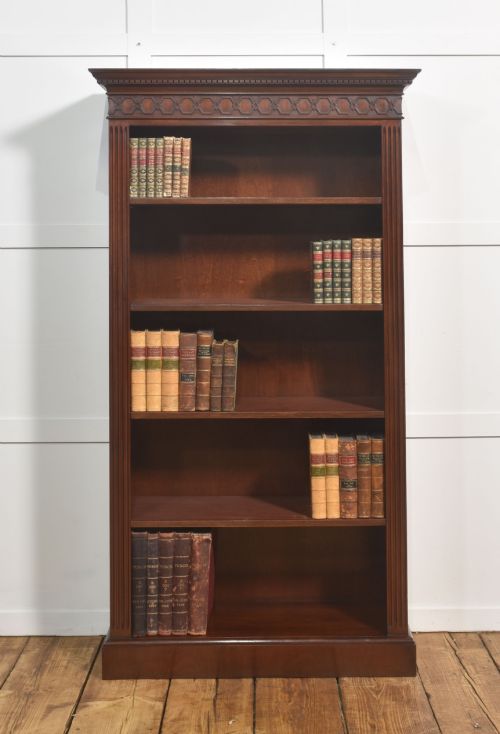
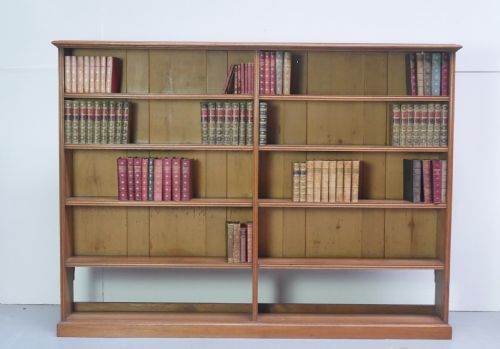
An open front wood bookcase serves as a functional and decorative addition to domestic spaces, designed specifically to hold volumes without the barrier of glass doors. You will frequently encounter Victorian and Edwardian examples on this page, alongside pieces spanning from the nineteenth century into the nineteen-thirties.
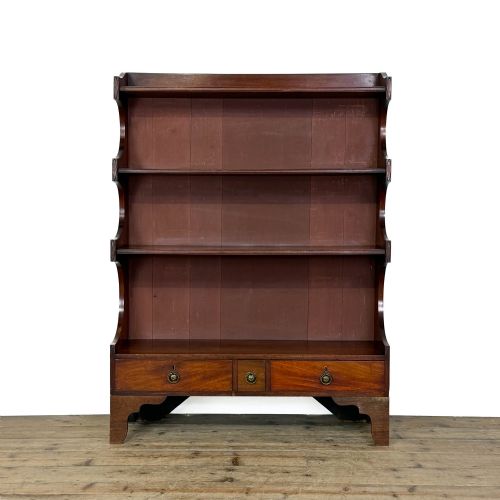
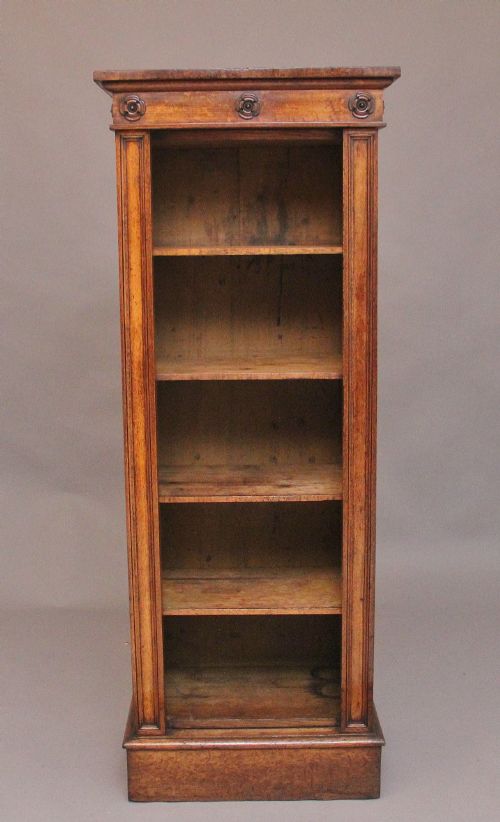
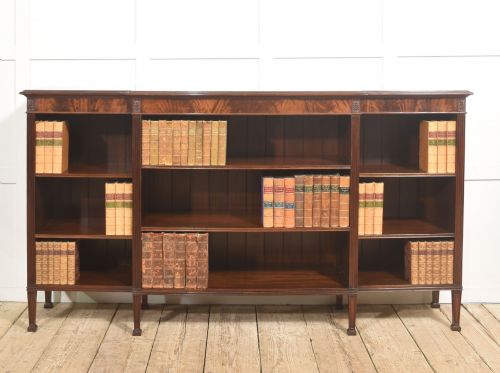
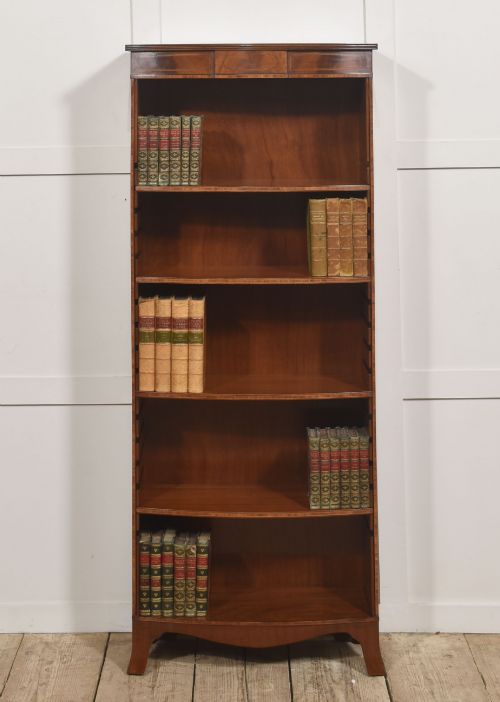
The forms range from narrow, upright shelving units to wide breakfront designs and low waterfall configurations. Many pieces feature adjustable shelves, galleries along the top surface, or inlaid details that reflect the stylistic preferences of their period.
Materials and construction
Cabinet makers utilised a variety of timbers including mahogany, oak, rosewood, walnut, pine, and satinwood to construct these bookcases. Grain selection played a major role, with flame mahogany and pollard oak chosen for their striking surface patterns.
Joinery methods involved sturdy framing to support the weight of heavy books, often supplemented by brass inlay, moulded edges, or carved decoration. Timber preparation relied on traditional seasoning and hand-finishing techniques to ensure stability.
Open Front Wood Bookcase Retail Price Guide 2026
Typical asking prices for open front wood bookcase among the pieces listed under this phrase on Sellingantiques today, from the lower quarter to the upper quarter. They describe what is for sale here now, not the wider market.
Listings feature pieces from the Victorian, Edwardian, Georgian, and Art Deco periods, constructed in mahogany, oak, rosewood, walnut, pine, and satinwood.
Factors that separate examples
The standard of an open front wood bookcase depends upon the choice of timber and the precision of the cabinet work. Superior pieces display carefully matched veneers, thoughtful proportions, and refined details such as crossbanding or delicate stringing.
Functionality also distinguishes finer examples, particularly those incorporating well-engineered adjustable shelving mechanisms rather than fixed partitions. The integration of galleries, carved mouldings, and superior brass hardware further elevates the execution.
The Open Front Wood Bookcase Glossary
- Breakfront
- A cabinet design where the central section projects forward from the flanking wings. This layout adds depth and visual structure to larger bookcases.
- Gallery
- A raised ornamental border running along the top edge of a piece of furniture. It typically prevents items placed on top from sliding off.
- Crossbanding
- A decorative border of veneer laid with the grain running perpendicular to the main surface. It creates a contrasting frame around drawer fronts or shelves.
- Pollard oak
- Timber taken from trees that were periodically pruned close to the trunk, producing a dense and highly textured knotty grain. Cabinet makers valued this wood for its distinctive appearance.
Open Front Wood Bookcase: Frequently Asked Questions
How do I choose the right size?
Measure your available wall space and consider the height of your ceiling before selecting a bookcase. Narrow and small variants suit tight corners, while large breakfront pieces require substantial wall space.
Think about the volume of your book collection and whether you need adjustable shelves to accommodate larger volumes. Height and depth dictate how the piece sits within a room layout.
Can I adjust the shelf heights?
Many of the bookcases featured here include adjustable shelving systems that let you alter the interior configuration. This proves particularly useful for storing mixed collections of books in various sizes.
Older pieces often rely on traditional wooden or metal support tracks. Inspect the shelf supports to understand how easily the tiers can be moved.
How do I care for wooden shelves?
Keep wooden furniture away from direct sunlight and strong heat sources to prevent the timber from drying out or warping. Dust the surfaces regularly with a soft cloth.
Occasional application of appropriate wax polish helps maintain the finish and nourishes the wood. Avoid using harsh chemical sprays that can damage antique polishes.
What styles are available here?
The selection encompasses Victorian, Edwardian, Georgian style, and Art Deco designs spanning multiple decades. These range from carved oak pieces to inlaid mahogany and rosewood constructions.
Details such as bowed fronts, arched galleries, and waterfall tiers appear across different periods. Each style reflects the prevailing aesthetic of its time of manufacture.