


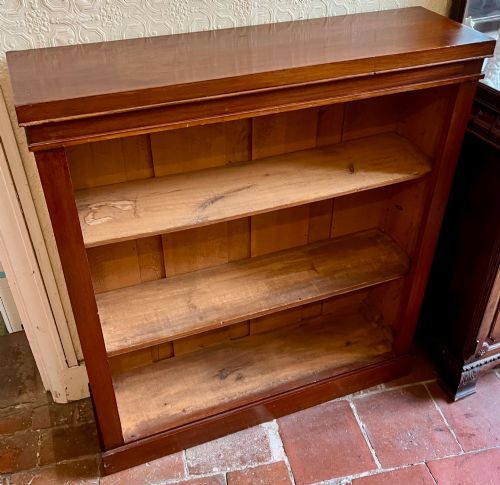
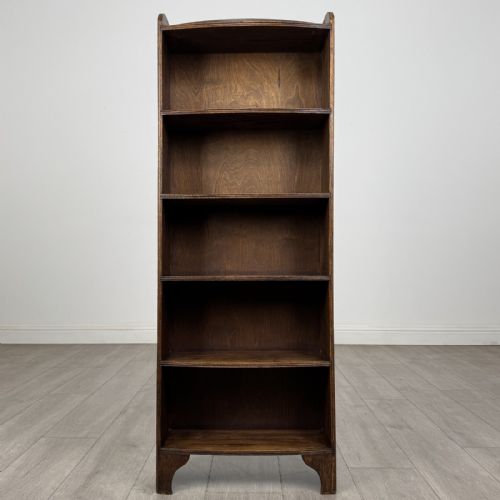
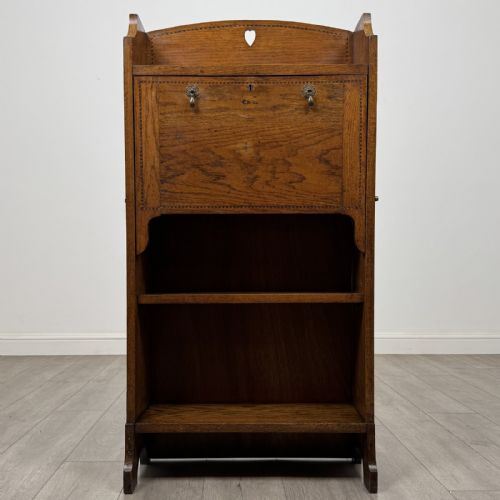
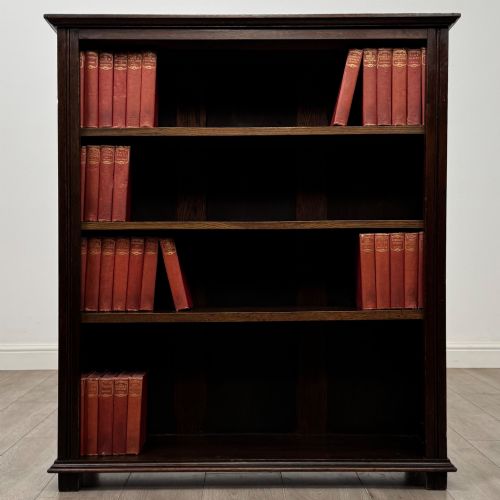
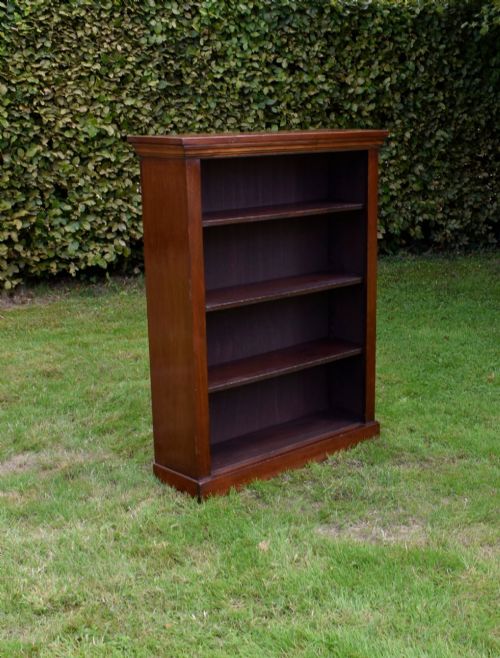
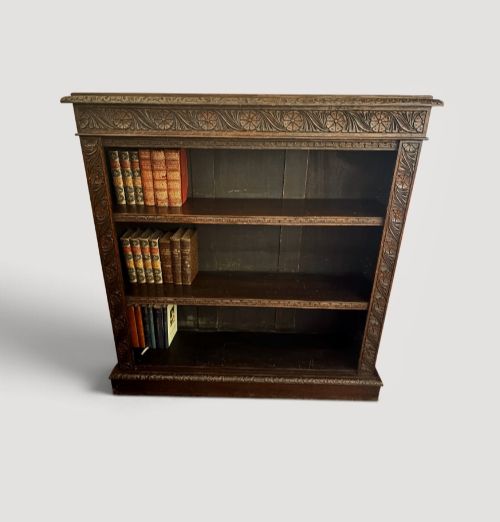
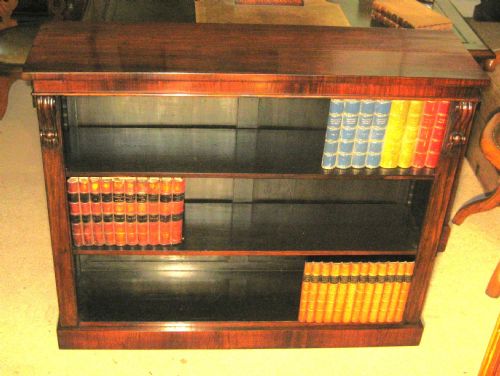
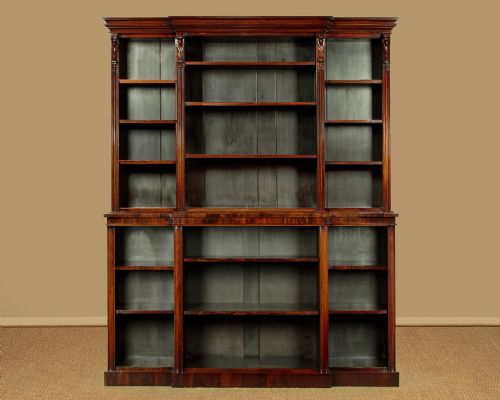


Open Front Cabinet
An open front cabinet offers accessible shelving and display space, bringing timeless timber grain and period craftsmanship directly into your home.
Open Front Cabinet
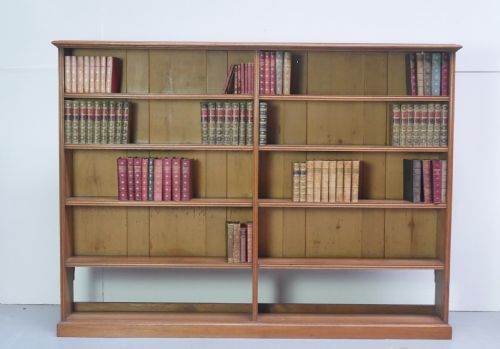
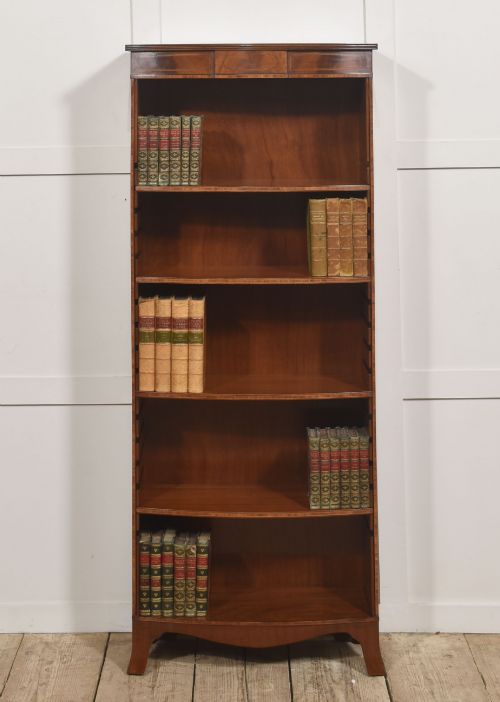
An open front cabinet functions primarily as an accessible bookcase, library shelf, or display unit for everyday volumes and decorative objects. When you search for an open front cabinet, you encounter varied forms ranging from tall library bookcases to breakfront shelves and low chiffoniers.
The pieces appearing on this page span the nineteenth century, the Victorian and Edwardian eras, through to the 1920s and 1930s. Oak and mahogany appear most frequently, accompanied by rosewood, walnut, satinwood, and pine.
Makers and designers from these periods produced pieces reflecting Georgian, Regency, Arts and Crafts, and Jacobean Revival styles. You will find standard upright shelving alongside specialised waterfall bookcases, credenzas, and glazed or open display variants.
How they were made
Cabinet makers relied predominantly on solid timbers such as oak and mahogany, often applying decorative veneers of rosewood, burr walnut, and satinwood to prominent surfaces. Structural elements were joined using traditional woodworking joints designed to support heavy volumes without sagging.
Surface ornamentation involved carved friezes, barley twist columns, inlaid brass details, beaded edges, and crossbanded borders. Adjustable shelving mechanisms and integrated drawers appeared in many utilitarian and library iterations to enhance practicality.
Open Front Cabinet Retail Price Guide 2026
Typical asking prices for open front cabinet among the pieces listed under this phrase on Sellingantiques today, from the lower quarter to the upper quarter. They describe what is for sale here now, not the wider market.
Design styles span Victorian, Edwardian, Georgian, Regency, Arts and Crafts, and Jacobean Revival aesthetics.
What varies in quality
Quality rests significantly on the selection of timber, moving from plain utilitarian pine and standard oak to highly figured walnut, rosewood, and richly grained mahogany. The presence of sophisticated decorative elements, such as brass inlay, satinwood crossbanding, and hand-carved friezes, elevates a piece above standard workshop production.
Proportion and scale dictate the distinction between simple country house storage and refined urban cabinet work. Superior examples display careful attention to architectural symmetry, robust structural integrity, and well-executed adjustable shelving systems.
The Open Front Cabinet Glossary
- Breakfront
- A cabinet design where the central section projects forward from the flanking wings. This architectural arrangement adds depth and visual interest to larger library bookcases.
- Chiffonier
- A low sideboard or cabinet equipped with shelves or drawers. In nineteenth-century examples, these often feature open shelving above a closed base.
- Waterfall bookcase
- A set of open shelves that progressively deepens from top to bottom. The stepped profile resembles the cascading tiers of a waterfall.
- Crossbanding
- A decorative border of veneer laid with the grain running perpendicular to the surrounding wood. This technique frames the primary surface of panels and shelves.
- Frieze
- The wide horizontal section situated beneath the top cornice of a cabinet. It frequently showcases carved motifs, inlay, or plain polished timber.
Open Front Cabinet: Frequently Asked Questions
What is an open front cabinet?
An open front cabinet is a piece of case furniture designed with exposed shelving rather than doors. It provides immediate visibility and accessibility for books and display objects.
Historically utilised in libraries, drawing rooms, and studies, these units evolved in various heights and proportions across the nineteenth and early twentieth centuries.
How do I style an open bookcase?
Balance your arrangement by combining vertical rows of books with horizontal stacks and decorative objects. Leave some shelf space empty to prevent a cluttered appearance.
Consider the timber tone of the cabinet when pairing it with existing room decor to ensure the wood grain complements your interior palette.
Are shelves usually adjustable?
Many period open bookcases feature adjustable shelving supported by wooden ratchets, metal pegs, or vertical slots. This adaptability accommodates volumes of varying heights.
Fixed shelves remain common in smaller or simpler utilitarian models, so check the specific description if you require flexible shelf positioning.
How do I identify the wood?
Examine the grain pattern, colouration, and weight of the timber. Oak displays distinct medullary rays, whilst mahogany ranges from deep reddish-brown to a lighter golden hue.
Exotic woods like rosewood and walnut often feature striking dark figuring and complex grain swirls that distinguish them from standard fruitwoods or pine.