



Open Front Book Shelves
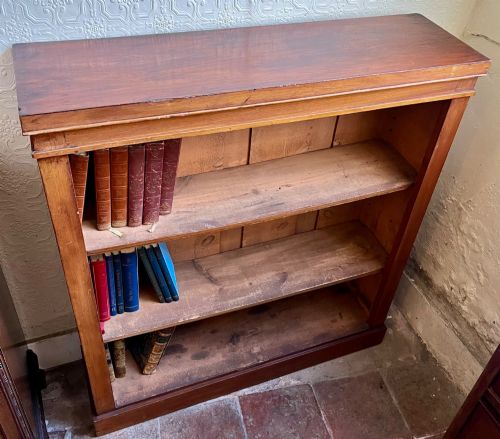
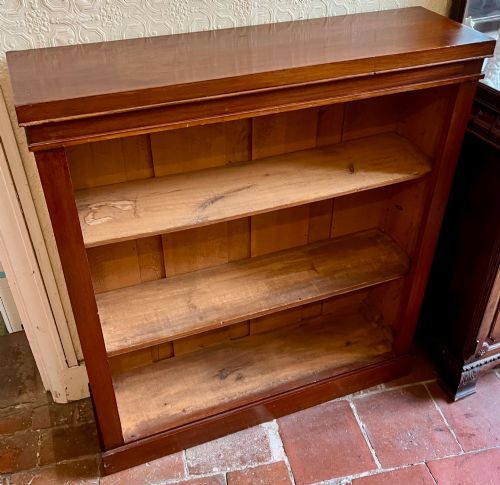
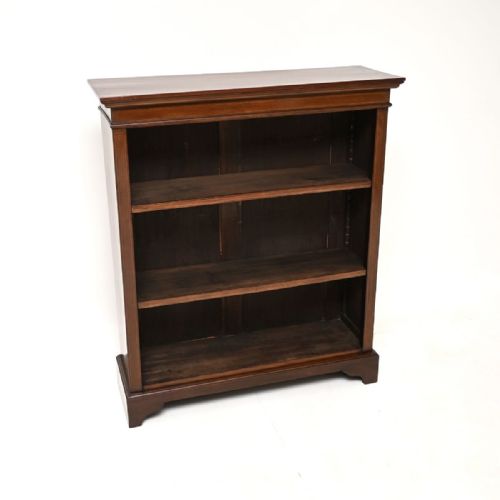
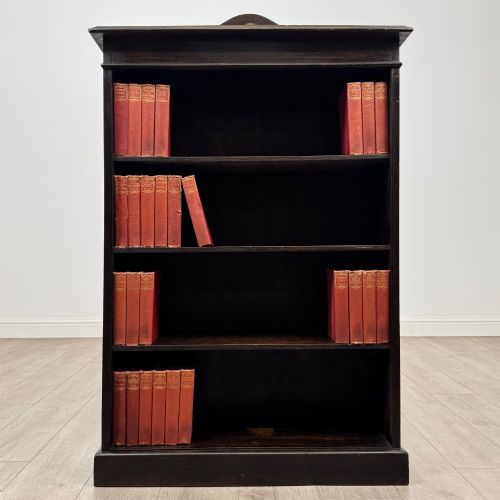
Open front book shelves offer direct access to volumes, appearing across Victorian, Edwardian, and twentieth-century designs in mahogany, oak, and walnut.
Open Front Book Shelves
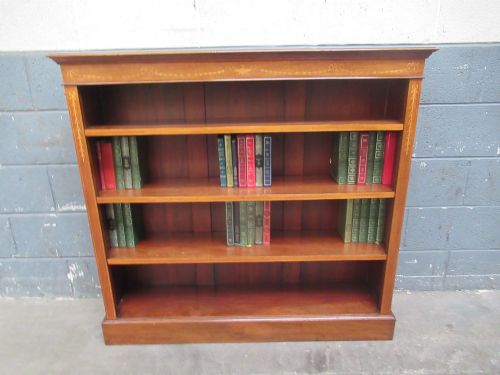
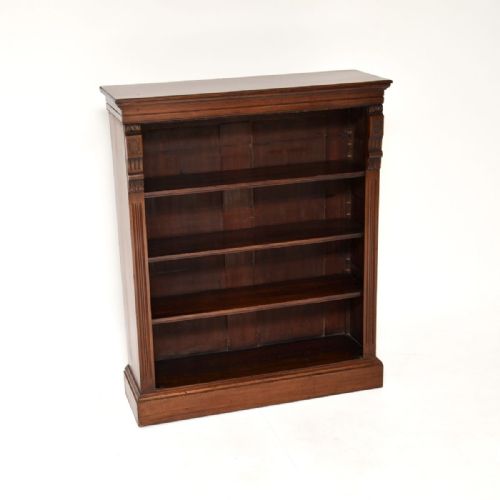
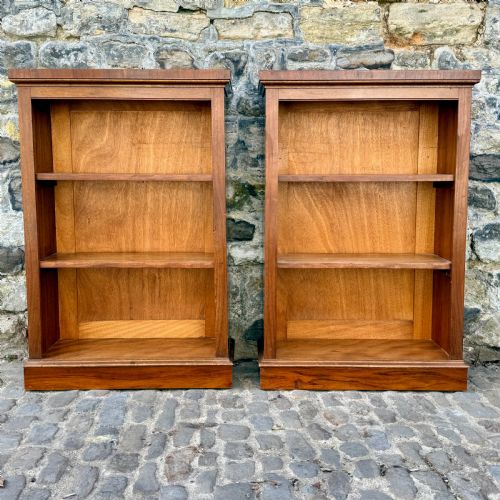
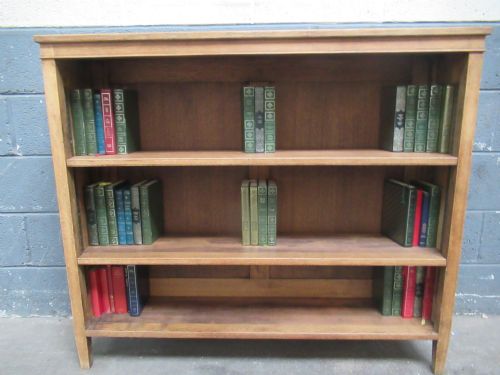
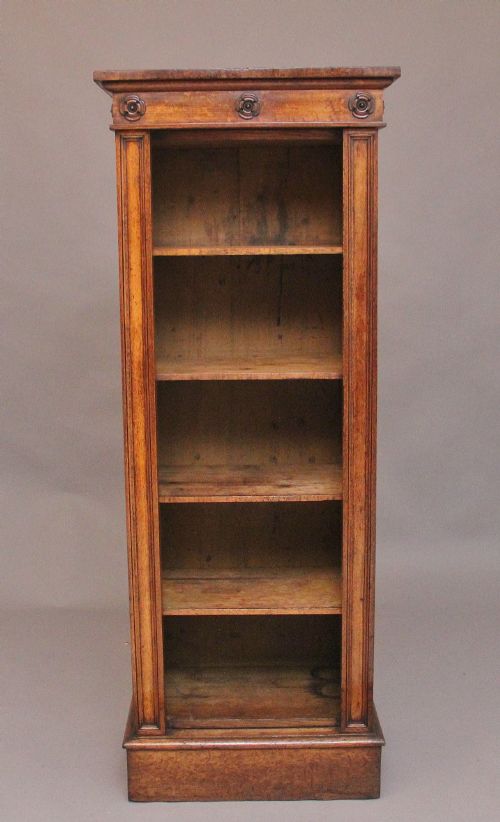
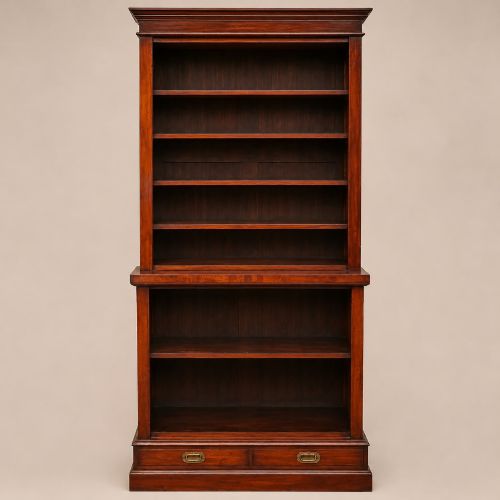
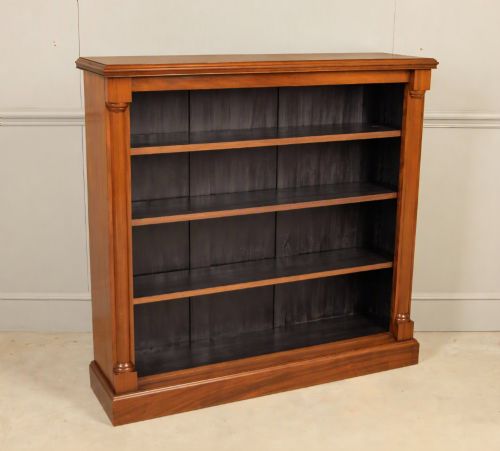
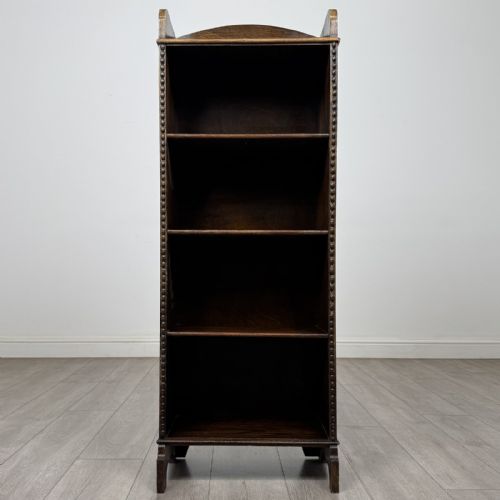
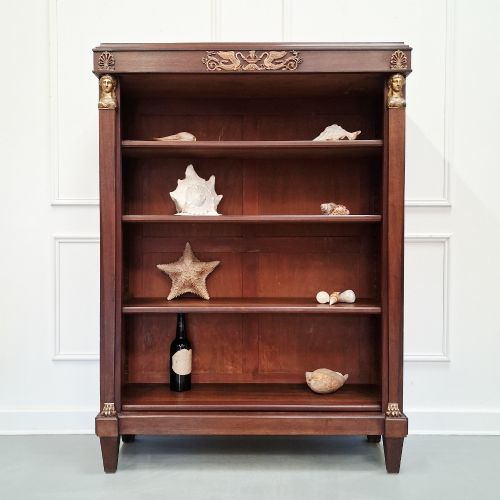
Open front book shelves provide immediate visibility for collections, taking forms from narrow freestanding units to broad library bookcases and low slope-shelf troughs. Buyers seeking this phrase encounter sturdy utilitarian oak pieces alongside formal mahogany and rosewood examples finished with inlay, carved galleries, and arched details.
The selection ranges from compact early twentieth-century oak units with adjustable shelves to grand nineteenth-century breakfront designs. Smaller Edwardian and Victorian variants frequently feature shaped sides or raised galleries, while specialised items like Arts and Crafts slope-shelf book troughs serve fireside reading needs.
Materials and Construction
Makers utilised a diverse palette of dense hardwoods, primarily selecting solid oak, figured mahogany, and walnut for structural integrity. Selected pieces incorporate decorative accents of satinwood, rosewood, and brass hardware to enhance the polished timber surfaces.
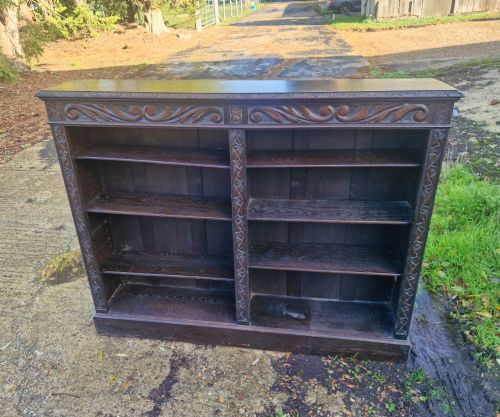
Construction techniques balanced daily utility with decorative ambition, employing adjustable shelving mechanisms, beaded edges, and inlaid marquetry. Carved galleries, moulded fronts, and shaped sides appeared across Victorian and Edwardian workshops to elevate standard domestic storage.
Open Front Book Shelves Retail Price Guide 2026
Typical asking prices for open front book shelves among the pieces listed under this phrase on Sellingantiques today, from the lower quarter to the upper quarter. They describe what is for sale here now, not the wider market.
Early readers kept their favourite volumes warm by the fire in slanted wooden troughs.
Factors of Quality
Quality rests on the selection of timber grain, such as figured walnut or richly toned mahogany, paired with refined decorative elements like inlaid borders and carved mouldings. Superior examples demonstrate careful proportion between the depth of the shelves and the height of the superstructure.
The sophistication of internal mechanics, including smoothly adjustable shelf supports and integrated drawers, separates utilitarian storage from finer library furniture. Presence of specialised regional styles, such as French Empire revival work or Arts and Crafts movement detailing, elevates the distinction of individual pieces.
The Open Front Book Shelves Glossary
- Breakfront
- A piece of furniture where the central section projects forward from the flanking wings. This architectural layout appears on larger nineteenth and twentieth-century bookcases.
- Gallery
- A raised decorative border or railing running along the top edge of a piece. It prevents items from sliding off the surface.
- Slope-shelf
- An angled display tier designed for resting volumes or periodicals for easy reading. This formation is typical of Arts and Crafts fireside troughs.
- Adjustable shelves
- Shelving resting on movable supports that allow the vertical spacing to be altered. This adaptation accommodates books of varying heights.
Open Front Book Shelves: Frequently Asked Questions
What periods do these bookcases span?
The pieces range from nineteenth-century Victorian and Georgian styles through Edwardian designs up to the nineteen-thirties. Arts and Crafts and Art Deco influences also appear.
Craftsmen built them across these decades using traditional hardwoods and evolving decorative motifs.
Are the shelves adjustable for different books?
Many examples include adjustable shelves to accommodate varying volumes. Library bookcases and utilitarian oak units often utilised this adaptable system.
Fixed shelving also occurs, particularly in smaller narrow units and specialised slope-shelf troughs.
What woods were commonly used?
Makers relied heavily on oak, mahogany, and walnut as primary construction materials. Finer details incorporated rosewood, satinwood, and pine.
Brass hardware frequently completed the construction on period items.
How do I identify an Edwardian piece?
Edwardian items frequently display inlaid mahogany or raised galleries on oak structures. They often feature lighter proportions than their heavy Victorian predecessors.
Shaped sides and refined proportions characterise the domestic output of that era.