
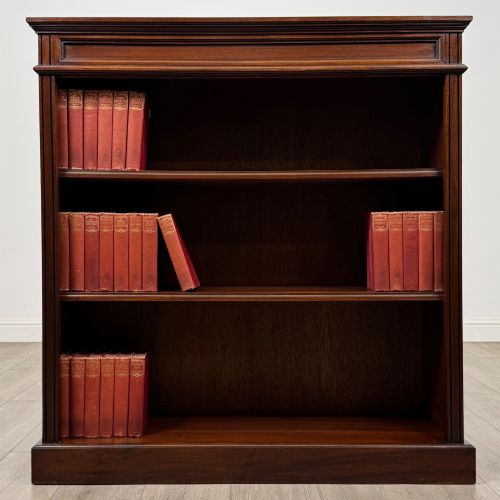
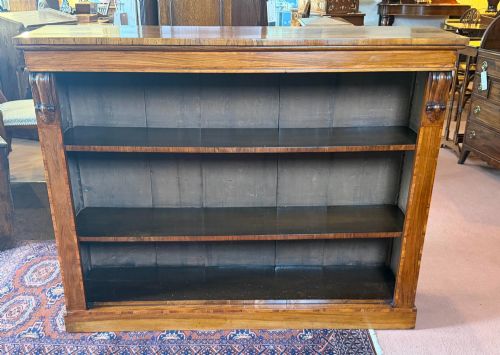
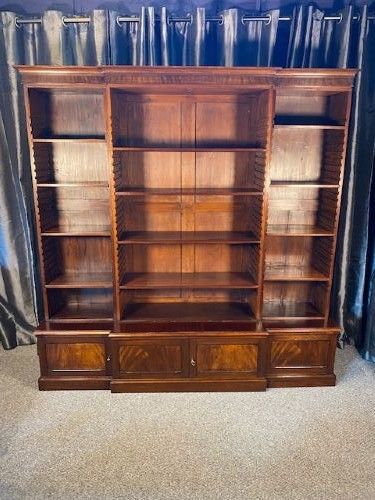
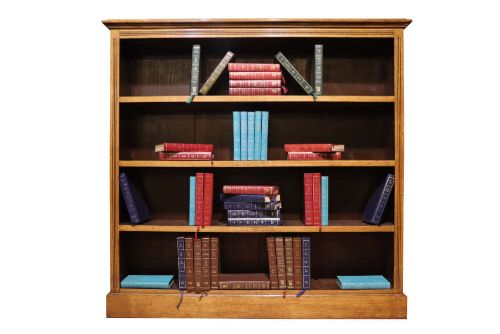


Open Face Book Display
An open face book display offers immediate access to a personal library, bringing practical shelving and period character together in timber.
Open Face Book Display
When you search for an open face book display, you encounter functional library furniture designed to keep volumes visible and within reach. These pieces range from compact Edwardian examples to larger Victorian and early twentieth-century library bookcases.
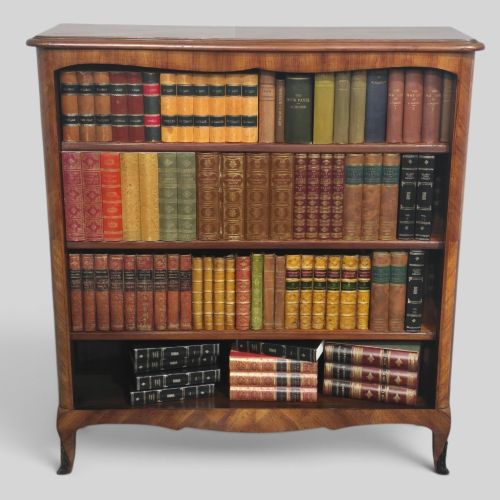
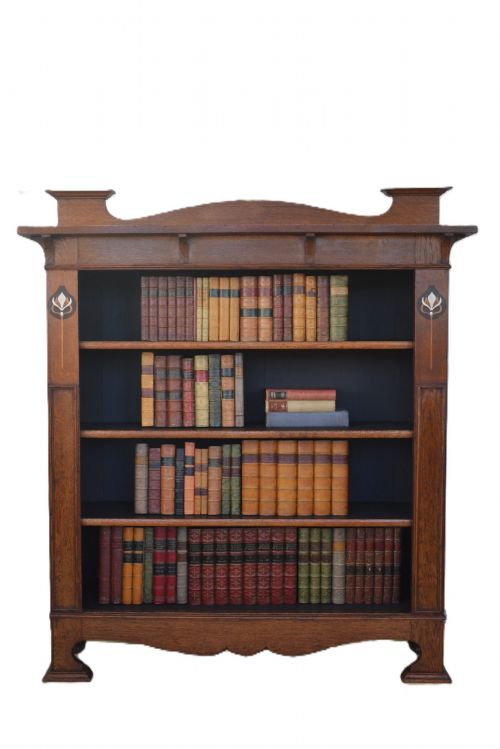
The versions you are most likely to meet on this page are constructed from oak and mahogany, often featuring adjustable shelves for practical storage. Styles span from plain traditional forms to Arts and Crafts designs and French Louis XV influences.
How they were made
Cabinet makers utilised solid timbers like oak and mahogany, alongside walnut and rosewood veneers, to build these open structures. Timber selection determined both the weight and the visual grain pattern of each piece.
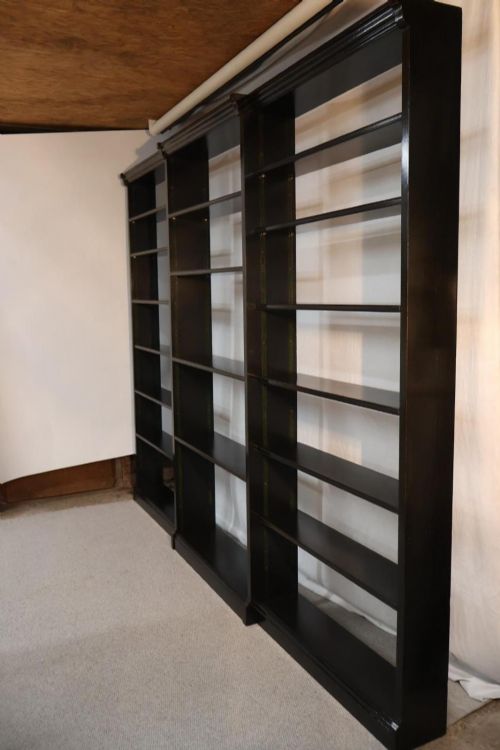
Construction techniques focussed on adjustable shelving systems and occasionally incorporated carved details, ebonised finishes, or delicate inlay work. The open fronts required sturdy vertical uprights and stable plinths to support heavy rows of books.
Current listings feature pieces spanning the Victorian period through to the nineteen-thirties, constructed in oak, mahogany, and walnut.
What varies in quality
Quality rests upon the selection of timber, distinguishing simple utility pieces from finer examples utilising flame mahogany veneer or rich walnut. Cabinet making standards appear in the crispness of mouldings and the smoothness of adjustable shelf mechanisms.
Design ambition separates basic workshop output from superior items featuring carved ornamentation, ebonised surfaces, or balanced breakfront proportions. The integrity of the structure and the condition of the polished finish dictate the overall standard.
The Open Face Book Display Glossary
- Adjustable shelves
- Movable internal boards resting on pins or ratchets that allow the shelf height to alter. This practical feature appears frequently in library bookcases.
- Breakfront
- A cabinet design where the central section projects forward from the flanking wings. This architectural arrangement adds depth and shadow to large library pieces.
- Ebonised
- Timber treated with a dark chemical stain or paint to imitate ebony. This finish was popular for creating a sharp, formal appearance.
- Flame mahogany veneer
- A thin slice of wood cut from the fork of a mahogany tree to produce a flickering, fiery grain pattern. It signals a more decorative approach to cabinet making.
- Inlay
- Contrasting woods or other materials inserted into depressions within the primary timber surface to form decorative patterns. It enhances the visual interest of the front frame.
Open Face Book Display: Frequently Asked Questions
What is an open face book display?
An open face book display is a piece of furniture designed without doors, allowing direct access to the books stored inside. These items serve as functional storage and display units for home libraries.
They appear in various timbers such as oak, mahogany, and walnut, reflecting the domestic styles of the nineteenth and early twentieth centuries.
How do I date an open bookcase?
Dating involves examining the timber species, construction methods, and stylistic details present in the piece. Edwardian examples often feature lighter oak, while Victorian pieces lean towards heavier mahogany or walnut.
Hardware types and the presence of hand-cut joints or machine milling also provide clues to the period of manufacture.
Are the shelves usually adjustable?
Many period open bookcases include adjustable shelving to accommodate books of varying heights. These systems typically use wooden supports, metal pins, or rack strips set into the interior sides.
This adaptability made them practical for growing and changing private collections during the Victorian and Edwardian eras.
Where were these bookcases used?
These bookcases were primarily housed in studies, libraries, and drawing rooms of large townhouses and country homes. Their open fronts were intended for everyday working collections rather than archival storage.
Today, they function similarly in domestic settings, offering visible storage for books and decorative objects.
How do I maintain wood finishes?
Maintenance requires keeping the timber away from direct sunlight and extreme temperature fluctuations to prevent veneer lifting and wood splitting. Regular dusting with a soft, dry cloth preserves the polished surface.
Occasional application of appropriate wax polish helps nourish the historic wood without building up heavy residues.