


Opal Gemstone Necklace
An opal gemstone necklace catches the light with shifting fires, offering a distinct play of colour that draws the eye across the room.
Opal Gemstone Necklace
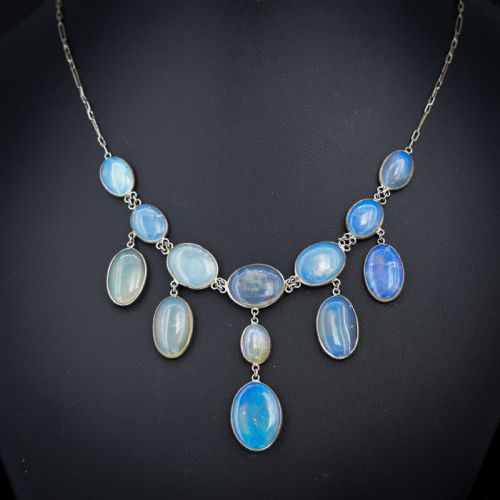
An opal gemstone necklace brings together cut stones of varying play and precious metal settings to form a wearable adornment for the neck. When searching for an opal gemstone necklace, buyers encounter pieces configured as simple solitaires, fringes, clusters, and convertible pendant brooches.
The selections span distinct periods, including Victorian, Edwardian, and Art Deco eras, alongside mid-century and vintage twentieth-century designs. Gold variants appear in nine carat, fifteen carat, and eighteen carat weights, alongside silver mountings.
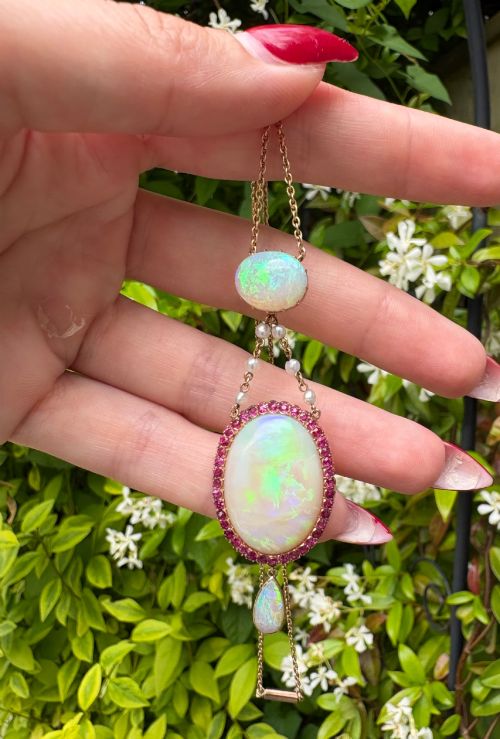
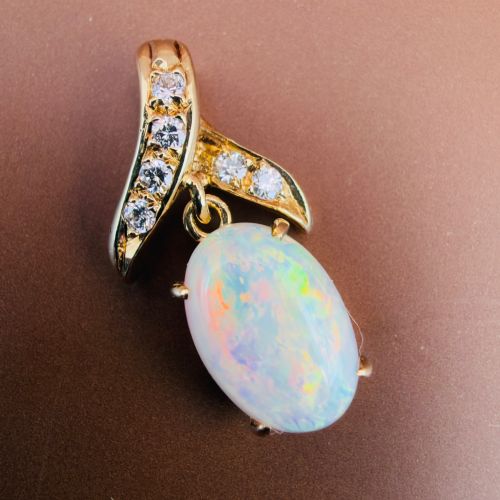
Pendants and necklaces utilise stones such as black opal, fire opal, milk opal, and solid natural opal. Accompanying gems frequently include diamonds, rubies, seed pearls, and cultured pearls.
How they were made
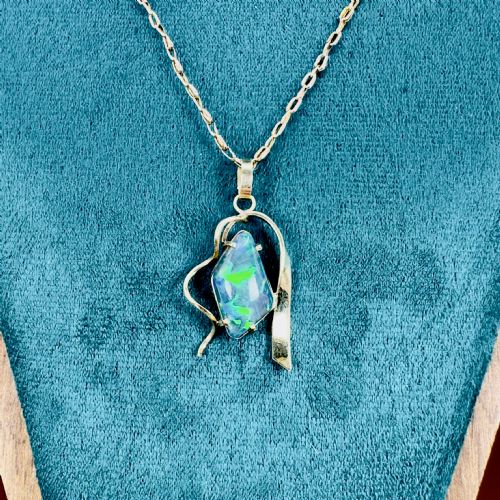
Goldsmiths set opals into gold and silver mountings using claw settings, bezels, and detailed filigree work. Stones are cut into cabochons, oval shapes, and unusual configurations to highlight their natural optical properties.
Combinations of yellow gold, white gold, and silver provide structural support for delicate festoon drops, fringe arrangements, and cluster formations. Additional gems like diamonds and rubies are flush or claw set to accent the central opal.
The documented periods span the Victorian era, Edwardian period, Art Deco years, and mid-century twentieth century.
What varies in quality
The quality of an opal gemstone necklace depends upon the optical vibrancy and play of colour within the stone itself. Superior specimens display a vivid spectrum of internal flashes across the entire face of the cabochon or cut surface.
Metalwork execution influences the overall standard, distinguishing between simple production pieces and intricate hand-finished filigree or cluster designs. The integration of supporting diamonds, rubies, or pearls also elevates the substance and visual balance of the mounting.
The Opal Gemstone Necklace Glossary
- Cabochon
- A gemstone shaped and polished with a smooth, convex top rather than faceted edges. This style is standard for displaying the shifting play of colour in opals.
- Fringe festoon
- A necklace style featuring drops or pendants suspended at intervals along a central chain or garland. Edwardian makers utilised this layout for delicate pearl and opal arrangements.
- Doublet
- A composite stone made of a thin slice of genuine opal glued to a darker backing material to enhance colour depth. These offer the visual impact of solid opals with altered construction.
- Seed pearl
- A very small, naturally formed or cultured pearl used in clusters or fringes. Victorian and Edwardian jewellers favoured them for delicate border work.
- Solid natural opal
- An untreated stone cut entirely from natural opal rough without backing or fortification. These pieces represent unenhanced geological formations.
Opal Gemstone Necklace: Frequently Asked Questions
How do I care for my opal necklace?
Opals contain water within their structure and benefit from gentle handling away from harsh chemicals or sudden temperature changes. Store them separately in soft pouches to avoid surface scratches from harder gems.
Clean the metal and stone gently with a damp cloth rather than ultrasonic jewellery baths or chemical dips. Allowing the piece to rest when not in use helps preserve its integrity.
Are all opals solid stones?
Not all opals are solid stones, as some examples utilise doublets formed from a thin opal layer bonded to a darker backing. This construction technique deepens the perceived play of colour while utilising thinner material.
Examining the side profile under magnification reveals the dividing line between the opal face and the underlying support structure.
How do I identify a Victorian opal piece?
Victorian opal pieces often incorporate fifteen carat or eighteen carat yellow gold mountings alongside rubies, diamonds, and seed pearls. The craftsmanship frequently includes convertible mechanisms that allow pendants to function also as brooches.
Heavier prongs and hand-forged details distinguish nineteenth-century work from later twentieth-century mass-produced settings.