


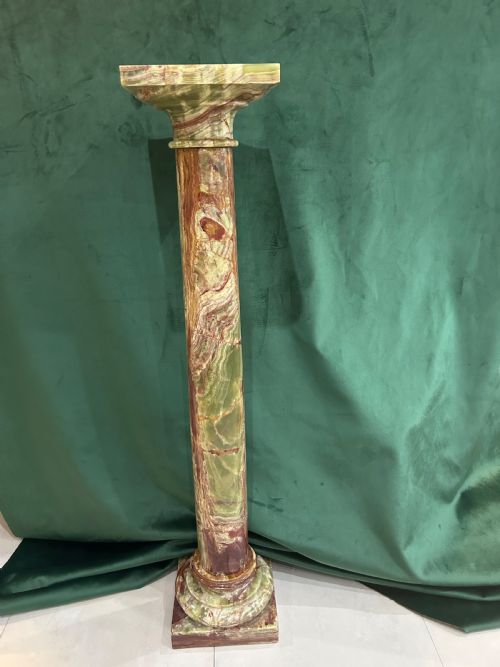


Onyx Marble Pedestal
These onyx marble pedestal columns bring height and classical presence to a room, lifting decorative objects into focus.
Onyx Marble Pedestal
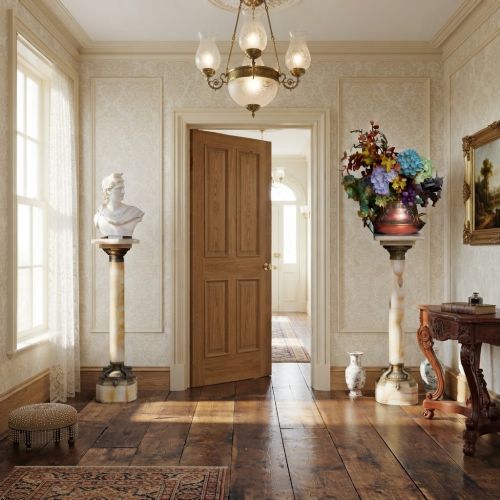
An onyx marble pedestal serves to elevate figures, urns or plants, bringing substantial weight and classical poise into domestic interiors. When searching for an onyx marble pedestal, you encounter tall display columns and smaller support stands designed to draw the eye upwards.
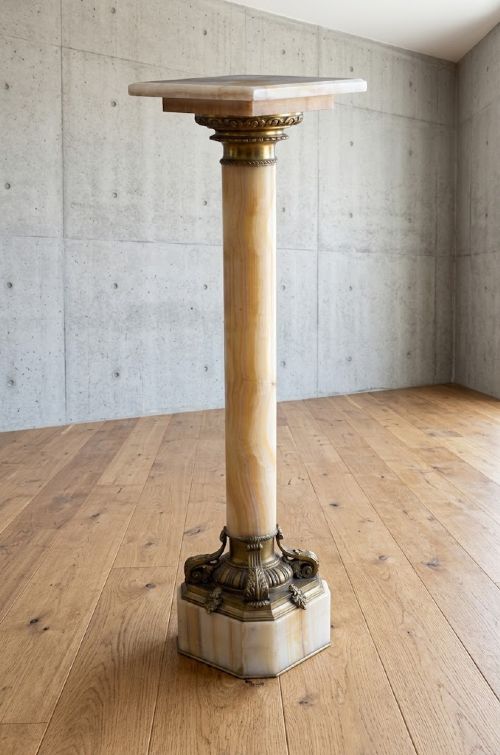
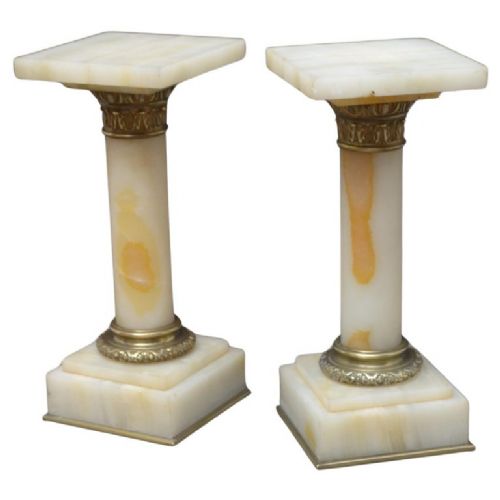
The selections here span the nineteenth century through the early twentieth century, taking forms such as freestanding torchere columns, low support tables and tiered plant stands. Neoclassical and Louis XVI revival designs dominate the groupings, reflecting a sustained nineteenth-century fascination with antiquity.
How they were made
Makers constructed these supports using solid stones like variegated onyx and black marble, often turning the shafts on lathes to achieve smooth, cylindrical profiles. Artisans then integrated cast ormolu, gilt bronze and brass mounts around the collars and bases to provide structural contrast and decorative enrichment.
Carved alabaster and walnut support structures also appear alongside the primary stone elements, joined with metal fittings. Surface enrichment relies on chased brass details, flower mouldings and galleried edges rather than applied paint.
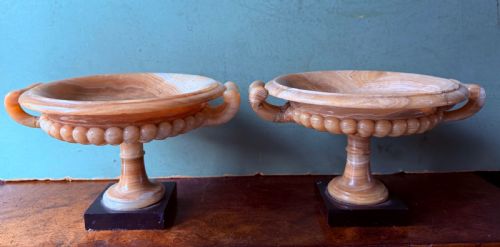
Grand Tour souvenir hunters carted heavy alabaster tazze all the way across Europe, trusting fragile stone to nineteenth-century baggage handlers.
What varies in quality
Quality rests upon the depth of figuring within the stone and the crispness of the metal mounts. Heavily figured onyx and smoothly turned marble columns display greater material ambition than simpler utility stands.
Finishing work on the bronze, ormolu and brass collars separates standard production pieces from finer examples. Sharp chasing and substantial weight in the metal elements indicate superior workshop output.
Ferdinand Preiss
The Onyx Marble Pedestal Glossary
- Onyx
- A translucent banded stone utilised for decorative columns and table tops. Its natural layers provide distinctive patterning across each turned shaft.
- Ormolu
- Gilded bronze mounts applied to furniture and pedestals. This technique adds metallic warmth and classical ornamentation to stone surfaces.
- Torchere
- A tall stand designed to support a light fixture, urn or sculptural vase. These vertical columns lift display items above eye level.
- Grand Tour
- Souvenirs and decorative objects acquired by travellers visiting European cultural sites during the nineteenth century. These items often emulate ancient classical forms.
- Neoclassical
- A style drawing inspiration from the art and architecture of classical antiquity. It emphasises symmetry, columns and restrained ornamentation.
Onyx Marble Pedestal: Frequently Asked Questions
How were onyx pedestals used historically?
These columns functioned primarily as display furniture for classical bronzes, marble busts, urns and large plants. Placing objects on pedestals elevated them for better visibility and protected them from floor-level activity.
In nineteenth-century drawing rooms, pairs of torcheres framed doorways, fireplaces or architectural recesses to create balanced focal points.
How do I identify a nineteenth-century pedestal?
Examine the construction methods, stone turning quality and metal alloy mounts. Nineteenth-century pieces frequently employ hand-chased ormolu or heavy brass collars secured with traditional fixings rather than modern welds.
Stylistic cues such as neoclassical fluting, Grand Tour associations and French revival proportions also point to nineteenth-century manufacture.
How do I care for onyx and marble furniture?
Dust stone surfaces regularly with a soft, dry cloth to prevent abrasion. Avoid acidic cleaning solutions, harsh chemicals and excess water, which can etch marble and damage unsealed stone.
Protect the top surface by placing felt or cork beneath heavy decorative objects to prevent scratching during movement.
What is the difference between a torchere and a pedestal?
A torchere specifically denotes a tall, slender stand originally intended to carry a light source or candelabrum. Pedestal is a broader term covering any column, plinth or base designed to elevate an object.
Many nineteenth-century examples overlap in function, serving interchangeably as plant stands and sculptural supports.