


Onyx Display Pedestal
An onyx display pedestal anchors a room with polished mineral depth, offering a sturdy stage for sculpture or urns.
Onyx Display Pedestal
The onyx display pedestal takes form primarily as columns, torcheres, and plinths spanning the nineteenth century through the nineteen-thirties. These architectural supports emerge in Neoclassical, Classical Revival, and French Chateau styles, functioning as elevated platforms to showcase decorative arts.
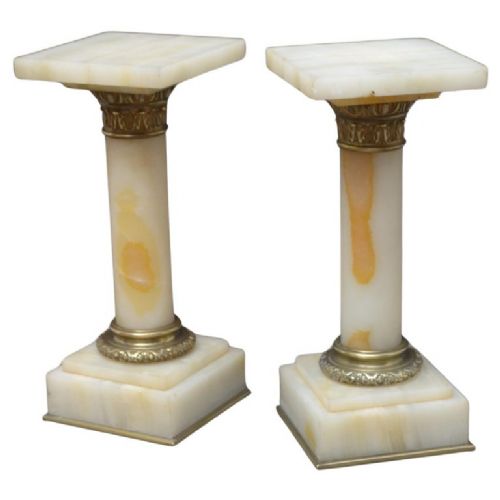
Most examples encountered here combine banded natural stone shafts with cast metal mounts, appearing singly or in matched pairs. Forms range from towering display columns to low plant stands and specialised pedestal tables with tiered tops.
How they were made
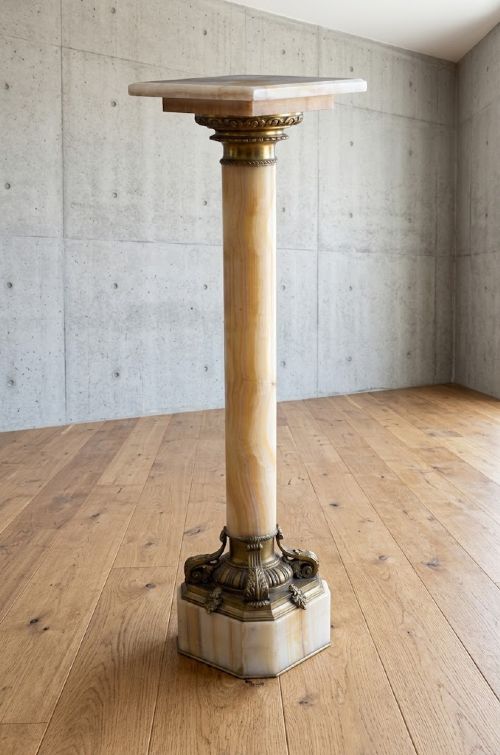
Makers shaped natural onyx and marble into cylindrical or fluted columns, frequently pairing the stone with cast brass, ormolu, or gilt bronze collars and bases. These metallic mounts secure the stone sections at the capital and plinth.
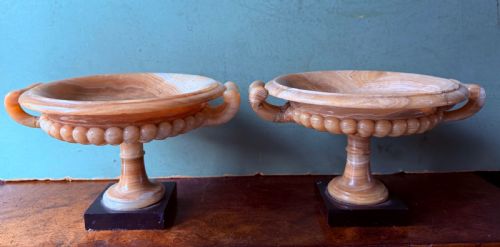
Artisans carved denser alabaster and variegated stone variants by hand, particularly for smaller Grand Tour souvenirs and tazze resting upon heavier black marble block bases.
Travellers once carted home miniature Italian stone tazze as polite proof they survived the Alps.
What varies in quality
Quality rests upon the visual intensity of the stone figure and the precision of the metalwork. Highly figured, richly banded onyx commands attention alongside finely chiseled ormolu and cast brass details.
Proportion and structural harmony separate standard production pieces from refined Neoclassical interpretations. Balanced capital collars and substantial stone weight indicate superior craftsmanship.
The Onyx Display Pedestal Glossary
- Ormolu
- Gilded bronze mounts applied to furniture and decorative objects. This technique creates bright metallic highlights against polished stone surfaces.
- Torchere
- A tall stand designed to support a light fixture or decorative object. These slender columns elevate objects above floor level.
- Tazza
- A shallow ornamental cup or bowl set upon a stem and foot. Collectors prize these classical forms for display on tabletops and pedestals.
- Grand Tour
- Souvenirs brought back by travellers exploring continental Europe during the nineteenth century. These items often replicate classical antiquities in miniature scale.
Onyx Display Pedestal: Frequently Asked Questions
How do I style an onyx display pedestal?
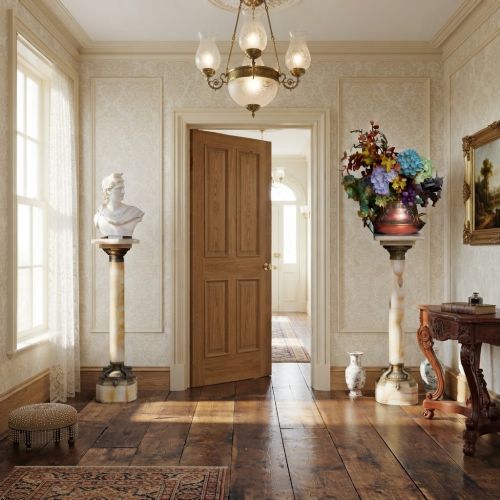
Place a single column in an empty corner or frame a doorway with a matched pair. Top the surface with bronze sculpture, heavy ceramic vessels, or trailing plants.
Ensure the height complements nearby furniture so the displayed object sits at a comfortable viewing level.
What periods do these pedestals come from?
The listings span the nineteenth century through the nineteen-thirties, covering Victorian, Edwardian, and later periods. Neoclassical and Classical Revival influences dominate the design vocabulary.
Earlier examples frequently feature hand-chiseled ormolu mounts and deeply figured stone shafts.
Can these pedestals support heavy sculptures?
Most stone and metal columns provide robust structural support for heavy bronze figures and marble busts. The wide base plates distribute weight evenly across the floor.
Check that the column sits level on the floor before placing heavy artwork on top.
How do I clean and maintain onyx?
Dust the stone regularly with a soft, dry cloth to prevent abrasion. Avoid acidic cleaners or excessive water, which can etch polished mineral surfaces.
Buff the metal collars gently with a dry microfiber cloth to maintain their lustre over time.