


Onyx Column Stand
These onyx column stand pieces bring striking neoclassical presence and rich veined stone into a room to elevate vases, lamps and sculpture.
Onyx Column Stand
When you search for an onyx column stand, you encounter substantial vertical display supports designed to elevate decorative objects, lighting and plant pots within formal rooms. These pieces appear across nineteenth-century Victorian and Edwardian periods, as well as twentieth-century examples up to the nineteen-thirties.
The most frequent forms met on this page are tall torcheres, pedestals and plant stands, alongside occasional low pedestals and pedestal tables. Their origins span French Chateau and Classical Revival designs, frequently executed in Louis XVI Revival styles with distinct neoclassical proportions.
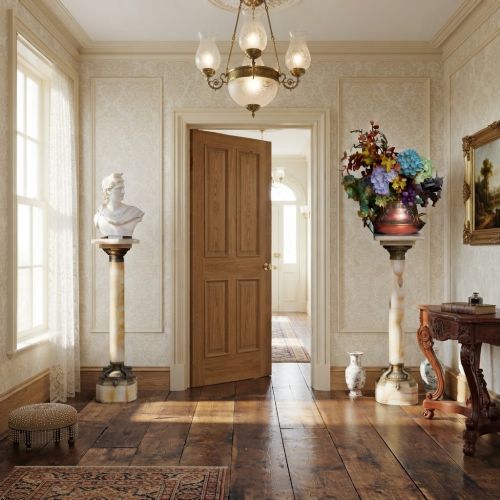
Makers and creators rely on vertical geometry to create height in an interior, using the natural banding of the stone to catch the light. Buyers select these columns to anchor corners or frame doorways with architectural gravitas.
How these columns were made
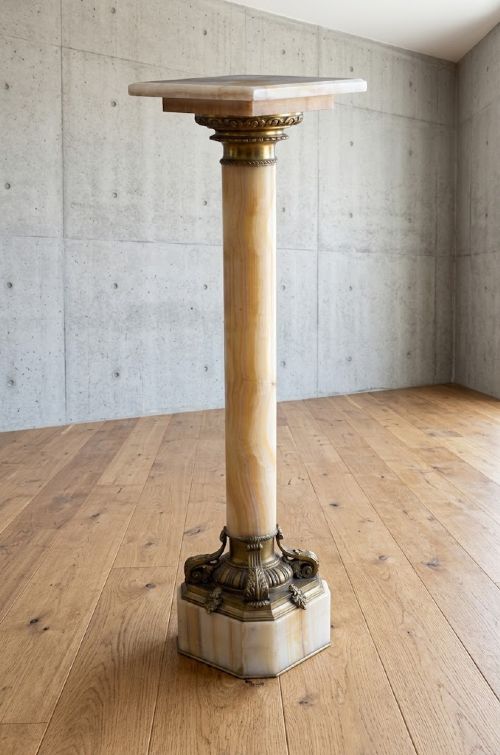
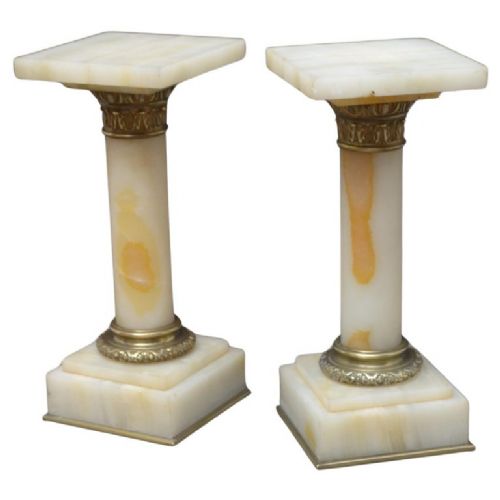
Craftsmen built these structures using solid onyx and marble shafts, often combined with brass, ormolu, gilt bronze, bronze and gilt wood mountings. Metal collars, capitals and bases provide structural reinforcement and decorative contrast to the polished stone shafts.
Turning and chiselling techniques shaped the stone columns and metal fittings, while casting produced intricate brass and ormolu mouldings for collars and floral decorations. Chiseled brass details and gilt bronze mounts were secured directly to the stone body to complete the support.
The object forms include torcheres, plant stands, pedestal tables and multi-tiered supports created in neoclassical and French Chateau styles.
What varies in quality
The sophistication of the cast metal mounts and the richness of the stone veining determine the distinction between standard and exceptional examples. Heavy ormolu collars and finely chased brass enrich the overall presence far beyond plain metal fittings.
Proportion and stability separate utilitarian plant stands from grand neoclassical display columns. Pieces retaining crisp flower mouldings and balanced gilt wood or bronze elements demonstrate superior workshop execution.
The Onyx Column Stand Glossary
- Onyx
- A translucent, layered variety of chalcedony quartz characterised by distinct parallel banding. It is polished to a high gloss for decorative furniture and columns.
- Ormolu
- Gilt bronze created by applying a finely ground high-carat gold-mercury amalgam to a bronze object. The mercury is then driven off by heat, leaving a rich gold coating.
- Torchere
- A tall stand or ornamental candlestick originally designed to hold a torch or lamp. In later furniture, it serves as a slender pedestal for displaying urns or figures.
- Neoclassical
- A style originating in the mid-eighteenth century inspired by classical antiquity. It relies on symmetrical geometry, columns and restrained classical ornamentation.
Onyx Column Stand: Frequently Asked Questions
What is an onyx column stand used for?
These vertical supports serve primarily to elevate urns, sculptures, lamps and decorative plants within a room. Their height draws the eye upward and creates architectural focal points in hallways or reception spaces.
Historically, they also functioned as torchieres to hold artificial light sources or candles before modern electric lighting became standard in domestic interiors.
How do I date an antique column?
Dating relies on examining the combination of materials, construction methods and stylistic revival motifs present in the piece. Nineteenth-century examples often feature heavier cast brass ormolu collars and classical proportions.
Later pieces from the twentieth century, such as those from nineteen-thirty, incorporate simplified metalwork and different joining techniques that reflect changing manufacturing standards.
Are these columns strong enough for heavy items?
Most solid stone shafts and metal-collared columns provide robust support for substantial bronze figures, large marble busts and heavy planters. Their wide bases ensure stability when placed on firm flooring.
However, buyers should check the specific diameter and weight capacity of smaller plant stands or pedestal tables before placing extremely heavy sculptures on top.
How do I clean and maintain onyx?
Maintenance requires gentle dusting with a soft, dry cloth to prevent abrasive particles from scratching the polished stone surface. Avoid acidic cleaners, alcohol or harsh chemical detergents that can etch the mineral structure of onyx and marble.
Metal collars and gilt bronze mounts should be kept dry and wiped carefully with a clean cloth to preserve their original finish without removing patination.