


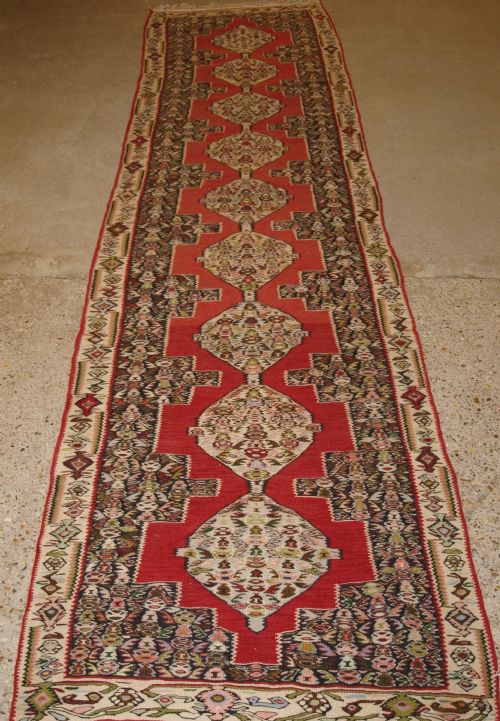


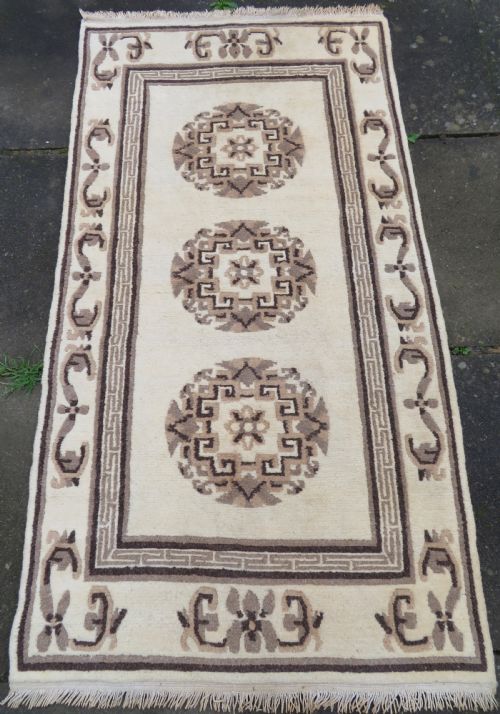


Old Tribal Runner
An old tribal runner brings rustic warmth and rich geometric motifs into a room, drawn from village and nomadic traditions.
Old Tribal Runner
An old tribal runner represents traditional nomadic and village weaving traditions from Persia, Anatolia, Afghanistan, the Caucasus, and the Himalayan region. When searching for an old tribal runner, buyers encounter narrow formats designed for corridors, hallways, and stairs, alongside related village rugs and kilims.
The pieces available here date across the early decades of the twentieth century, specifically spanning the 1910s, 1920s, and 1930s. Styles range from Persian tribal and Anatolian tribal to Afghan, Baluch, Caucasian, and Himalayan regional designs.
Makers in village and tribal settings utilised classic formats such as narrow kilim runners, prayer rugs, and village carpets. These textiles carry geometric medallions, Turkmen style patterns, and eagle Kazak motifs passed down through generations.
Materials and construction
Weavers constructed these textiles primarily using wool, cotton, and hand-spun wool foundations and piles. The reliance on hand-spun materials gives the surfaces a varied texture and tactile depth unique to early twentieth-century village production.
Natural dyes provide the foundational palette for these rugs and runners. Artisans sourced colours from local plants and minerals, resulting in rich tones that age with considerable character.
Old Tribal Runner Retail Price Guide 2026
Typical asking prices for old tribal runner among the pieces listed under this phrase on Sellingantiques today, from the lower quarter to the upper quarter. They describe what is for sale here now, not the wider market.
Listings feature pieces dated strictly between 1910 and 1940, originating from Persian, Anatolian, Afghan, Caucasian, and Himalayan weaving traditions.
Judging quality in tribal weaving
Quality rests upon the tightness of the weave and the handled weight of the wool. Tighter knots and heavier hand-spun wool structures create durable runners suited for high-traffic corridors.
The clarity of natural dye colours and the precision of geometric motifs separate standard village pieces from finer tribal examples. Distinct design execution in medallions and prayer formats elevates a runner's visual impact.
The Old Tribal Runner Glossary
- Kilim
- A flat-woven carpet or runner produced without a pile. These pieces rely on interlocking weft techniques to create crisp geometric patterns.
- Prayer rug
- A small rug featuring a mihrab or niche design used historically for daily prayers. These formats often display focused symbolic imagery.
- Baluch
- A style associated with nomadic and village weavers from the borderlands of Persia and Afghanistan. They frequently utilise deep colour palettes and distinctive geometric field patterns.
- Medallion
- A central ornamental design motif placed in the field of a rug. Linked or single medallions anchor the symmetry of tribal compositions.
Old Tribal Runner: Frequently Asked Questions
What is an old tribal runner?
An old tribal runner is a narrow, elongated hand-woven textile produced by nomadic or village communities in regions such as Persia, Anatolia, and Afghanistan. These pieces served practical flooring roles in tents, houses, and corridors.
They feature traditional geometric patterns and motifs woven with wool and natural dyes during the early twentieth century.
How were these runners used?
Nomadic and village weavers created these narrow formats to line the floors of corridors, hallways, and tent interiors. Their durable wool construction withstood daily foot traffic while adding warmth to living spaces.
Today, buyers utilise them in similar narrow spaces or as distinctive accent pieces in modern interiors.
How do I care for an old wool runner?
Protect your runner with a quality rug underlay to prevent sliding and reduce friction against the floorboards. Regular gentle vacuuming without a rotating brush roll keeps dust from settling into the wool pile.
Professional specialist cleaning is recommended when the textile requires deep washing.
How do I date an old tribal runner?
Dating relies on examining the materials, natural dye palettes, and structural characteristics typical of early twentieth-century production. Pieces from this era often exhibit hand-spun wool and traditional regional motifs.
Stylistic markers and construction methods help place examples within the 1910 to 1930 period.