

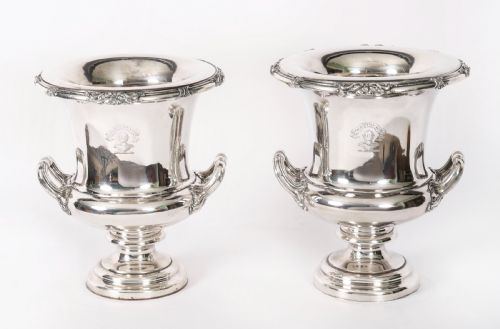


Old Silver Wine Bucket
An old silver wine bucket brings substance and historic weight to a table, offering solid construction and the gleam of traditional metalwork.
Old Silver Wine Bucket
An old silver wine bucket, predominantly found here as a wine cooler or ice bucket, serves as a grand vessel for chilling bottles during dining. These pieces mostly date from the Georgian, Regency, and nineteenth century periods, reflecting the formal entertaining habits of their eras.
The campana design dominates the forms seen on this page, presenting a classic inverted bell shape with sweeping handles. Buyers encounter single vessels as well as matched pairs, often bearing heraldic engraving or crests.
Originating largely from British workshops, these metal vessels range from the late eighteenth century into the early Victorian decades. They combine practical utility with the architectural presence typical of Regency and Georgian silver-smithing.
How they were made
Makers utilised Old Sheffield Plate, a pioneering material created by fusing a thin sheet of silver onto a thicker copper base under high heat. This technique allowed the rich appearance of solid silver while maintaining structural rigidity through the underlying copper.
Craftsmen shaped the fused metal sheets by hand-raising and hammering, then soldered applied cast borders, handles, and foot rims to the main body. Engravers subsequently added armorial bearings and crests by hand using sharp gravers.
Old Silver Wine Bucket Retail Price Guide 2026
Typical asking prices for old silver wine bucket among the pieces listed under this phrase on Sellingantiques today, from the lower quarter to the upper quarter. They describe what is for sale here now, not the wider market.
The listings span the late eighteenth century to the nineteenth century, featuring materials such as Old Sheffield Plate and copper.
What varies in quality
The crispness of the cast mounts and applied handles distinguishes finer examples from simpler production. Where the chasing and leaf work on a campana rim remain sharp and deep, the maker invested greater skill in the finishing stages.
The preservation of the fused silver layer over the copper core dictates the visual integrity of a piece. Balanced proportion in the tapering bowl and secure attachment of the heavy handles further separate standard production from superior workshop output.
Matthew Boulton Co
The Old Silver Wine Bucket Glossary
- Campana
- A bell-shaped vessel with a flared rim and foot, commonly used for classical wine coolers. This silhouette draws direct inspiration from antique pottery forms.
- Old Sheffield Plate
- An early fused composite of silver and copper produced before electroplating was invented. The technique sandwiches a thin layer of sterling silver over a thick copper ingot.
- Coat of Arms
- A heraldic design engraved onto the side of a metal vessel to denote the original owner. These armorial bearings often allow researchers to trace a piece back to a specific family.
- Regency
- A British design period spanning the early nineteenth century characterised by classical revival motifs. Pieces from this era frequently display bold architectural lines and restrained ornamentation.
Old Silver Wine Bucket: Frequently Asked Questions
How were old wine buckets used?
These vessels were filled with ice and water to chill wine bottles before and during formal dining. Servants placed them on sideboards or directly on the table for guests.
Their heavy construction helped maintain cold temperatures throughout long meals, protecting fine vintages while adding visual display to the room.
What is Old Sheffield Plate?
Old Sheffield Plate is a fused metal made by heating a thin sheet of silver and a thick block of copper until they bonded together. Smiths then rolled the combined ingot into sheets for crafting.
This method differs entirely from nineteenth-century electroplating, as the physical layer of silver is substantially thicker and more durable.
How do I date a wine cooler?
Dating relies on stylistic details such as the shape of the rim, the form of the handles, and the overall silhouette. Regency pieces typically show bold classical revival curves, while late eighteenth-century examples feature simpler neoclassical lines.
Engraved crests and maker marks, when present, provide further chronological markers to narrow down the decade of manufacture.
Can I use them for wine today?
These historical vessels function well as actual wine coolers or ice buckets during modern gatherings. Their waterproof metal construction handles ice and bottled drinks securely.
Careful washing with warm soapy water and soft cloths preserves the historic surface without damaging the underlying plate.