




Old Sapphire Jewellery
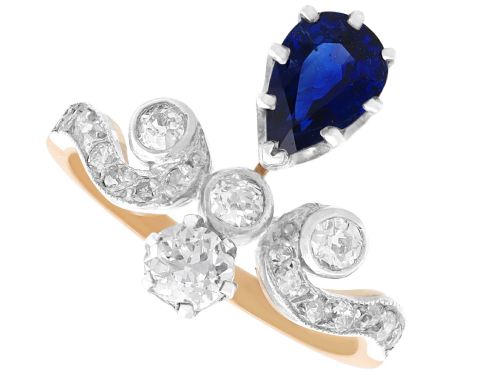
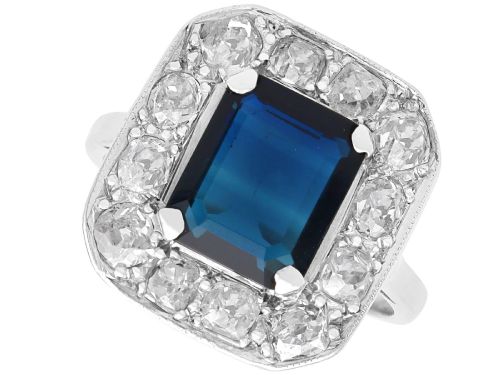
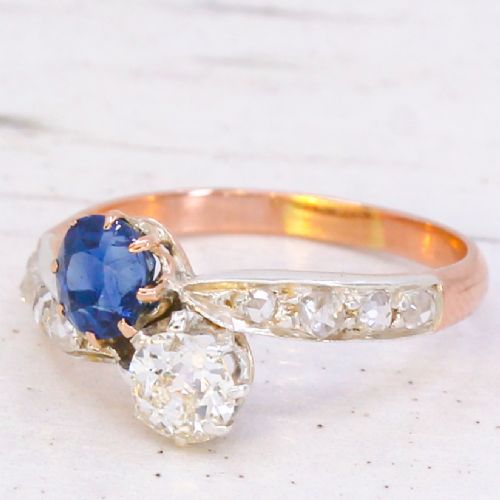
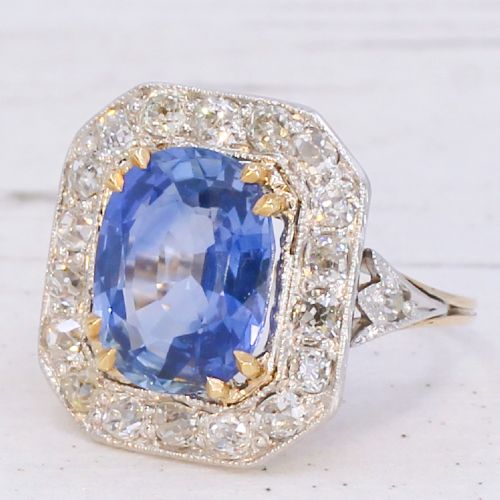
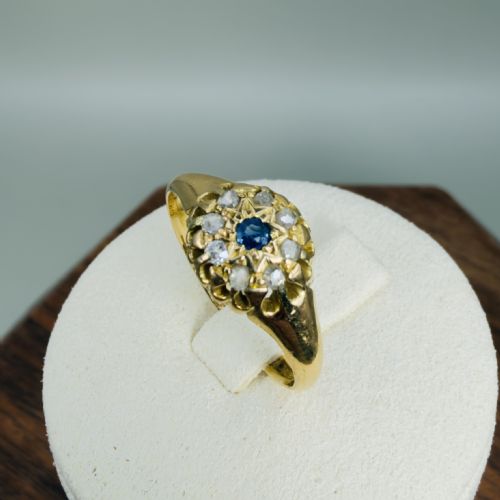
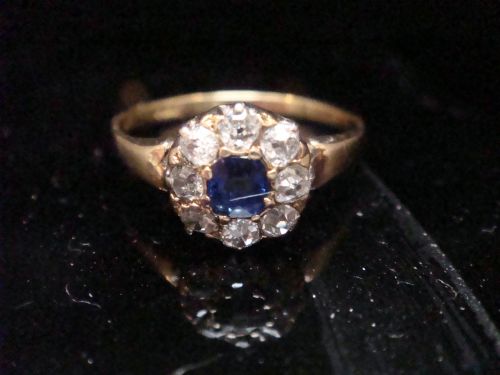
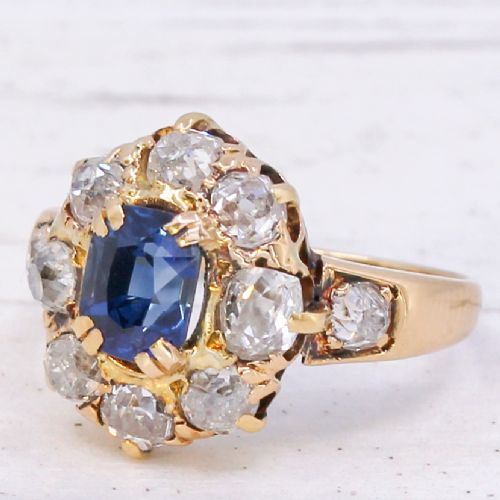
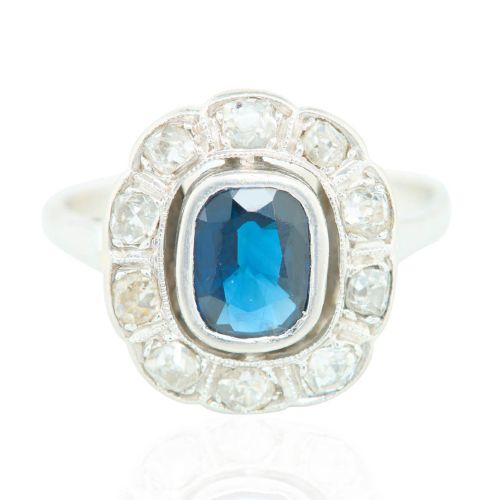
Old sapphire jewellery brings together cluster rings, brooches and pendants shaped by Victorian, Edwardian and Art Deco hands.
Old Sapphire Jewellery
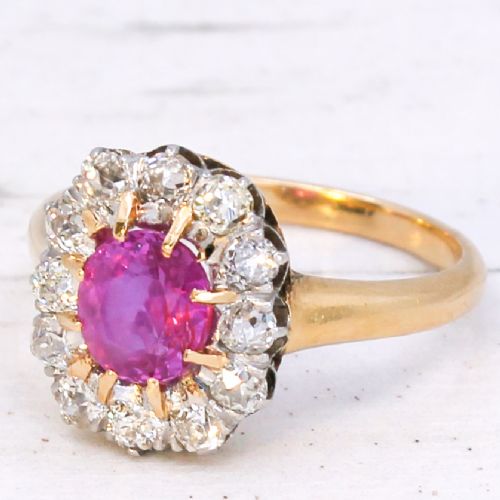
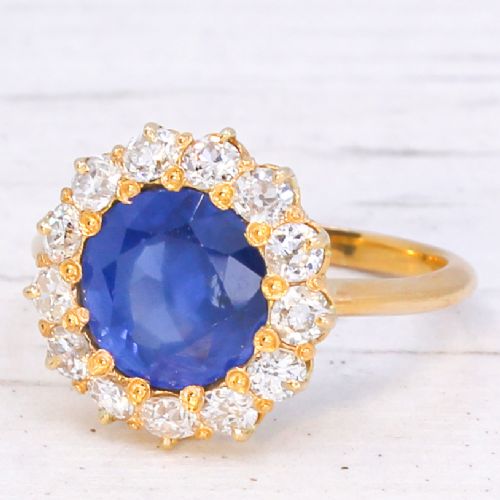
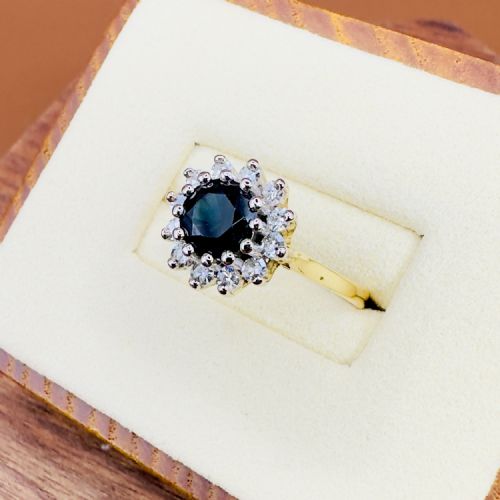
Old sapphire jewellery spans rings, brooches, and pendants originating from the Victorian, Edwardian, and Art Deco periods. Buyers searching for old sapphire jewellery frequently encounter cluster rings, trilogy designs, and delicate drop pendants set with diamonds.
The assortment on this page concentrates heavily on rings, ranging from mid-Victorian boat settings to geometric Art Deco plaques. These items combine deep blue corundum with hand-faceted diamonds shaped before modern brilliant cutting standards emerged.
How they were made
Goldsmiths set stones using platinum, silver-topped gold, 18ct yellow gold, and white gold to mount the gems securely. Platinum gained favour during the Edwardian and Art Deco eras for its strength in fine, lace-like settings.
Gemstones received hand cutting, resulting in old mine cuts, old European cuts, and rose cut diamonds paired with natural, basaltic, or unheated sapphires. Calibré cuts also appear in geometric arrangements where small stones are shaped precisely to fit channel borders.
Old Sapphire Jewellery Retail Price Guide 2026
Typical asking prices for old sapphire jewellery among the pieces listed under this phrase on Sellingantiques today, from the lower quarter to the upper quarter. They describe what is for sale here now, not the wider market.
Some Edwardian bow brooches double as pendants, offering a dual personality for lapels and chains alike.
What varies in quality
Quality rests upon the origin and treatment of the sapphire, distinguishing unheated Burmese or Ceylon stones from basaltic varieties. The depth of the natural blue colour and the presence of thermal enhancement dictate the standing of each piece.
The calibre of the accompanying diamonds and the precision of the metalwork set individual pieces apart. Hand-carved platinum mountings and matched old cut diamonds elevate the execution of a cluster or plaque ring.
The Old Sapphire Jewellery Glossary
- Cluster ring
- A central gemstone surrounded by a circle of smaller stones, commonly diamonds encircling a sapphire. This layout maximises the optical impact of both gems.
- Old cut diamond
- A hand-faceted diamond from the Victorian or Edwardian periods featuring a smaller table and a higher crown. These stones scatter candlelight differently than modern round brilliants.
- Basaltic sapphire
- A sapphire originating from alkaline basaltic volcanic rocks, often displaying a deeper, inky blue tone. These stones form a distinct category alongside Burmese and Ceylon origins.
- Calibré cut
- Small gemstones cut to specific geometric shapes and sizes to fit closely together in a channel or paved setting. Art Deco jewellery uses this technique extensively.
- Trilogy ring
- A ring featuring three principal stones set in a row, representing past, present, and future. In this inventory, they pair sapphires with old cut diamonds.
Old Sapphire Jewellery: Frequently Asked Questions
What periods do these pieces come from?
The listings span the Victorian, Edwardian, Art Nouveau, and Art Deco periods, covering roughly the late nineteenth century through to the mid-twentieth century.
Craftsmanship shifts noticeably across these eras, moving from yellow gold boat settings towards platinum filigree and geometric white gold plaques.
How do I identify an Edwardian sapphire ring?
Edwardian pieces often utilise platinum or yellow gold mounted with light, airy motifs like bows, daisies, and delicate millegrain edges.
Diamonds from this era are predominantly old cuts, paired with natural sapphires in cluster or marquise silhouettes.
What is an unheated sapphire?
An unheated sapphire is a natural stone that has not undergone thermal enhancement to improve its colour or clarity.
Unearthly treatments are absent, leaving the sapphire in its original state as mined from regions such as Burma or Ceylon.
How were Art Deco sapphire rings designed?
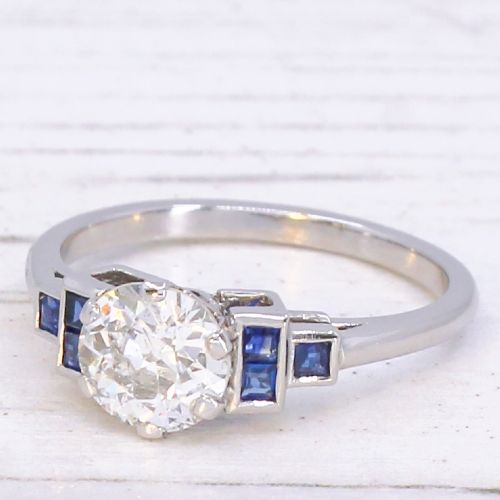
Art Deco rings favour strict geometry, symmetry, and platinum settings that showcase calibré cut sapphires alongside old European cut diamonds.
Target clusters and rectilinear plaque forms define the architectural aesthetic of this 1920s style.