






Old Mine Diamond Cluster
An old mine diamond cluster brings together hand-cut stones and precious metals from the Victorian, Edwardian, and Art Deco eras.
Old Mine Diamond Cluster
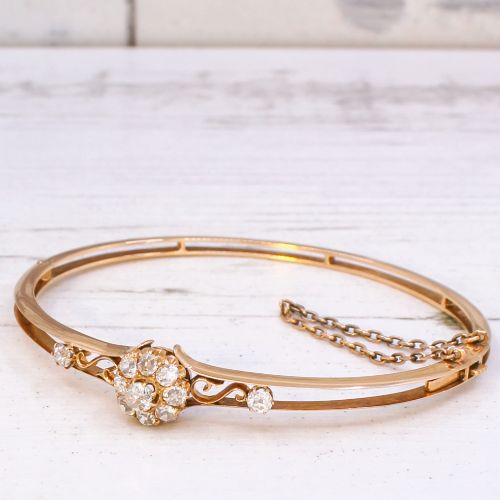
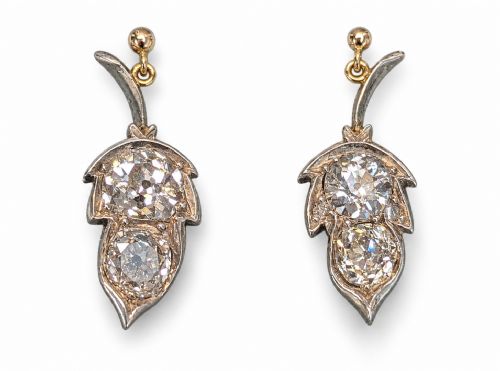
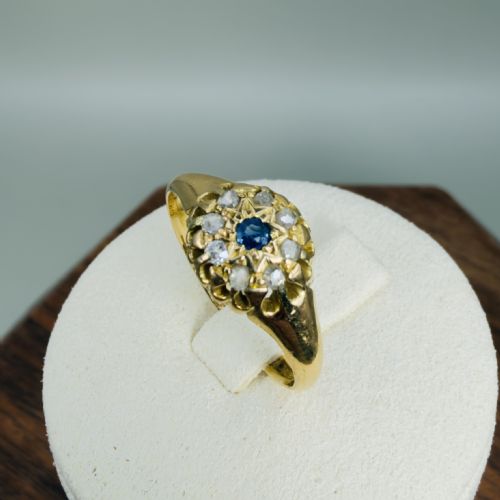
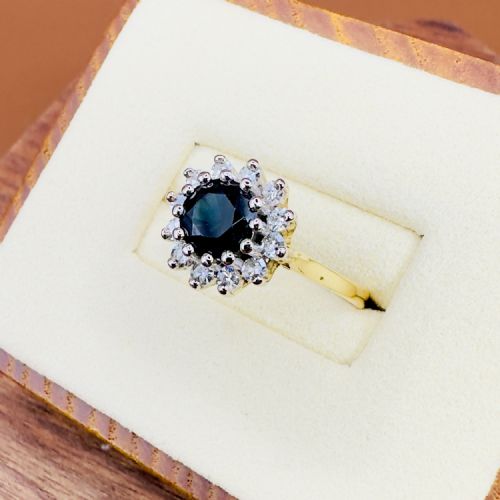
An old mine diamond cluster centres on characteristic hand-faceted diamonds arranged in distinct groupings across rings, earrings, brooches, pendants, and bangles. These pieces most frequently appear from the Victorian and Edwardian periods, constructed primarily as rings featuring central diamonds surrounded by smaller stones.
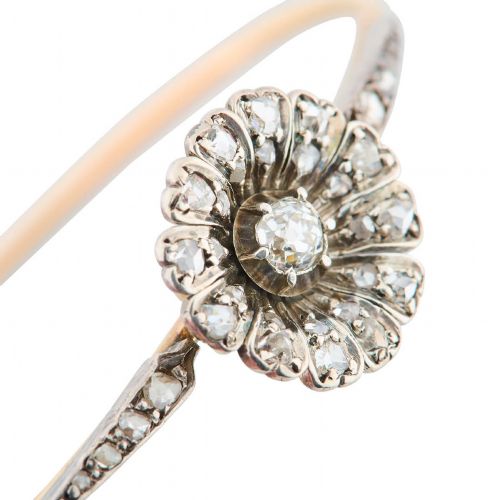
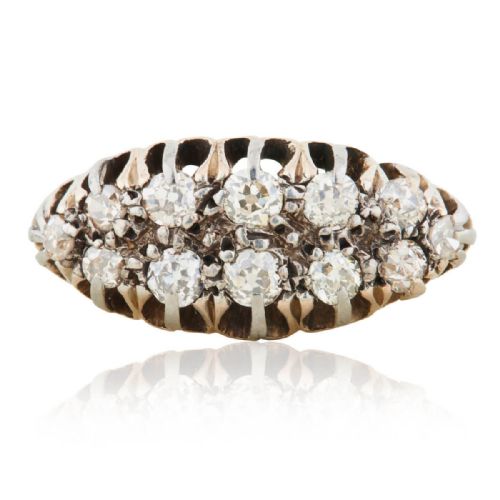
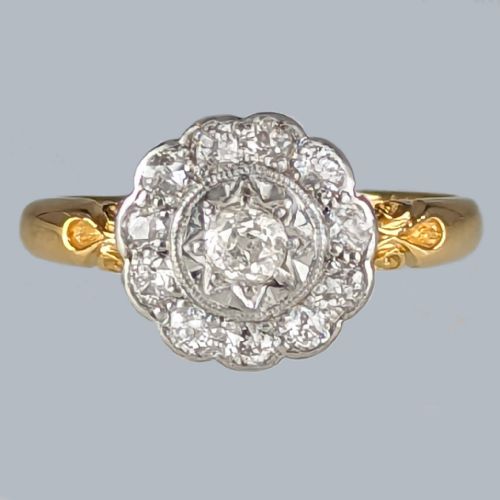
Makers and jewellers of the nineteenth and early twentieth centuries favoured this clustered arrangement to maximise the visual impact and fire of antique cut diamonds. Surviving examples demonstrate how these formations adapted across various forms of jewellery, including boat-shaped clusters, marquise settings, and flower motifs.
Buyers seeking an old mine diamond cluster encounter pieces that span the mid-nineteenth century through to the early decades of the twentieth century. The selection ranges from simple yellow gold mounts to more intricate combinations incorporating platinum, silver, and secondary gemstones such as sapphires, emeralds, and pearls.
How they were made
The materials recorded in these pieces rely heavily upon 18ct gold, yellow gold, silver, and platinum. Silversmiths and jewellers often utilised silver set over gold during the Victorian and Edwardian eras to enhance the whiteness of the diamond settings.
Construction techniques involve hand-cut old mine and old rose diamonds mounted in claw, collet, or pave settings. Artisans shaped the precious metals by hand, producing robust mountings for rings, drop earrings, bangles, and brooches that secured irregular, cushion-shaped stones.
Old Mine Diamond Cluster Retail Price Guide 2026
Typical asking prices for old mine diamond cluster among the pieces listed under this phrase on Sellingantiques today, from the lower quarter to the upper quarter. They describe what is for sale here now, not the wider market.
Some Victorian makers arranged tiny diamonds into flowers so convincing they might have fooled a bumblebee.
What varies in quality
Quality in an old mine diamond cluster rests upon the proportion, symmetry, and optical liveliness of the hand-cut centre stones. Master craftsmen selected diamonds with pleasing cushions and generous culets that interact distinctively with candlelight and daylight.
The standard of the surrounding metalwork and the integrity of the original settings determine the overall refinement of the piece. Superior examples exhibit delicate pierced work, well-matched secondary stones, and substantial precious metal mounts that retain their original structural balance.
The Old Mine Diamond Cluster Glossary
- Old mine cut
- An antique diamond cut characterised by a nearly square or cushion shape, high crown, small table, and a large culet facet. This early form of cutting was executed by hand to retain maximum crystal weight.
- Cluster ring
- A ring design featuring a prominent central gemstone encircled by a ring of smaller stones. This arrangement was immensely popular for engagement and dress rings during the Victorian and Edwardian periods.
- Marquise cluster
- An elongated, boat-shaped cluster setting pointed at both ends. It creates a larger finger coverage using symmetrical arrangements of diamonds and gold.
- Culet
- The small facet at the bottom of a gemstone. In old mine cut diamonds, this facet is often visible through the top of the stone as a distinct open centre point.
- Rose cut
- A diamond cut featuring a flat base and a domed crown covered in triangular facets. These stones appear frequently in antique pendants, earrings, and secondary cluster work.
Old Mine Diamond Cluster: Frequently Asked Questions
What is an old mine diamond cluster?
An old mine diamond cluster is a piece of antique jewellery featuring hand-cut diamonds grouped together in a geometric or floral arrangement. These clusters are most commonly found in rings, earrings, and brooches from the nineteenth and early twentieth centuries.
The central stones possess characteristic cushion shapes and large culets unique to hand-cut gems from the Victorian and Edwardian eras. Each cluster showcases the individual character of stones shaped before modern standardised cutting machines existed.
How do I care for my antique cluster?
Caring for an antique cluster requires gentle handling due to the delicate nature of historic settings and hand-cut stones. Cleaning should be done with warm soapy water and a soft brush, avoiding harsh chemical dips that can damage silver or softer backing metals.
It is advisable to remove these pieces during rigorous physical activities or housework to protect the claws and settings. Regular inspection by a specialist jeweller ensures the security of the stones within their original mounts.
How can I tell the period of a cluster ring?
Determining the period involves examining the mounting style, metal combinations, and hallmarks present on the piece. Victorian examples often utilise yellow gold and silver-topped gold, while Edwardian and later pieces frequently incorporate platinum and lighter yellow gold.
Maker's marks, assay office stamps, and London or Birmingham hallmarks provide precise dates of origin. The overall silhouette, such as boat shapes or flower motifs, also points directly to the prevailing fashion of the decade.