

Old Gemstone Ring
An old gemstone ring brings together historical periods and precious stones in forms designed to be worn every day.
Old Gemstone Ring
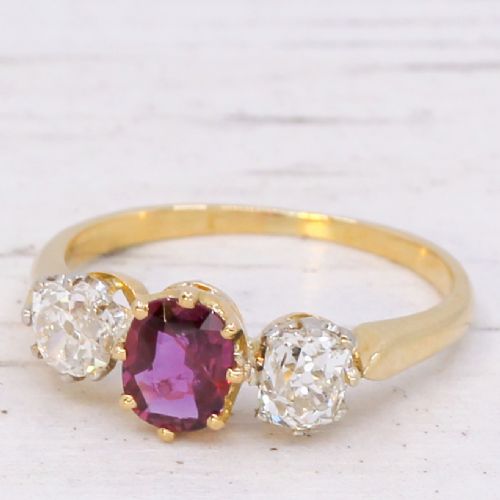
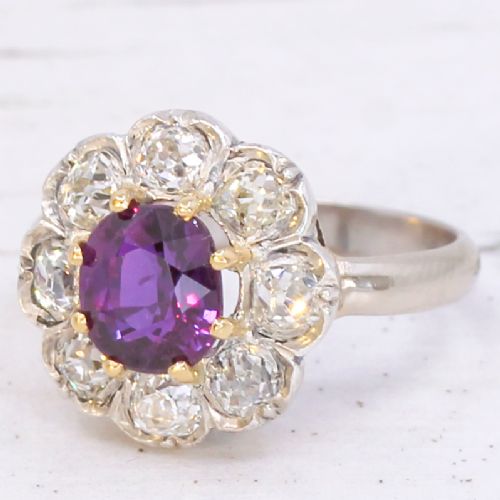
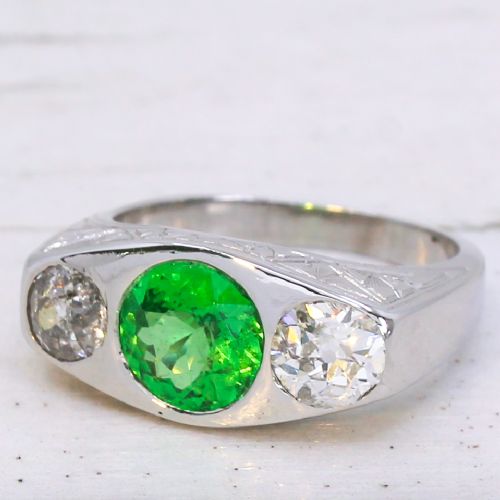
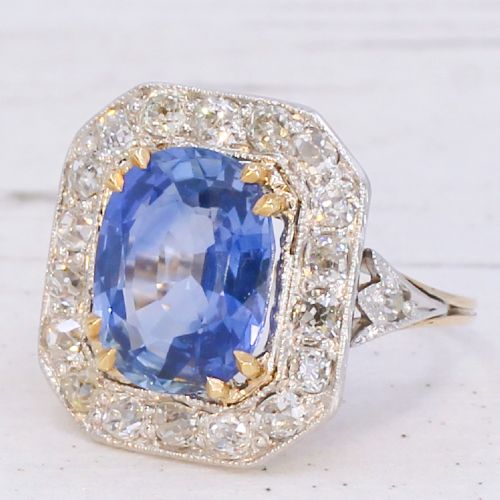
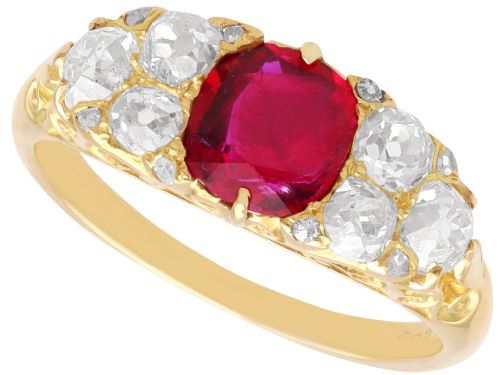
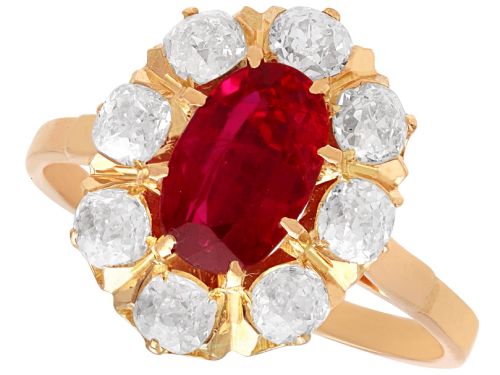
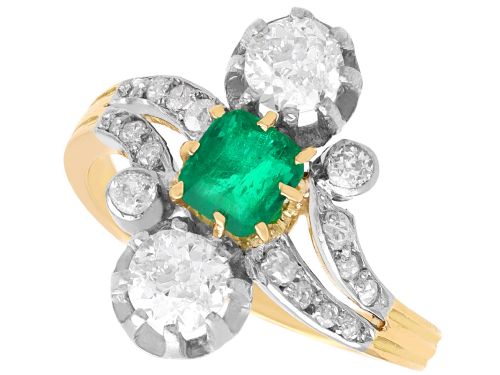
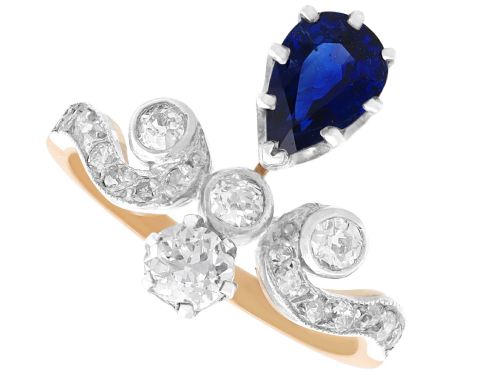
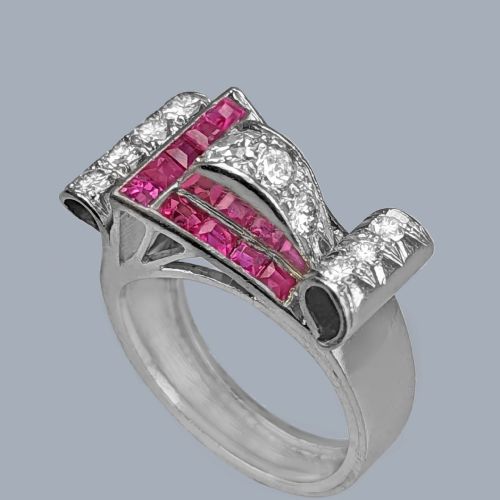
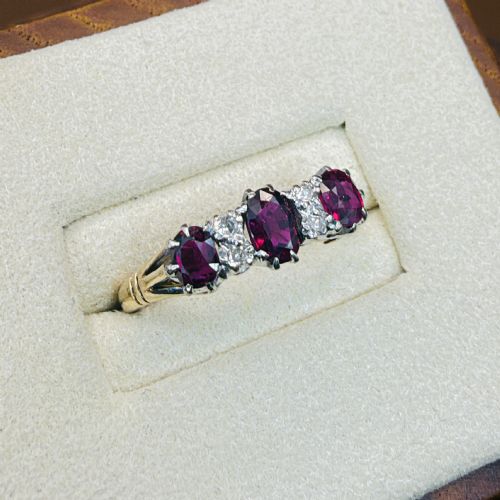
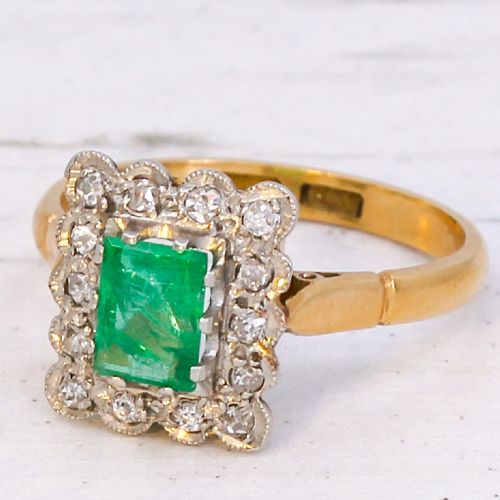
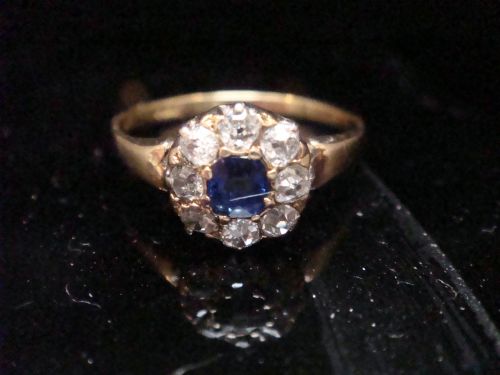
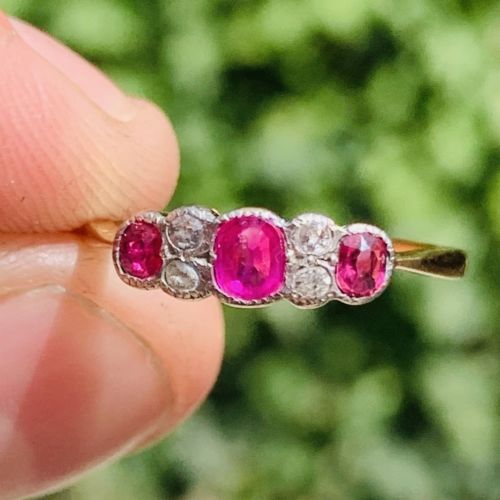
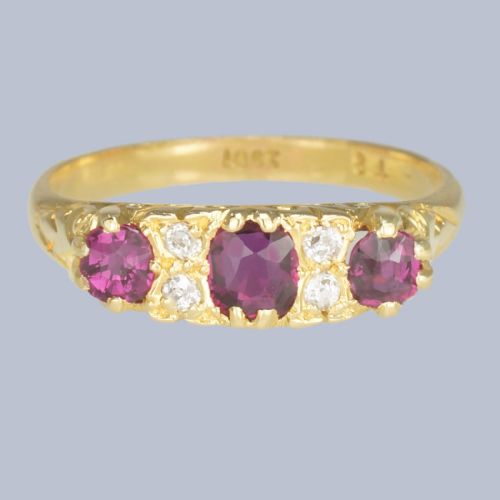
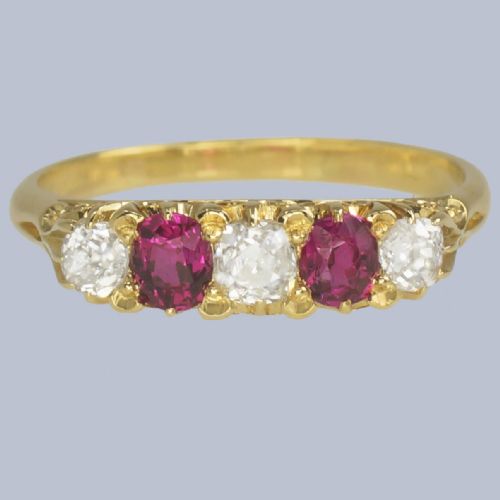
When searching for an old gemstone ring, collectors encounter pieces spanning from the Georgian era through to the mid twentieth century, with Victorian, Edwardian and Art Deco examples appearing frequently. These pieces typically combine central coloured stones such as ruby, sapphire or emerald with supporting diamonds, set into yellow gold, white gold or platinum mounts.
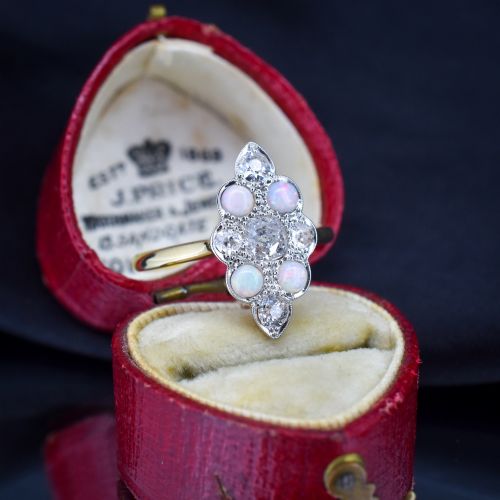
The prevailing formats on this page range from cluster and trilogy settings to five stone bands and tiara configurations. Formats such as the navette cluster or the twist ring reveal specific chronological preferences, connecting the jewellery directly to the design aesthetics of its original decade.
Materials and construction methods
Craftsmen of the nineteenth and early twentieth centuries constructed mounts predominantly in yellow gold or platinum, often combining materials such as an eighteen carat yellow gold shank with a platinum setting head to enhance the brilliance of white diamonds. Stones were secured using hand cut claws or flush settings tailored individually to each gemstone.
Gemstones themselves display historical cutting styles, notably old mine cuts and old European cuts, which feature smaller tables and higher crowns than modern brilliant cuts. These hand shaped facets interact with candle or gas light differently, producing a softer and more varied pattern of scintillation.
Old Gemstone Ring Retail Price Guide 2026
Typical asking prices for old gemstone ring among the pieces listed under this phrase on Sellingantiques today, from the lower quarter to the upper quarter. They describe what is for sale here now, not the wider market.
Listings span multiple eras from Georgian and Victorian times through Edwardian and Art Deco periods into the mid twentieth century.
Distinguishing finer examples
Quality in these pieces rests upon the natural origin and untreated state of the central gemstones, alongside the proportional harmony of the design. Unheated rubies and sapphires from specific origins command greater attention than treated stones, while the matching and graduation of supporting diamonds dictates the visual coherence of a cluster or multi stone band.
The integrity of the metalwork also defines the upper tier of pieces, where delicate piercing, millegrain edging and original hallmarks remain intact without excessive thinning of the shank from centuries of wear.
The Old Gemstone Ring Glossary
- Old cut diamond
- A hand faceted diamond shape common before the introduction of modern brilliant cutting standards, characterised by a small table, steep crown and open culet.
- Cluster ring
- A ring design featuring a central prominent gemstone encircled by a ring of smaller stones, typically diamonds.
- Trilogy ring
- A ring set with three stones of similar or graduated size, often interpreted symbolically to represent past, present and future.
- Navette cluster
- An elongated boat shaped cluster setting that extends along the finger, popular during the Edwardian period.
- Millegrain
- A decorative technique involving a row of tiny raised metal beads along the edges of a setting, common in Edwardian and Art Deco jewellery.
Old Gemstone Ring: Frequently Asked Questions
How do I care for an antique ring?
These historical pieces require gentle cleaning with warm soapy water and a soft brush rather than harsh ultrasonic devices. Regular inspection by a jeweller ensures that claws holding fragile old cut stones remain secure.
Avoiding exposure to chemicals and removing the ring during heavy manual tasks preserves the delicate metalwork and prevents unnecessary wear on soft gold shanks.
Can I wear an old ring daily?
Many people wear these historic pieces every day, provided the mounting remains robust and the prongs hold each gemstone firmly. Rings featuring durable stones like diamonds and sapphires tolerate daily wear better than softer materials.
Checking the thickness of the band annually prevents unexpected breaks and protects the structural integrity of older gold alloys.
What defines an Edwardian gemstone ring?
Edwardian rings typically utilise platinum and yellow gold to create light, airy designs inspired by lace and garlands. Millegrain details and openwork mounts are standard hallmarks of this graceful era.
Diamonds paired with blue sapphires or pearls predominate in this period, reflecting a preference for refined elegance and intricate craftsmanship.
How can I tell the period of a ring?
Dating relies upon a combination of gemstone cuts, metal types, setting techniques and official hallmarks stamped inside the band. Georgian and early Victorian rings often feature closed back foils and thick shanks, while later Victorian and Edwardian pieces introduce platinum and lighter basket settings.
Comparing the overall silhouette against known design movements helps narrow down the decade of manufacture.