




Old Cushion Cut Ring
An old cushion cut ring holds a hand-cut stone shaped by older methods, offering a softer brilliance than modern machine-cut gems.
Old Cushion Cut Ring
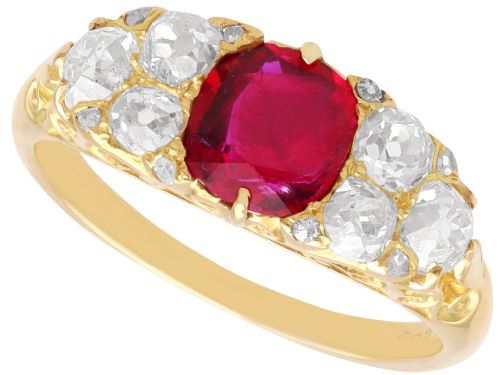
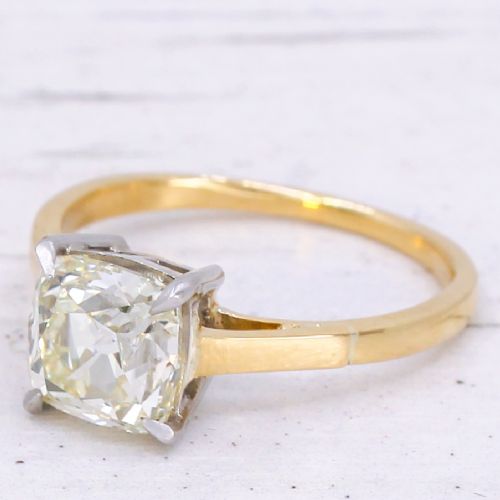
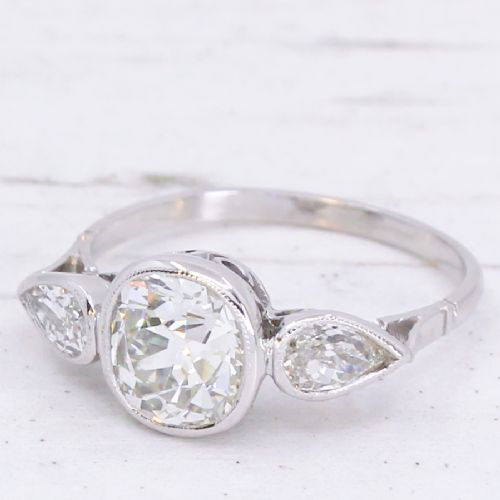
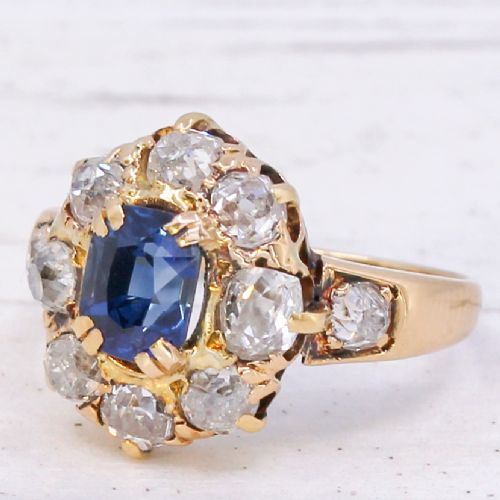
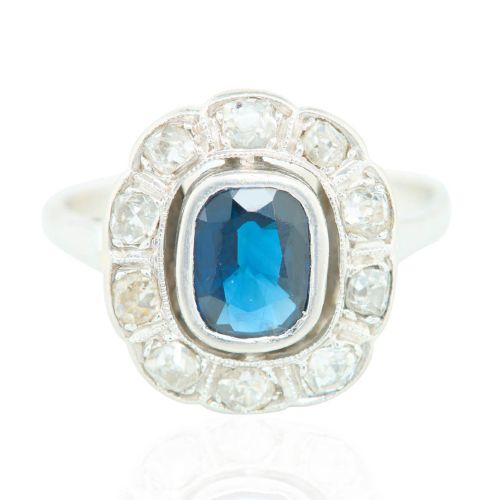
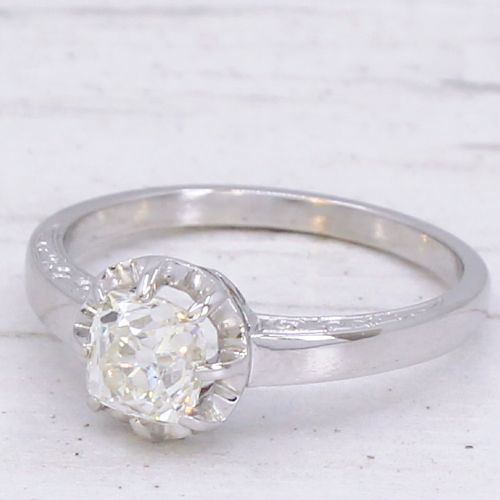
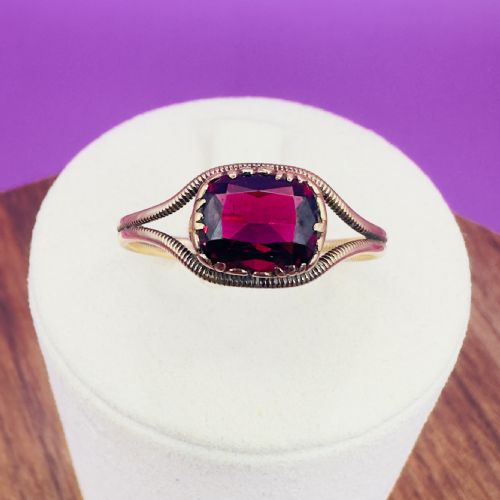
An old cushion cut ring represents a piece of antique or vintage jewellery centred on a diamond or coloured gemstone cut by hand before the advent of modern machinery. These jewels span multiple eras, appearing most frequently in designs from the Georgian, Victorian, Edwardian, and Art Deco periods.
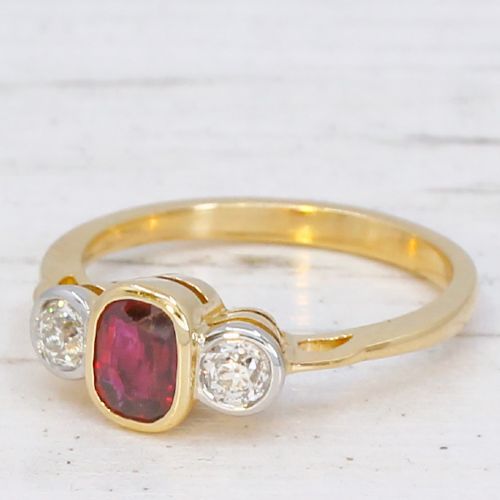
The selection encompasses solitaire mountings, clustered arrangements, multi-stone trilogy designs, and halo settings. Diamonds form the core of the inventory, often paired with sapphires, rubies, or emeralds.
Makers from the past utilised platinum and various grades of gold, including yellow, white, and rose tones, to construct the bands and settings. Each piece carries the distinct geometric lines of the 1920s and 1930s or the more organic floral motifs of the nineteenth century.
How they were made
Goldsmiths shaped mountings by hand, casting or forging platinum and gold into intricate baskets and bezels to secure the stones. Platinum gained immense favour during the Edwardian and Art Deco eras for its strength, allowing delicate millegrain edges and openwork wireframes.
Lapidaries faceted cushion diamonds and older mine cuts by eye under magnification rather than using computer-calculated angles. This technique produced larger facets, open culets, and a distinct pillow-like contour that catches candle or low light with broad, soft flashes.
Old Cushion Cut Ring Retail Price Guide 2026
Typical asking prices for old cushion cut ring among the pieces listed under this phrase on Sellingantiques today, from the lower quarter to the upper quarter. They describe what is for sale here now, not the wider market.
Some stones were shaped to catch the flicker of evening candlelight rather than electric bulbs.
What varies in quality
The brilliance and proportions of the central cushion stone establish the primary distinction across the range, as hand-cut gems vary widely in symmetry and depth. Stones possessing balanced facet distribution and lively internal light transmission command greater regard.
The integrity of the metalwork and the preservation of original settings dictate the structural merit of the piece. Settings that retain crisp claw work, sharp millegrain decoration, and unaltered shank thickness reflect superior survival through the decades.
The Old Cushion Cut Ring Glossary
- Old cushion cut
- A diamond or gemstone shape featuring rounded corners and curved sides, faceted by hand with larger facets than modern equivalents. This cut provides a softer optical return under indoor lighting.
- Old mine cut
- An early form of cushion diamond cut originating in the eighteenth and nineteenth centuries, characterised by a high crown, small table, and deep pavilion. These stones often possess a charming, chunky facet pattern.
- Millegrain
- A decorative technique involving tiny raised metal beads along the edges of a setting, common in Edwardian and Art Deco jewellery. It adds a soft texture that frames the central gem.
- Trilogy ring
- A ring design featuring three principal stones set side by side, frequently interpreted to represent the past, present, and future. In antique examples, these often combine cushion diamonds with sapphires or rubies.
- Culet
- The small facet at the very bottom of a gemstone, left flat in many antique cuts to prevent damage. In old cushion and mine cuts, a wide culet often appears as a small open window when viewed from above.
Old Cushion Cut Ring: Frequently Asked Questions
What is an old cushion cut ring?
An old cushion cut ring is a piece of antique or vintage jewellery featuring a hand-faceted stone with curved sides and rounded corners. These rings date from historical eras like the Victorian and Art Deco periods.
The cutting style predates modern mathematical proportions, giving each gem a unique personality and a warmer, softer glow than contemporary stones.
How do I care for antique rings?
Caring for these rings requires gentle handling, as antique settings and hand-cut stones benefit from regular inspection by a specialist jeweller. Avoid wearing them during heavy manual tasks to protect the delicate claw work and thin bands.
Cleaning is best done with warm soapy water and a soft brush, keeping harsh ultrasonic cleaners away from fragile coloured gemstones and closed-back foils.
How can I tell the period of a ring?
Determining the period involves examining the mounting style, metal choices, and the specific way the stone is faceted. Edwardian and Art Deco pieces often utilise platinum and geometric motifs, while Victorian examples lean towards yellow gold and organic cluster designs.
Hallmarks stamped inside the shank also provide clues regarding the assay office and the year of manufacture, though many antique bands have been resized over the decades.