


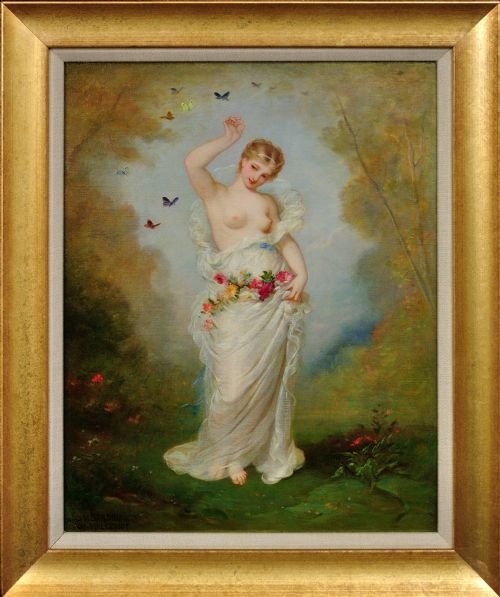


Oil Canvas Nude Portrait
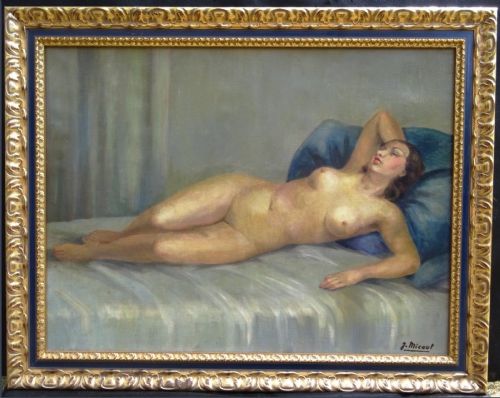
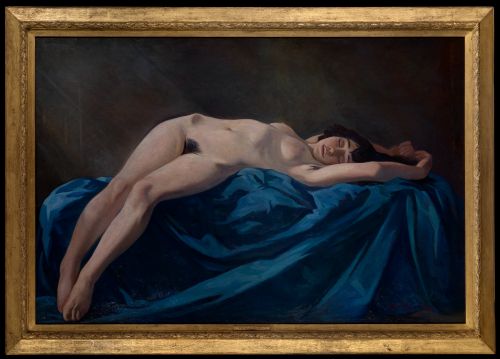
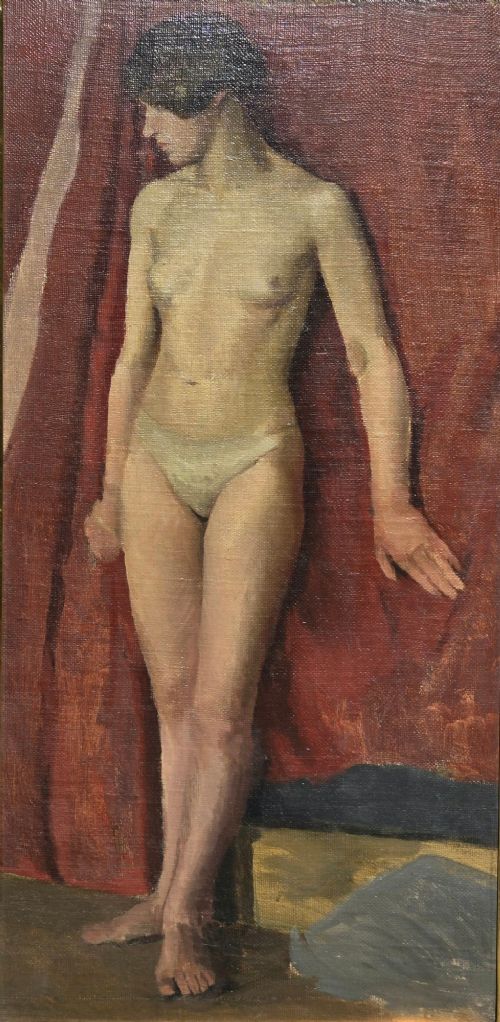
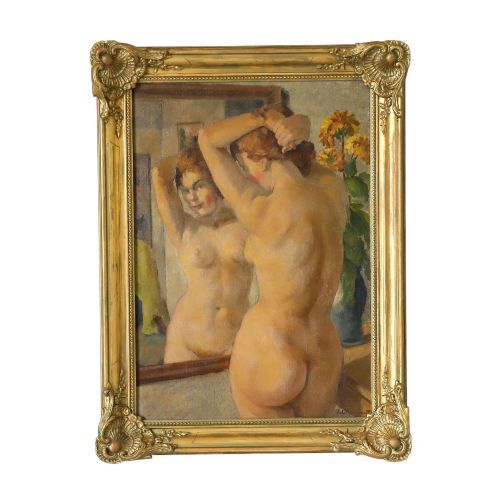
When you search for oil canvas nude portrait, you encounter figurative studies rendered in oil paint upon woven canvas supports, spanning academic realism to early modernism.
Oil Canvas Nude Portrait
An oil canvas nude portrait depicts the human form using oil-based pigments applied to stretched fabric, capturing figures in reclining, standing, or studio poses. These works range from nineteenth-century academic and mythological compositions to mid-century modern and Expressionist interpretations.
The selections recorded here reflect diverse European traditions, prominently featuring French, British, and Belgian artists working from the late nineteenth century through the 1960s. Common formats include intimate panel studies and large canvases presented in period frames, often utilising gilt wood.
Buyers seeking an oil canvas nude portrait navigate a spectrum of aesthetic movements, including Art Deco, post-impressionism, and avant-garde groupings such as the Bloomsbury circle. Each piece records the intersection of classical figure study and the distinct stylistic lens of its decade.
Materials and construction
These works utilise oil paint applied to woven canvas supports, sometimes mounted onto wood panels or stretcher frames. The medium allows for nuanced blending, visible brushwork, and varied surface textures ranging from smooth academic finishes to expressive impasto.
Framing often involves gilt wood mouldings characteristic of the nineteenth and twentieth centuries, providing structural support and visual definition to the painted surface.
Listings feature oil on canvas supports spanning the 19th century through the 1960s, utilising gilt wood frames and traditional stretched canvas.
Factors of distinction
Quality within these figurative paintings rests upon the artist's command of anatomical proportion, tonal graduation, and the psychological presence of the sitter. Works demonstrating confident draftsmanship and expressive brushwork distinguish themselves from routine academic exercises.
The preservation of the original paint surface and the integrity of the canvas support influence the overall standing of a piece. Additionally, association with recognised academic institutions or documented artist signatures elevates historical and artistic significance.
Eric Robertson·Philippe de Rougemont·Raymond Moritz·Tony Giles·André Charles Voillemot·Henri Vincent-Anglade·Alexandre-Louis Martin·Gaetan Dumas·James Clark·Fernand Jean Barbier·William Edward Frost·Peter Jackson·Jean Hippolyte Marchand·Pinchus Krémègne·Yetta Kane·Raymond Arthur Roadnight·Auguste Renoir·Otto Vautier·Alice West
The Oil Canvas Nude Portrait Glossary
- Canvas
- A heavy woven fabric, typically linen or cotton, stretched across a wooden frame to serve as a support for oil painting. It provides a durable and textured surface for pigment application.
- Impasto
- A technique where paint is laid onto a canvas in very thick areas, usually thick enough that the brush or painting-knife strokes are visible. This adds tactile dimension to the painted surface.
- Academic Realism
- A style of painting and sculpture produced under the influence of European academies of art, emphasising precise anatomical accuracy, polished surfaces, and classical themes.
- En Grisaille
- A painting executed entirely in shades of grey or another single neutral colour, often used to emulate sculpture or as an underpainting for subsequent colour layers.
- Post-Impressionism
- A predominantly French art movement that developed from about 1880 to 1910, extending Impressionism while rejecting its limitations by seeking to express more subjective emotional responses.
Oil Canvas Nude Portrait: Frequently Asked Questions
What periods do these nude paintings cover?
The available selection spans from the nineteenth century through the 1960s, encompassing Victorian academic studies, Art Deco works, and mid-century modern interpretations.
Earlier pieces often lean toward classical or mythological themes, whereas twentieth-century examples embrace expressionist and post-impressionist handling of the human form.
How should I hang an oil portrait?
Select a wall with stable environmental conditions, avoiding direct sunlight and excessive humidity fluctuations that can affect canvas tension and oil paint.
Ensure the hanging hardware matches the weight of the frame, particularly for pieces housed in heavy gilt wood mouldings.
Are these works signed by the artists?
Many examples feature artist signatures, studio stamps, or biographical documentation linking them to recognised European academies and exhibitions.
Unsigned studies remain common within the category, often representing preparatory life classes or student work from institutions such as the Slade School.
What is academic realism?
Academic realism describes art produced under the strict standards of nineteenth-century European art academies, prioritizing precise draftsmanship, anatomical correctness, and traditional subject matter.
Artists working in this tradition mastered rendering light, shadow, and skin tones through meticulous layering of oil paint.