
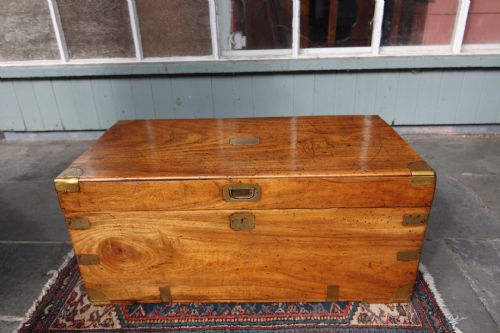
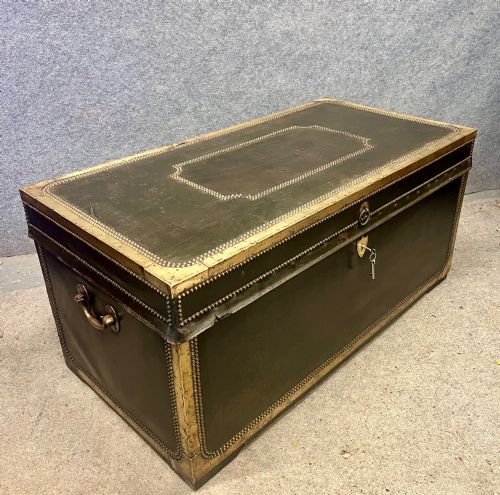
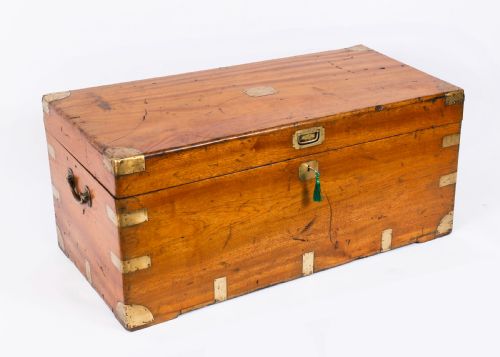
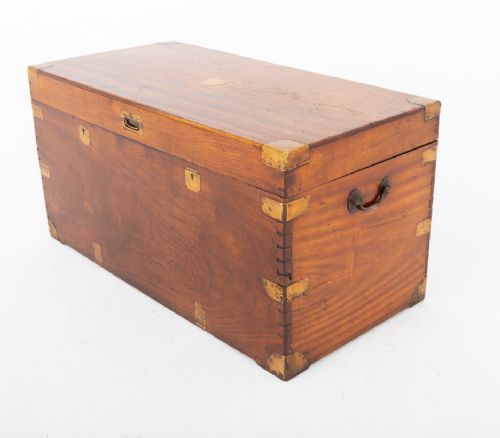
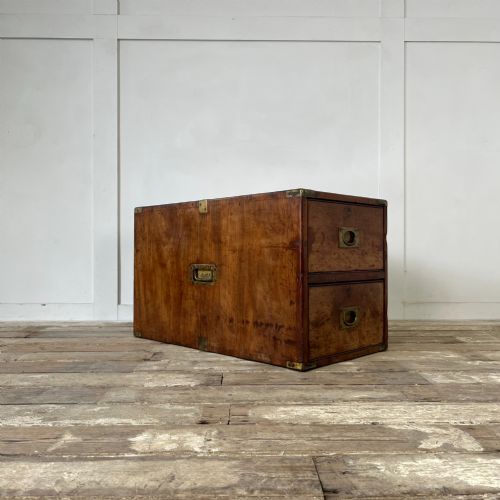


Officer Travel Chest
An officer travel chest is a sturdy portable container designed for military life, offering durable storage and practical adaptability for the road.
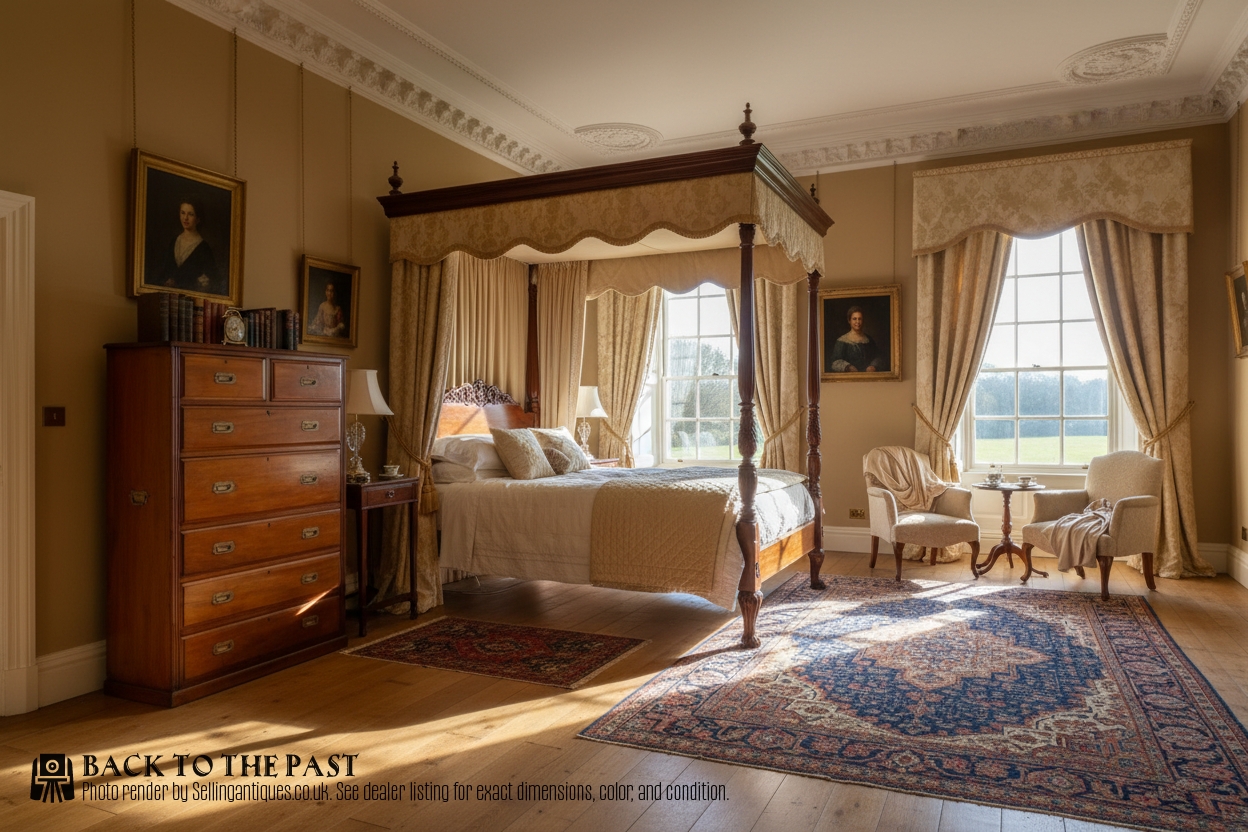
Officer Travel Chest
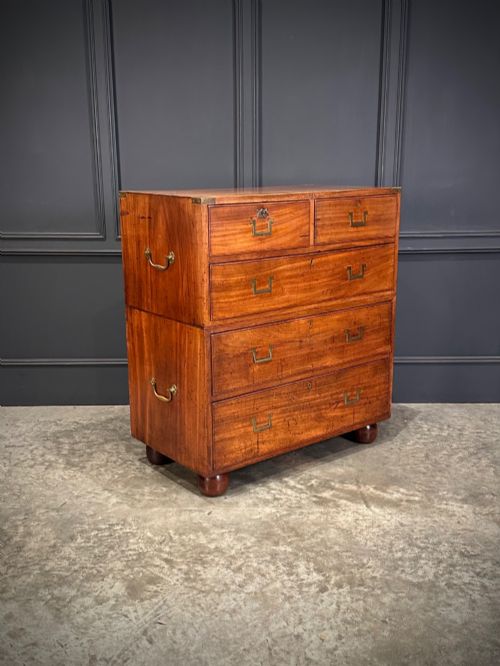
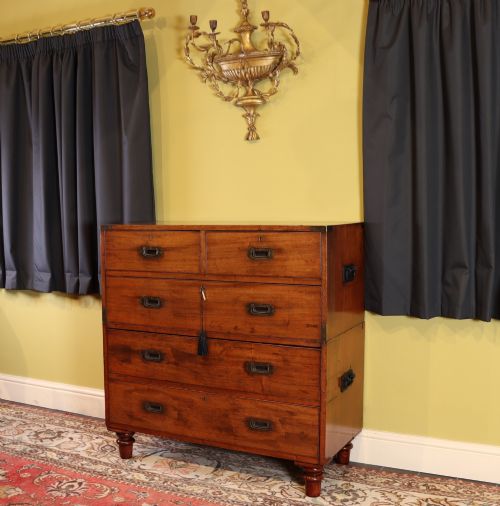
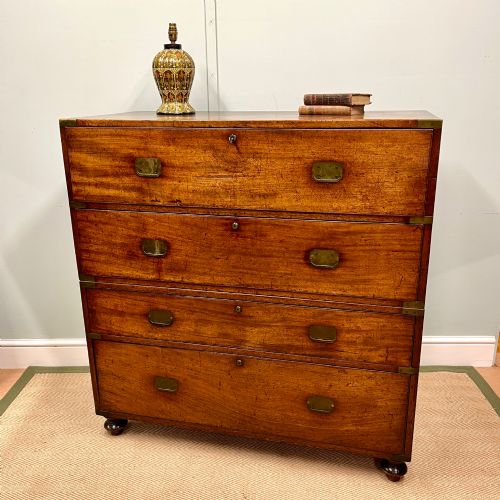
When you search for an officer travel chest, you encounter robust storage designed for military relocation. These pieces take the form of trunks, coffers, blanket boxes, and chests of drawers intended to withstand arduous journeys.
The versions most frequently met on this page span the 18th, 19th, and 20th centuries, covering Regency and Victorian periods. They appear in styles such as military campaign, Victorian campaign, and China Trade.
Constructed for utility on the move, many examples divide into separate stacking sections to facilitate transport. They serve as functional storage or striking focal points in modern interiors.
How they were made
Cabinet makers utilised resilient timbers suited to arduous travel and tropical climates, notably camphor wood, mahogany, teak, and oak. These woods frequently exhibit strong figuring and resistance to pests.
Metal reinforcement was essential for structural integrity, incorporating heavy brass corners, straps, binding, and iron fixtures. Leather covering and zinc linings also appear to protect contents from the elements.
Materials seen include camphor wood, mahogany, teak, oak, brass, iron, leather, and zinc.
What varies in quality
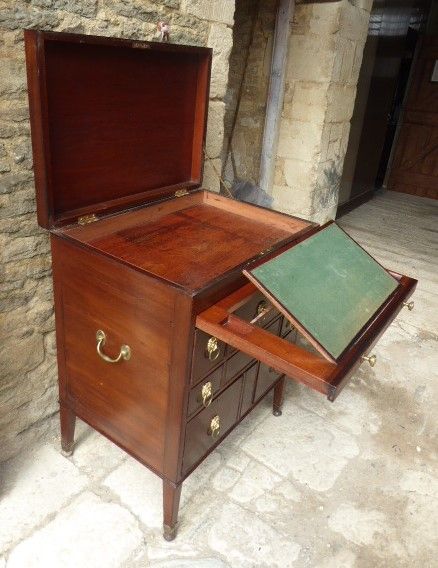
The standard of an officer travel chest depends on the selection of timber and the precision of its brass mounts. Superior examples display tightly fitted joints, well-cast brass hardware, and thoughtful internal arrangements such as secretaire drawers.
Provenance and maker attribution elevate certain pieces significantly. Surviving inscriptions, original keys, and documented makers differentiate standard utility trunks from exceptional commissioned pieces.
S. W. Silver & Co·Allen of London·Drew & Sons
The Officer Travel Chest Glossary
- Campaign chest
- A piece of furniture designed to dismantle into sections for easy transport by military personnel. These typically feature recessed brass handles and corner brackets to prevent snagging.
- Secretaire chest
- A chest of drawers incorporating a fitted writing desk drawer with a drop-front. This provides a portable writing surface for paperwork on the move.
- Camphor wood
- An aromatic timber prized for campaign furniture due to its insect-repellent properties. It protects stored uniforms and textiles from moths.
- China Trade
- Items manufactured in China during the 19th century or earlier for Western export. These often utilise native timbers like camphor wood.
- Brass bound
- Furniture strengthened with brass straps and corners. This protects the edges and corners of the wood from heavy impact during transit.
Officer Travel Chest: Frequently Asked Questions
What is an officer travel chest?
An officer travel chest is a portable container built for military service during the 18th, 19th, and early 20th centuries. These pieces provided secure storage for uniforms, documents, and personal belongings while on active duty.
Built to withstand rough handling, they often feature robust timber construction reinforced with brass or iron. Many separate into modular sections to ease the burden of transport.
How were campaign chests used?
Campaign chests served as portable wardrobes, desks, and storage trunks for officers on military campaigns or colonial postings. They allowed owners to maintain order and writing facilities in temporary quarters.
Drawer configurations often included secret compartments or fold-down writing surfaces. After service, many found permanent homes in domestic settings.
How do I identify a Victorian chest?
Victorian examples generally date from the mid-19th century to 1901 and often utilise dense mahogany, teak, or camphor wood. They typically display characteristic brass binding and recessed hardware.
Many of these pieces are built in two separate stacking sections. Some carry inscriptions or maker marks from firms active during the period.
Where should I place a campaign chest?
These chests suit living rooms, bedrooms, or studies as statement storage units. Their flat tops function well as display surfaces for lamps, books, or decorative objects.
Ensure the room has stable humidity to protect older timber and brass fittings. Allow adequate floor space, as these pieces are often deep and heavy.