

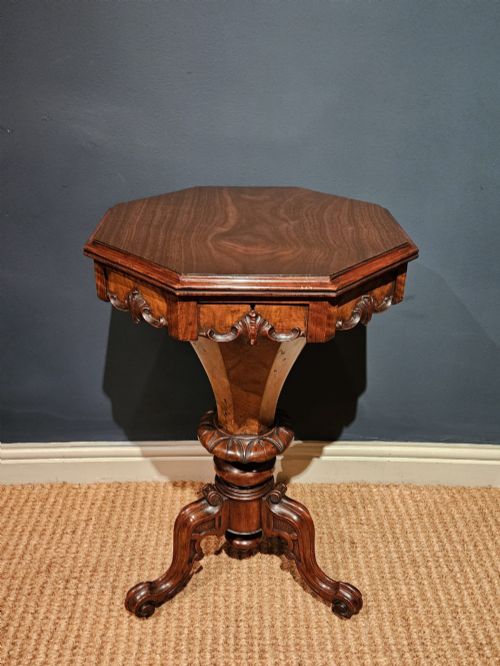
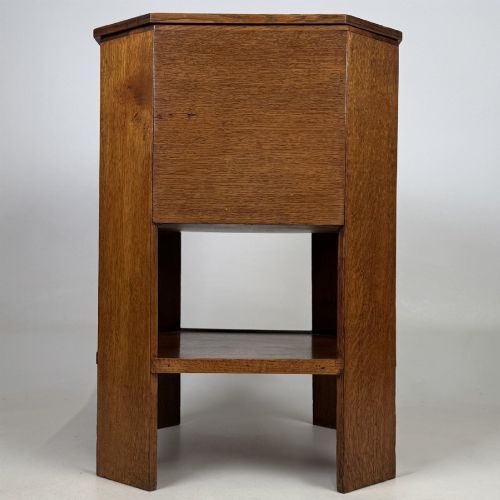
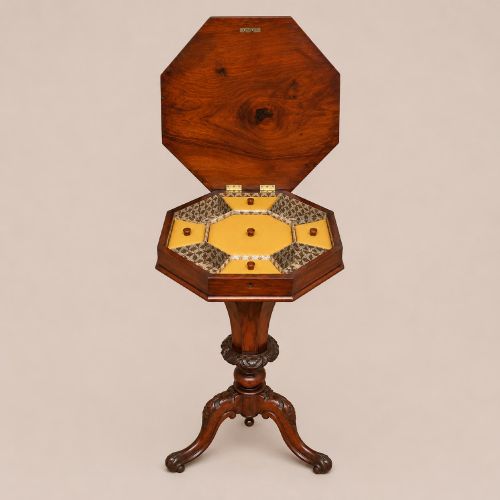
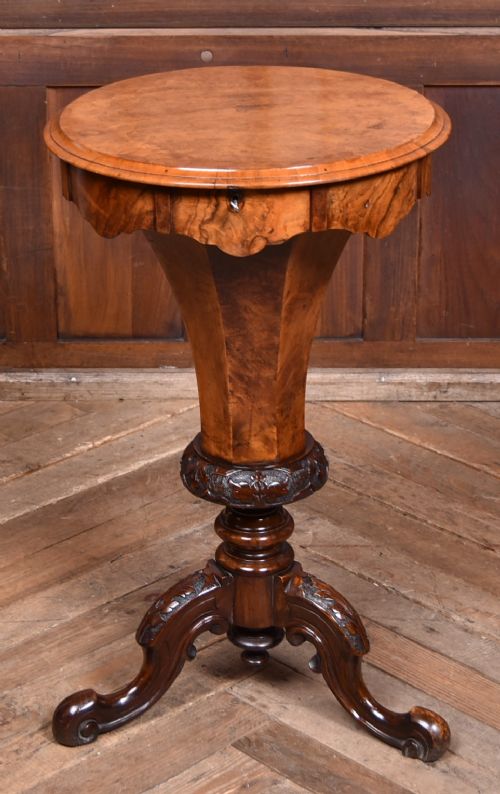


Octagonal Work Box
An octagonal work box gathers needlework tools and small treasures inside geometric symmetry, prized for neat storage and crisp eight-sided proportions.
Octagonal Work Box
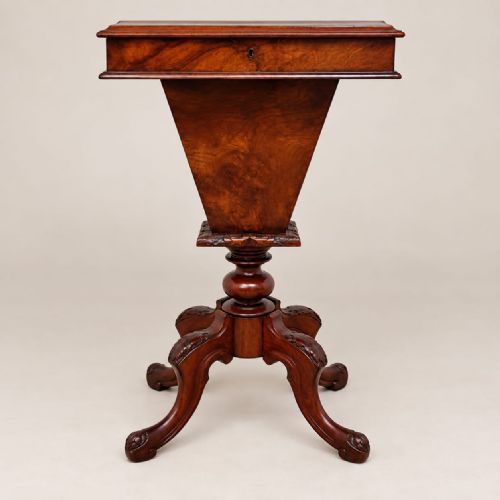
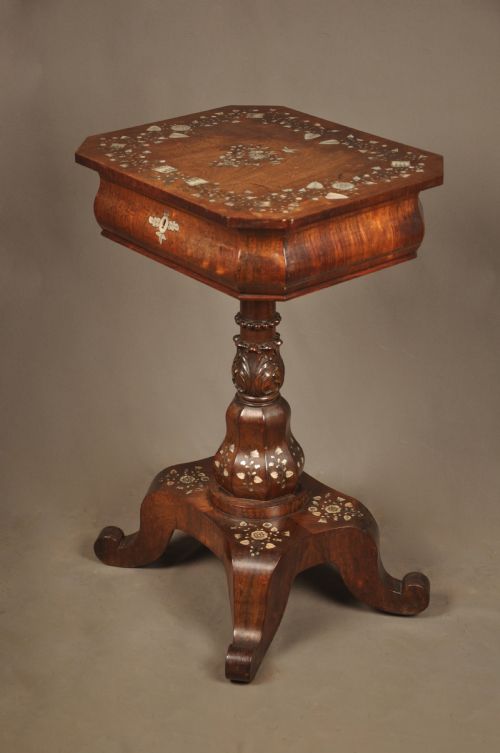
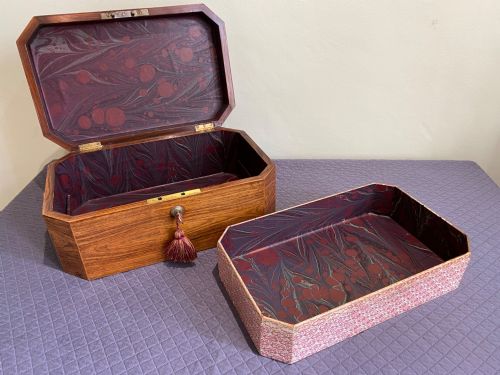
The search phrase brings up an octagonal work box in forms ranging from tabletop caskets and baskets to pedestal sewing tables and trumpet workboxes. These pieces date from the George III and Regency eras through the Victorian, William IV and Edwardian periods.
Most examples encountered here are Victorian walnut or rosewood trumpet tables with fitted interiors and silk collection bags below. Tabletop boxes and baskets appear alongside freestanding work tables, all united by eight-sided geometry.
Assessing quality
Quality rests on the crispness of the eight-sided geometry and the precision of the wood inlay or marquetry. Richness of grain in rosewood, walnut and mahogany distinguishes better examples.
Fitted internal compartments with original lids and intact silk work bags elevate a piece. Solid timber construction outperforms veneered carcases where the underlying wood lacks stability.
Octagonal Work Box Retail Price Guide 2026
Typical asking prices for octagonal work box among the pieces listed under this phrase on Sellingantiques today, from the lower quarter to the upper quarter. They describe what is for sale here now, not the wider market.
The listings show walnut and rosewood as the dominant timbers, spanning the George III period through to Edwardian times.
The Octagonal Work Box Glossary
- Trumpet table
- A freestanding work table featuring an octagonal body that flares outward toward the rim, resembling the bell of a musical instrument.
- Tunbridge Ware
- Small wooden items decorated with precise mosaic patterns formed from thousands of tiny tinted wood blocks.
- Sadeli mosaic
- An intricate form of micro-mosaic craft originating in India, utilising horn, bone and metal to create geometric surface patterns.
- Marquetry
- Decorative veneer work arranged in pictorial or geometric patterns using various coloured woods.
Octagonal Work Box: Frequently Asked Questions
What fits inside an octagonal work box?
These boxes store needles, threads, thimbles and small sewing implements within segmented internal trays. Many feature a suspended fabric bag beneath for wool and unfinished pieces.
Larger freestanding versions double as side tables while keeping sewing gear concealed out of sight.
How do I date an octagonal work box?
Regency and George III pieces display cleaner lines with satinwood or mahogany veneers. Victorian examples often introduce trumpet shapes, trumpet pedestals and heavy walnut marquetry.
Edwardian and later pieces lighter in build appear towards the turn of the twentieth century.
Where should I place a work box at home?
Tabletop boxes sit neatly on sideboards, desks or occasional tables as decorative storage. Freestanding sewing tables function well beside armchairs or sofas as small lamp tables.
The eight-sided shape allows them to fit comfortably into corners or tight spaces where rectangular tables look awkward.
Are these tables sturdy enough for daily use?
Solid mahogany, rosewood and walnut construction provides robust durability for everyday placement. Tripod bases and pedestal columns offer stable support when placed on level flooring.
Internal compartments and hinged lids require gentle handling to preserve original brass hinges and delicate wood veneers.