


Octagonal Wine Box
An octagonal wine box brings structured Georgian proportion and rich timber into a dining room.
Octagonal Wine Box
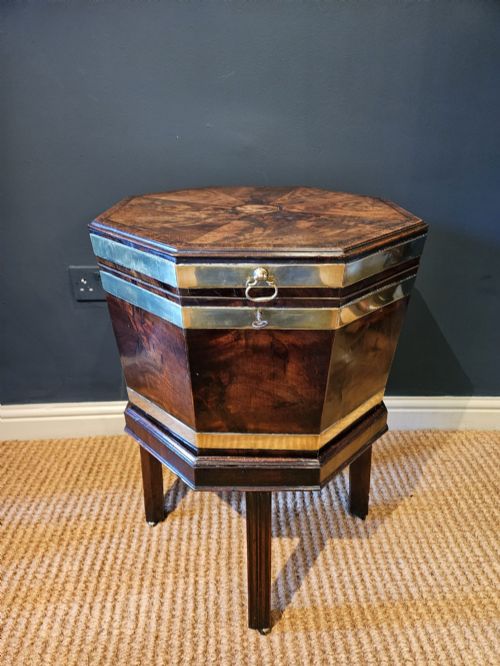
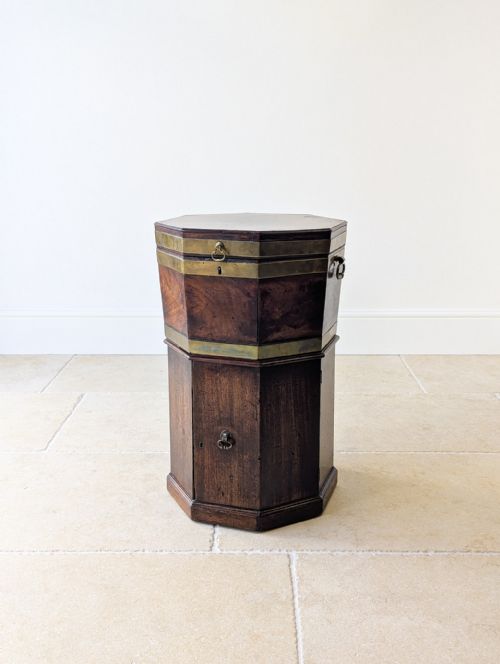
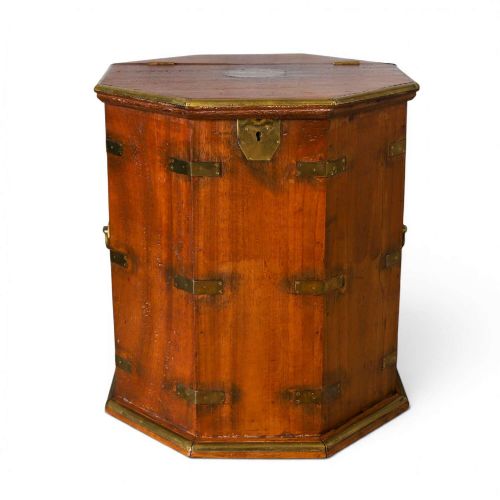
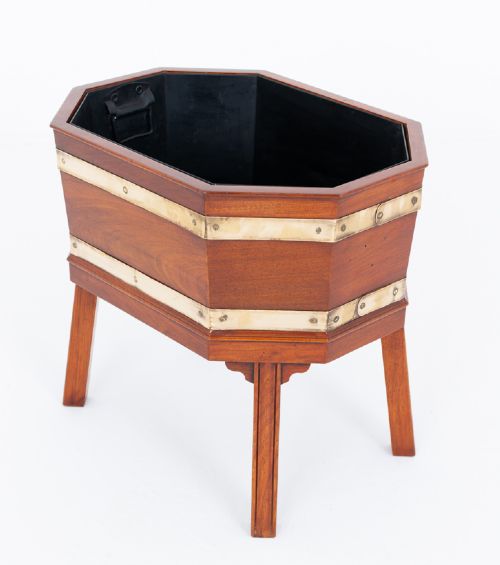
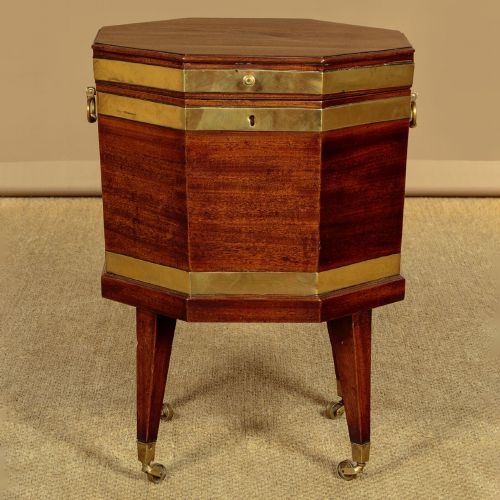
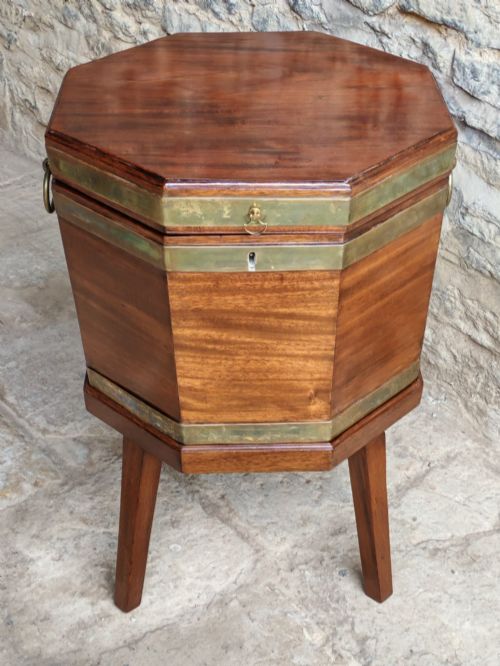
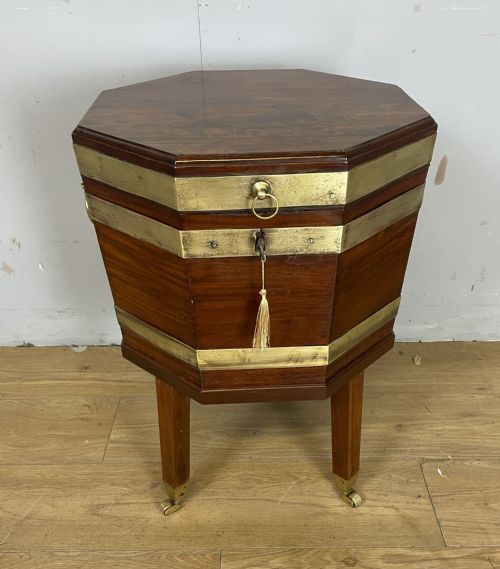
An octagonal wine box functions as a dedicated cellar chest designed to hold bottles and ice beneath a hinged lid. Buyers encountering these pieces on this page will see forms spanning the Georgian, Regency and early twentieth-century periods, alongside related Anglo-Indian colonial examples.
Most items take the form of cellarettes and wine coolers built with eight-sided bodies, frequently raised on tapered legs, fixed stands or casters. The primary variants recorded here include brass-bound mahogany models and inlaid occasional variants from the eighteenth and nineteenth centuries.
Materials and construction
Cabinetmakers constructed these pieces predominantly using solid mahogany, padouk and teak, selected for durability and deep grain figures. Timber sections were joined with precise corner construction to contain heavy loads of glass and liquid.
Metalwork played a structural and decorative role, with heavy brass bands securing the staves of cooler bodies and drop handles fitted to the sides for lifting. Inlaid variants incorporate contrasting boxwood stringing and linear banding into the primary wood surfaces.
The listings on this page span the Georgian and Regency periods through to the 1920s, utilising mahogany, teak, padouk and brass.
Judging quality and proportion
Quality rests in the crispness of the eight-sided geometry and the thickness of the timber used for the body and lid. Superior pieces display carefully matched grain patterns across the panels and robust original brass fittings rather than later replacements.
The integration of the stand or legs dictates the overall elegance of the piece, with integrated tapering supports or sturdy pedestals separating finer workshop productions from simpler utilitarian boxes.
The Octagonal Wine Box Glossary
- Cellarette
- A low cabinet or box designed to hold bottles of wine near the dining table. They frequently include internal lead-lined compartments for ice.
- Brass-bound
- A technique where metal hoops or straps are fitted around wooden containers for strength and decoration. This method mimics the construction of coopered casks.
- Padouk
- A dense tropical hardwood with a reddish-brown hue utilised in colonial cabinetmaking. It provides exceptional stability and deep colour.
- Stringing
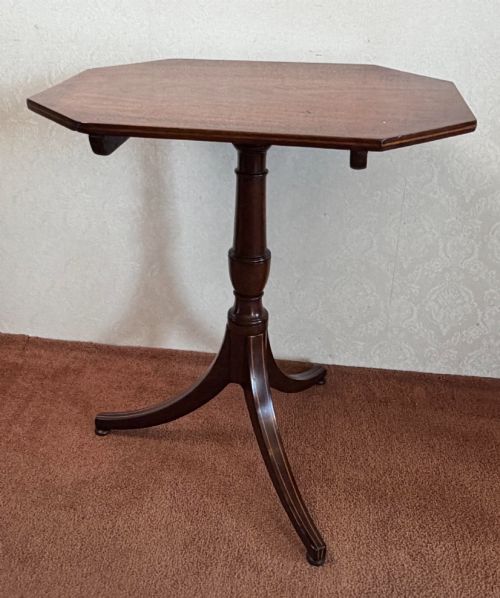
- Thin lines of contrasting wood inlaid into channels cut into the surface of a piece. It outlines panels and geometric borders on tabletops and lids.
Octagonal Wine Box: Frequently Asked Questions
What is an octagonal wine box?
An octagonal wine box is a specialised storage chest shaped with eight sides, historically built to keep wine bottles cool and secure during dining.
These pieces typically feature hinged lids and sturdy internal divisions to hold glass bottles upright among ice.
How were these boxes used?
Servants placed these containers near the dining table to store wine without requiring frequent trips to the main cellar.
The metal linings and thick wooden walls maintained low temperatures for chilled beverages throughout long meals.
How do I date an octagonal wine cooler?
Dating relies on observing timber choices like mahogany or padouk alongside construction methods such as brass banding and dovetailing.
Georgian and Regency examples display specific proportions and leg styles that differ from later twentieth-century revivals.
How do I clean a mahogany wine box?
Maintenance requires gentle dusting with a dry lint-free cloth and occasional application of traditional beeswax to nourish the wood.
Harsh chemical cleaners and excessive moisture should be avoided to protect the polish and brass fittings.