


Octagonal Teak Side Tables
These octagonal teak side tables bring intricate colonial craftsmanship and rich timber grain straight into the British home.
Octagonal Teak Side Tables
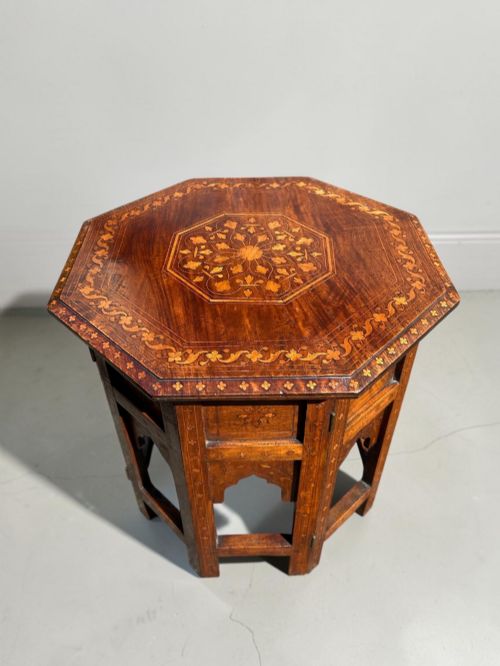
When you search for octagonal teak side tables, you meet pieces originating largely from nineteenth and early twentieth century colonial workshops. These items encompass Anglo-Indian, Anglo-Burmese, and wider Indian designs built for domestic use as occasional, side, and coffee tables.
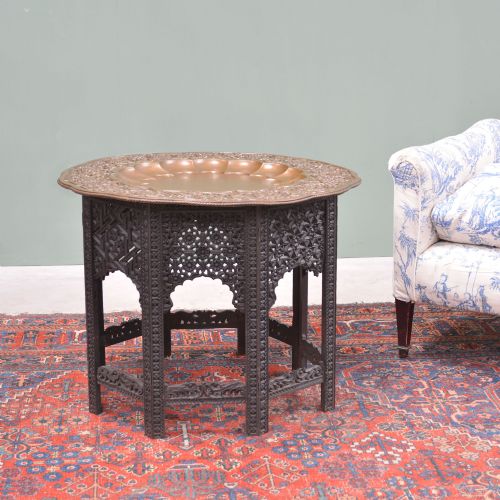
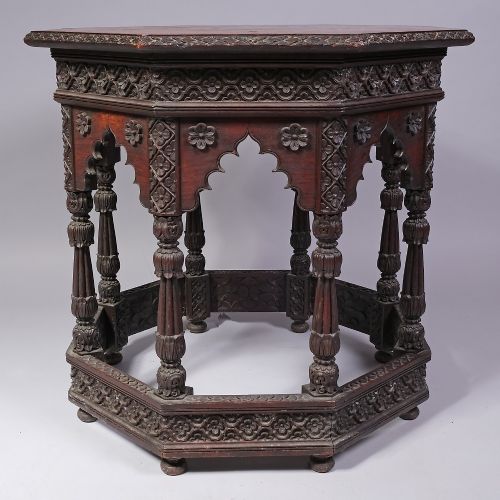
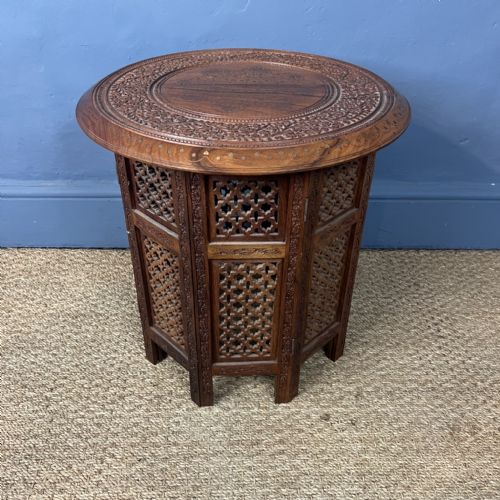
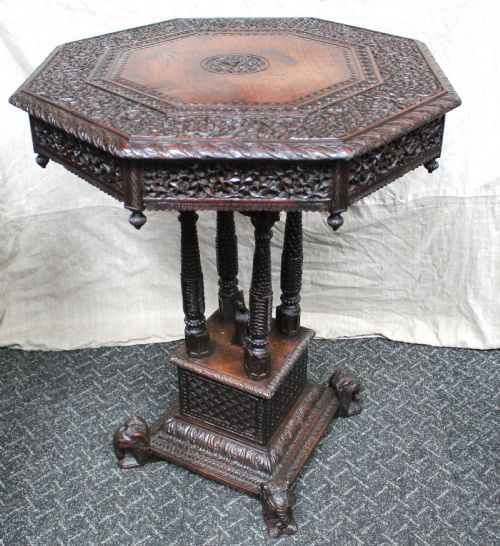
The most common formats on this page feature eight-sided tops resting upon folding bases or carved supports. Makers constructed these surfaces primarily in teak and hardwood, frequently pairing the timber with contrasting decorative elements.
Geographic variations span from Hoshiarpur production centres to Bombay Presidency pieces and Burmese workshops. Forms range from compact lamp tables to larger centre tables, often incorporating clever folding mechanisms for practical transport.
Materials and construction
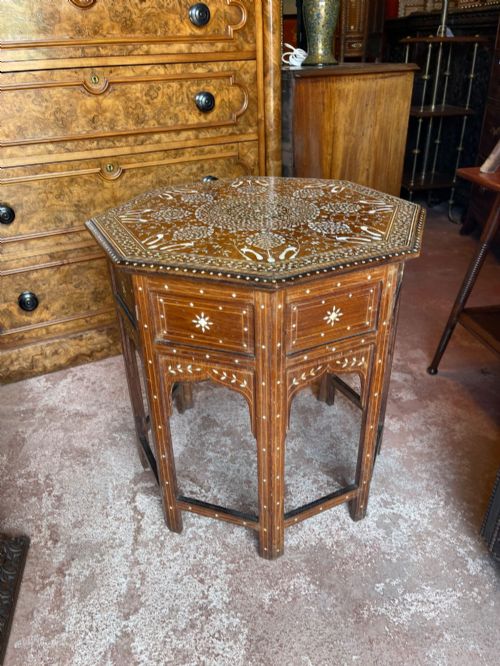
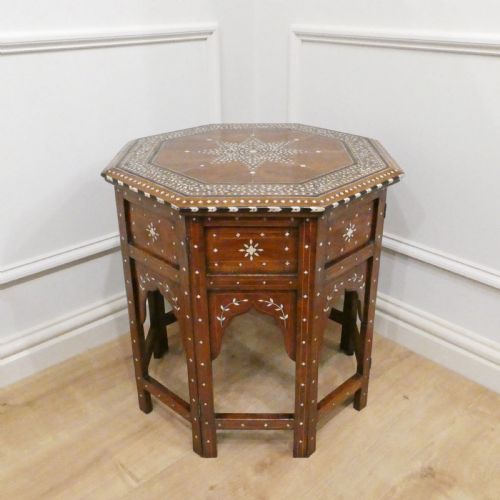
Craftsmen built these tables using dense tropical hardwoods, predominantly selecting durable teak for its strength and rich grain. Artisans frequently paired this primary timber with intricate inlays of brass wire, sheet, and contrasting bone.
Carving represents the defining technique across these pieces, with deep relief work covering tabletops, aprons, and folding leg assemblies. Workshops utilised traditional hand tools to execute dense foliate motifs, geometric patterns, and figural supports like elephants and camels.
Many examples feature clever folding wooden bases constructed from interlocking panels that collapse flat for transport. Finishers typically applied traditional wax treatments to seal the timber while highlighting the natural warmth of the hardwood.
Listings span the nineteenth and early twentieth centuries, featuring teak, brass, bone, and wax finishes across side, coffee, and centre tables.
Judging quality and execution
Quality in these tables rests upon the crispness and depth of the hand carving across the wooden surfaces. Superior examples display sharp, cleanly defined foliage and figures without the soft edges or splintering found in rushed production.
The integration of metal and bone inlays dictates the tier of craftsmanship, requiring precise channel cutting and flush fitting. Stronger pieces maintain structural stability in their folding bases, ensuring the eight-sided top sits level without excessive play in the hinges or joints.
The Octagonal Teak Side Tables Glossary
- Anglo-Indian
- A descriptive term for furniture made in India during the British period, combining local craftsmanship with European forms. These pieces often merge traditional Indian carving techniques with standard British furniture shapes.
- Hoshiarpur
- A major centre in the Punjab renowned for intricate woodwork and inlay. Tables from this region typically feature dense surface carving combined with delicate brass and bone wire work.
- Tray top
- A tabletop style featuring a raised perimeter edge to prevent items from sliding off. This practical feature appears frequently on folding occasional and side tables.
- Campaign furniture
- Portable pieces designed to be dismantled or folded for military travel. These items incorporate clever hinges and joints for ease of movement.
- Occasional table
- A light, movable table designed for specific, intermittent use around a room. These versatile pieces function easily as lamp or side tables.
Octagonal Teak Side Tables: Frequently Asked Questions
How were octagonal teak side tables used originally?
These tables served as versatile occasional furniture in colonial households, easily moved for serving tea or displaying lamps.
Their portable nature made them practical additions to drawing rooms and verandahs alike.
How do I care for teak and brass inlay?
Maintain the timber with a traditional wax finish applied sparingly with a soft cloth to preserve the natural lustre.
Avoid excessive moisture and polish brass inlays gently along the grain to prevent lifting the wire.
Are folding bases typical for these tables?
Many examples feature clever interlocking wooden bases that collapse completely flat for storage or transport.
This folding mechanism reflects their origins as portable campaign furniture adapted for colonial life.
What defines Hoshiarpur work?
Hoshiarpur pieces are distinguished by densely packed carved floral patterns covering every available surface of the timber.
Artisans from this region embedded precise brass and bone wire into the wood to create striking geometric contrasts.