
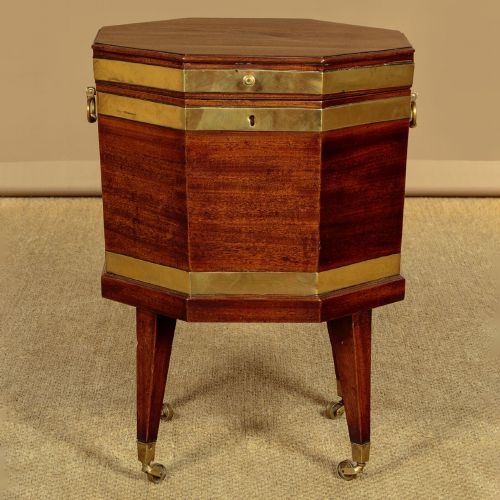
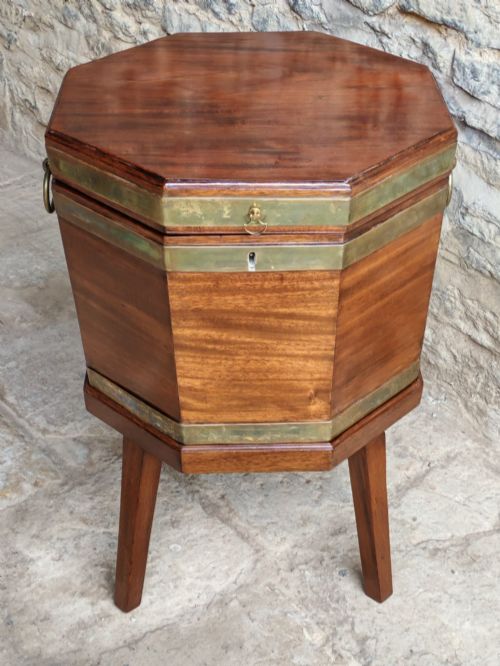


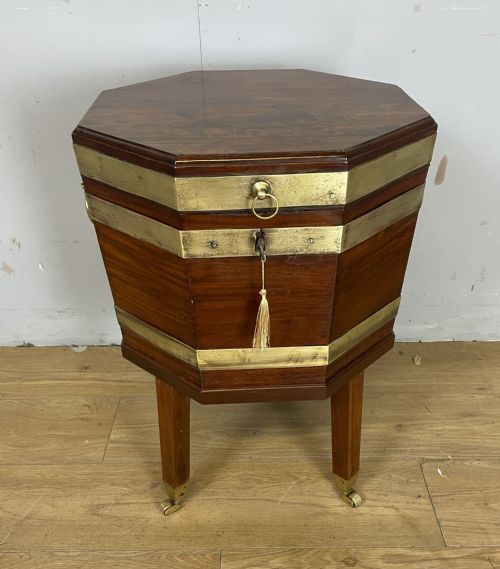


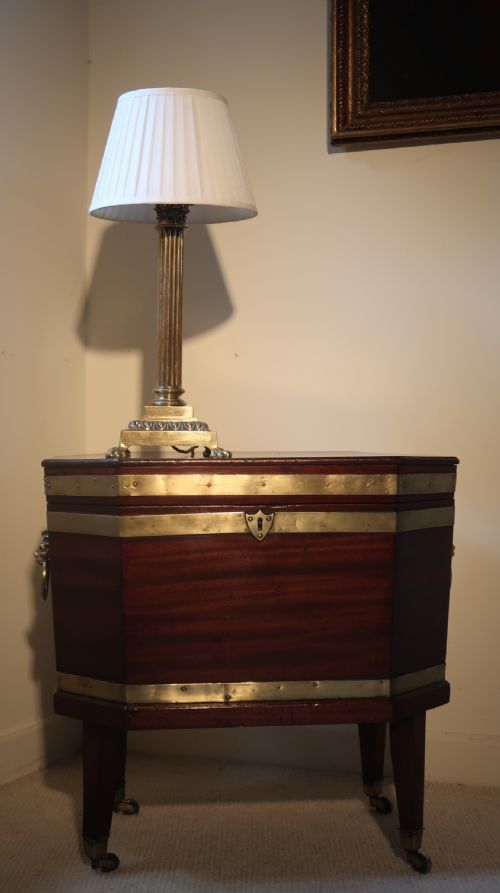


Octagonal Brass Bound Cooler
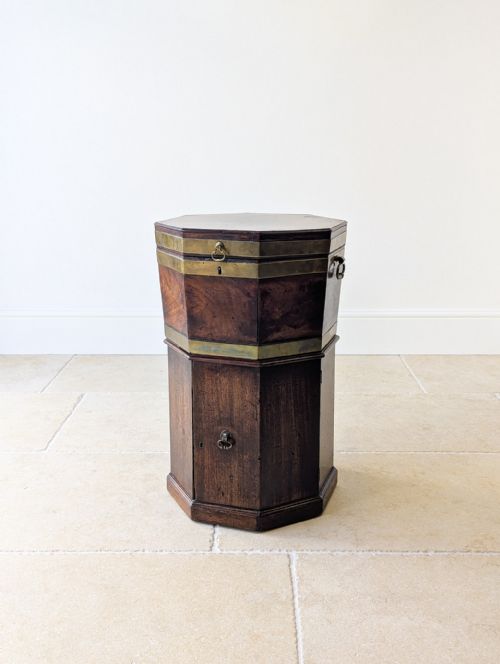
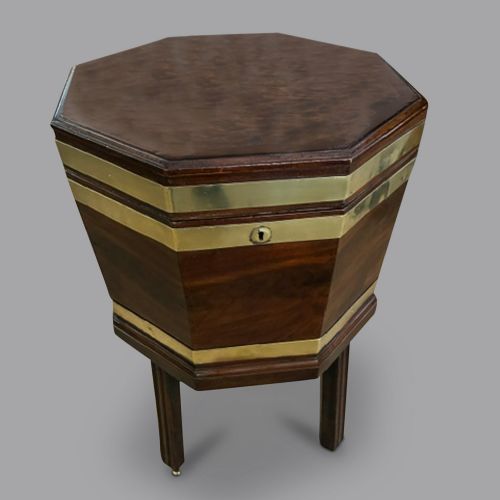
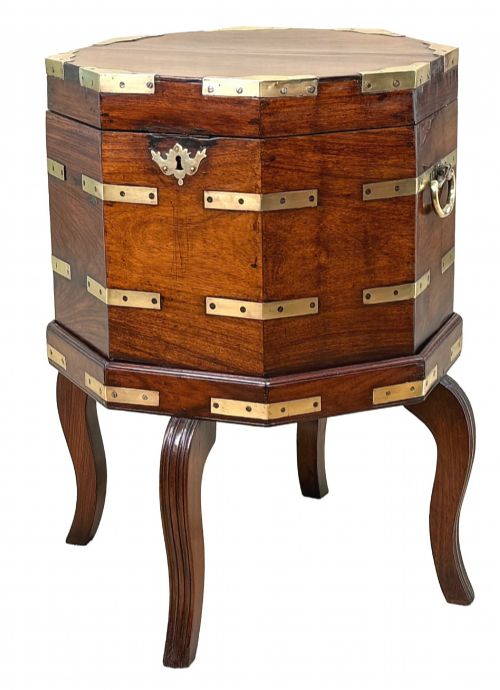
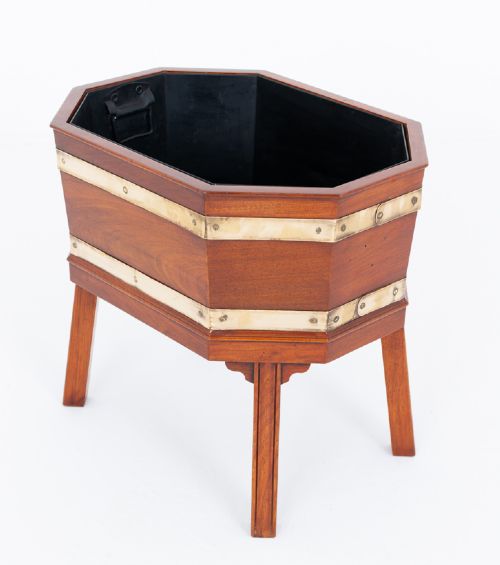
An octagonal brass bound cooler is a vessel for chilling bottles at table, rendered in timber and metal.
Octagonal Brass Bound Cooler
The octagonal brass bound cooler is a distinct form of wine cooler or cellarette designed to hold bottles and ice during dining. When searching for an octagonal brass bound cooler, buyers encounter pieces spanning the eighteenth century, the Regency period, and later revivals from the twentieth century.
Mahogany and padouk dominate the construction of these vessels, reinforced with metal hoops and fittings. Most examples follow Georgian or Regency proportions, reflecting the formal dining habits of their original periods.
Materials and construction
Cabinetmakers constructed these coolers primarily in solid mahogany or padouk, jointed to form a watertight eight-sided body. The timber surfaces receive a polished finish that highlights the grain of the wood.
Heavy brass bands encircle the body to provide structural strength and contrast with the dark tropical timbers. Metal handles and liners complete the construction, equipping the vessel for holding ice and liquid.
Listings span the eighteenth century, the Regency era, and the twentieth century, constructed primarily in mahogany and padouk with brass fittings.
Assessing quality and character
Quality rests in the crispness of the eight-sided geometry and the integration of the brass banding into the timber. Earlier Georgian examples display tight joinery and well-figured mahogany, whereas later revivals from the twentieth century show variations in timber selection and metalworking technique.
The presence of original stands, mounts, and interior liners elevates a piece, as does the depth of colour in the aged wood. Subtle differences in the weight of the brass and the proportion of the taper distinguish standard production from finer cabinet work.
The Octagonal Brass Bound Cooler Glossary
- Cellarette
- A lockable container used for storing bottled wine in a dining room before service. It often sits on the floor beneath a sideboard.
- Brass bound
- A method of reinforcing wooden vessels with metal bands fixed around the circumference. This technique adds both structural rigidity and decorative contrast.
- Padouk
- A dense tropical hardwood with a reddish-brown hue utilised in eighteenth-century cabinet making. It provides a durable and heavily figured surface for formal furniture.
- Regency style
- An aesthetic drawing on classical Roman, Greek, and Egyptian motifs popular during the early nineteenth century and later revived. It prioritises clean architectural lines and strong contrasts.
Octagonal Brass Bound Cooler: Frequently Asked Questions
What was an octagonal brass bound cooler used for?
These vessels held ice and wine bottles beside the dining table during formal meals. Servants placed the bottles inside the chilled compartment to keep beverages at the correct temperature for guests.
The metal lining protected the timber from melting ice and water. After the meal, the contents could be secured depending on whether the vessel featured a locking lid.
How do I date a wine cooler?
Dating relies on examining the timber species, the hand-cut joinery, and the style of the brass mounts. Eighteenth-century pieces typically show dense mahogany or padouk with patinated brass, while twentieth-century revivals exhibit different internal construction methods.
Comparing the proportions to documented Georgian and Regency furniture helps confirm the period of manufacture. Secondary woods on the interior also provide clues to the workshop's origin.
Can I use it as a planter?
Many of these vessels serve alternative domestic purposes such as a jardiniere for holding potted plants. The waterproof metal lining makes them practical for containing soil and moisture.
Care must be taken to protect antique wood surfaces from standing water and fertilizer spills. Placing a modern saucer inside the liner prevents direct contact with the historic metal.
How do I maintain the brass and mahogany?
Regular dusting with a dry cloth keeps the polished mahogany surface clean without stripping the aged patina. Wax can be applied sparingly to nourish the tropical hardwood.
Brass bands require gentle cleaning to remove tarnish while preserving their historical appearance. A soft cloth avoids scratching the metal or the surrounding timber.