
Oak Wooden Chest
An oak wooden chest brings centuries of tactile grain and sturdy utility into a modern interior.
Oak Wooden Chest
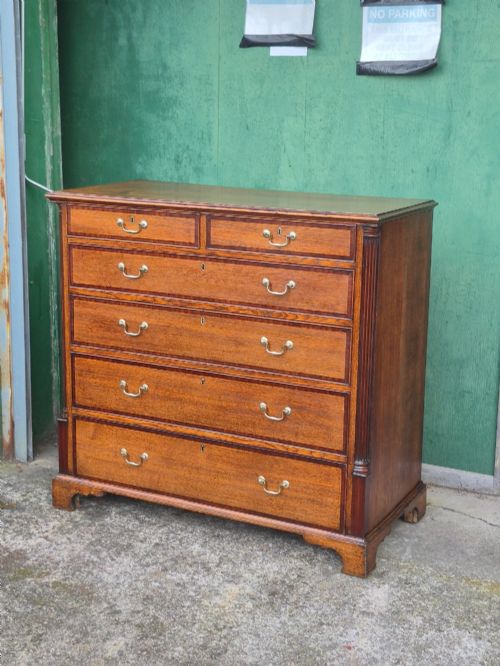
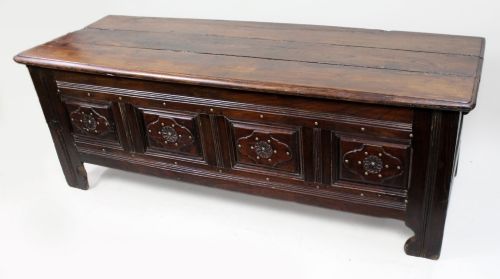
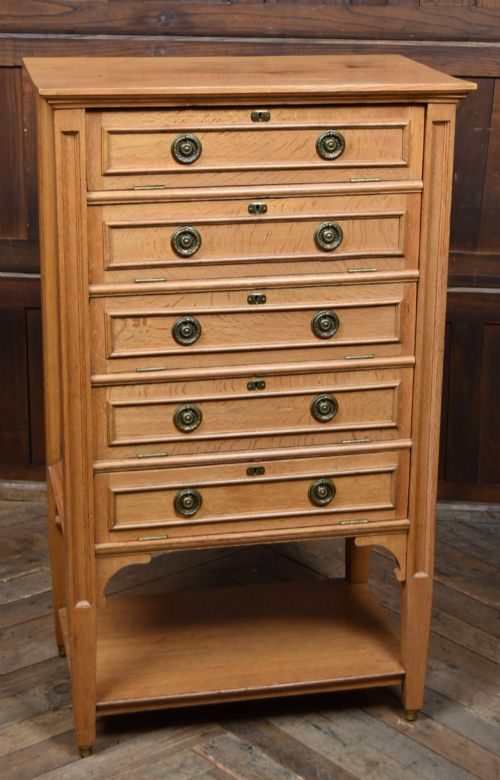
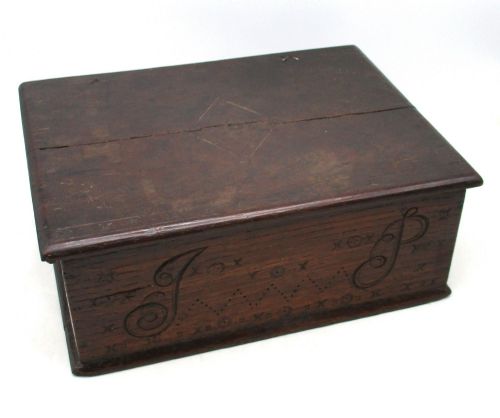
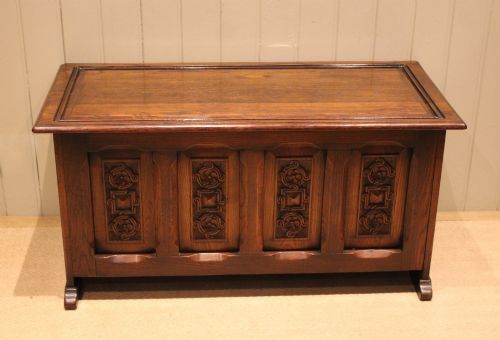
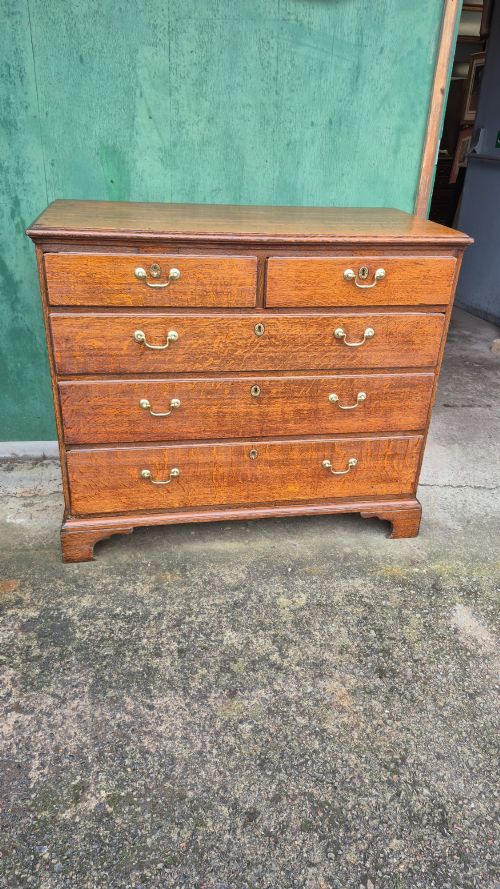
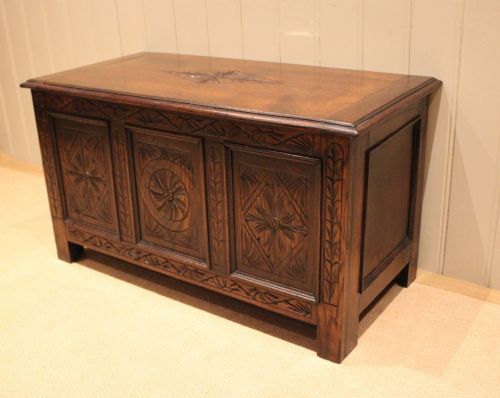
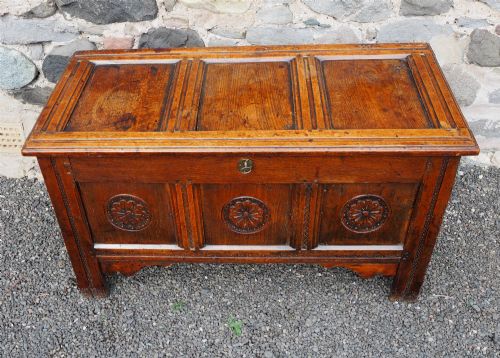
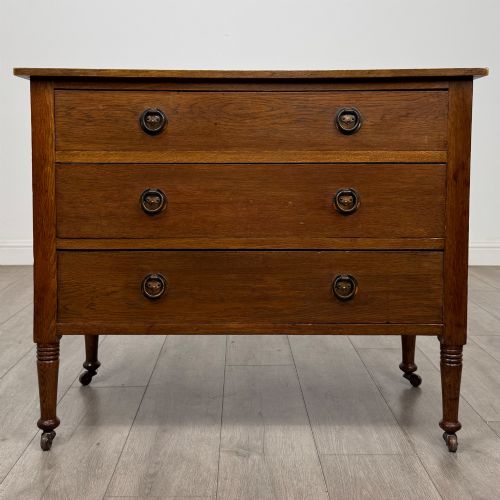
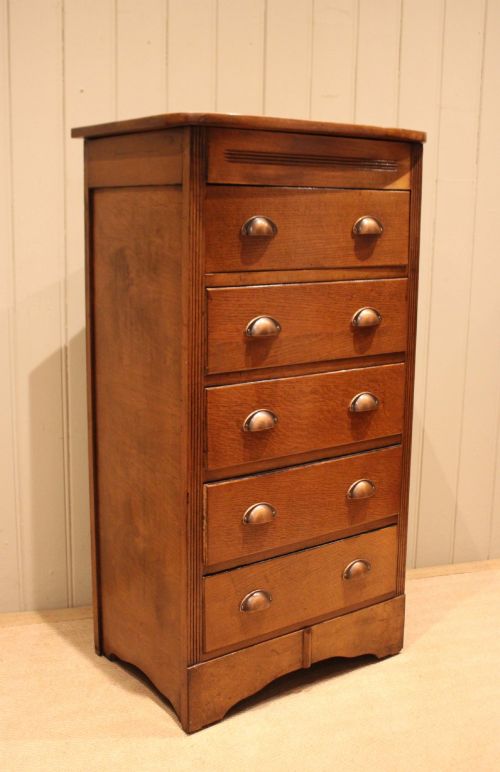
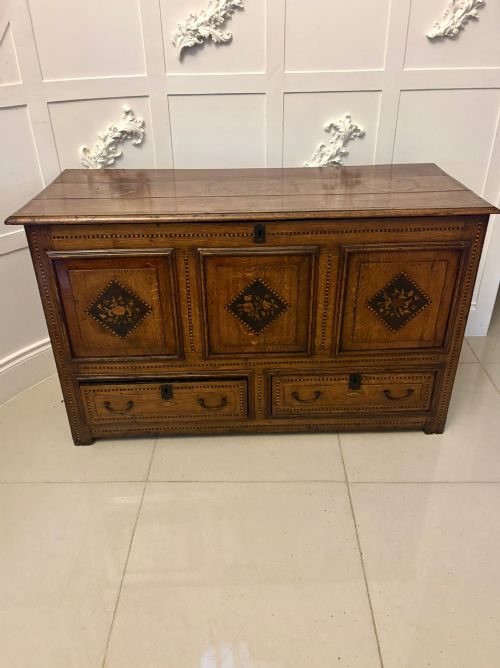
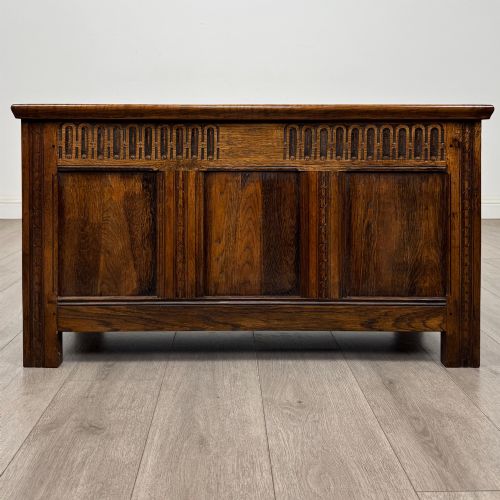
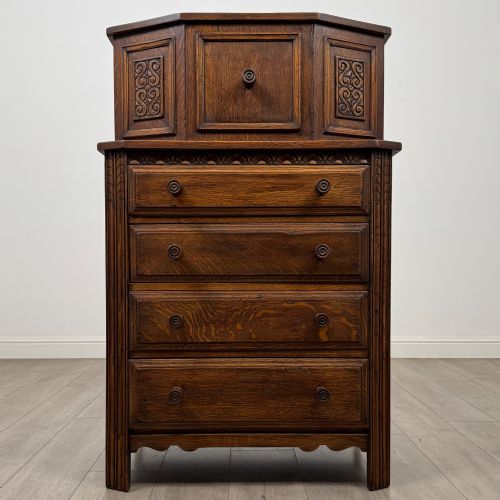
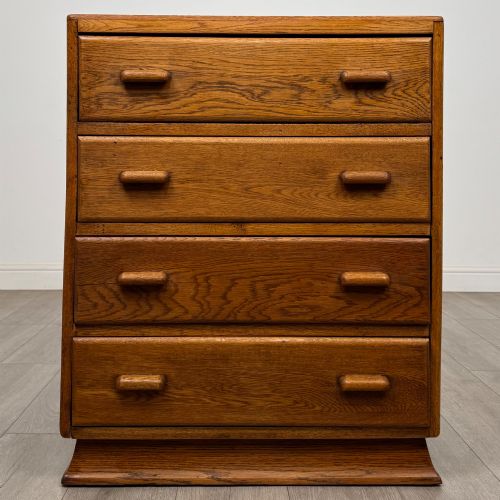
When you search for an oak wooden chest, you encounter a lineage spanning from seventeenth-century coffers to Edwardian filing cabinets and blanket boxes. These pieces serve primarily for storage, appearing variously as panelled coffers, multi-drawer chests, and specialised storage trunks.
The selections on this page draw heavily from seventeenth and eighteenth-century origins, alongside later Edwardian and twentieth-century interpretations. Coffers and drawer chests dominate the forms, reflecting centuries of domestic utility across British, French, and Welsh workshops.
Markers of Distinction
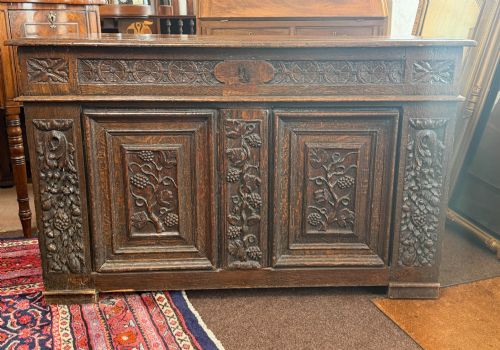
Distinction in these pieces rests upon the integrity of the timber, the depth of period carving, and the survival of original surfaces. Pieces retaining patinated golden or dark oak tones without excessive restoration command greater appreciation.
Structural honesty and the crispness of hand-carved detailing separate standard utilitarian boxes from exceptional examples. The harmony between the original hardware, such as brass hinges or locks, and the timber body defines the overall character.
Some early Welsh coffers carry secret compartments originally designed for hiding contraband from nineteenth-century tax inspectors.
The Oak Wooden Chest Glossary
- Coffer
- A large wooden chest traditionally used for storing valuables or household goods. Early examples often feature heavy panelled lids and robust frame construction.
- Mule chest
- A storage chest featuring one or more drawers at the base beneath the main compartment. This form bridges the evolution between the simple coffer and the modern chest of drawers.
- Marquetry
- Decorative inlay work utilising various woods to create geometric or floral patterns on the surface. Artisans fit thin veneer sections precisely into carved recesses.
- Panelling
- A method of framing thin wooden boards within grooved stiles and rails to accommodate seasonal wood movement. This technique prevents the timber from warping or splitting.
- Patina
- The surface sheen and mellow colour developed by timber through age, handling, and wax polishing. This quality reveals the history and usage of the piece.
Oak Wooden Chest: Frequently Asked Questions
How do I date an oak chest?
Dating relies on observing construction methods, joinery marks, and stylistic decorative motifs. Early seventeenth-century pieces typically utilise pegged frame-and-panel assemblies and hand-carved panels.
Later Victorian and Edwardian examples show machine-sawn timber, standardised fixings, and different dovetailing techniques on internal drawer components.
Where should I place an oak chest?
These pieces function effectively as coffee tables, blanket storage at the foot of a bed, or hallway catch-alls. Their robust top surfaces provide practical display areas for lamps or decorative objects.
Keep them away from direct heat sources and intense sunlight to prevent the solid oak timber from drying out or splitting over time.
Are oak chests heavy?
Solid oak is a dense hardwood, making these chests considerably heavy and sturdy. Moving them typically requires two people, particularly for seventeenth-century panelled coffers.
This substantial weight contributes to their durability and ensures they remain stable when utilised for seating or heavy storage.