



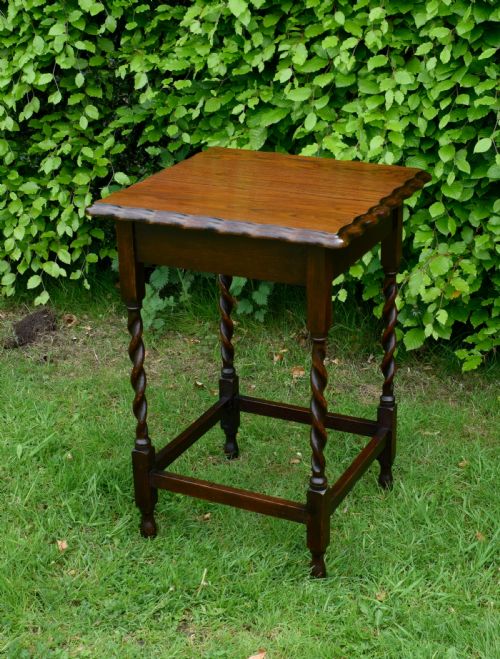
Oak Twist Leg Table
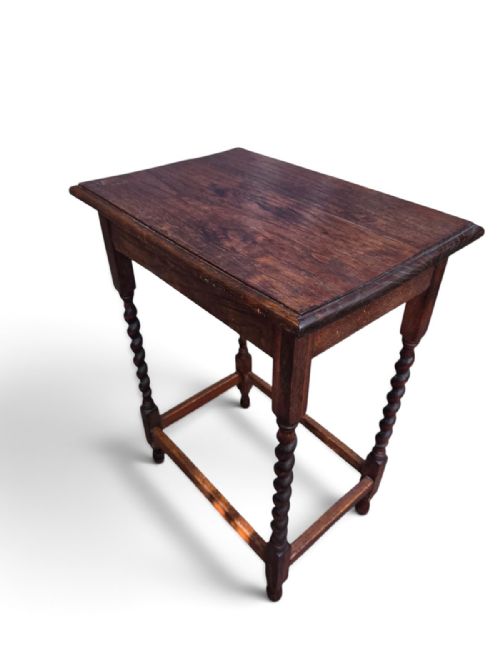
An oak twist leg table brings tactile grain and spirited turned timber into a room, offering practical surface space with distinct historical character.
Oak Twist Leg Table
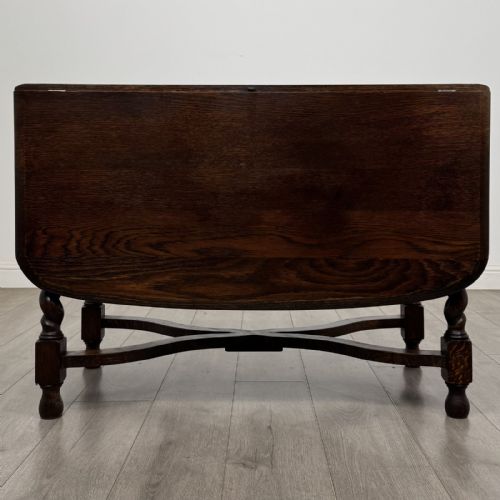
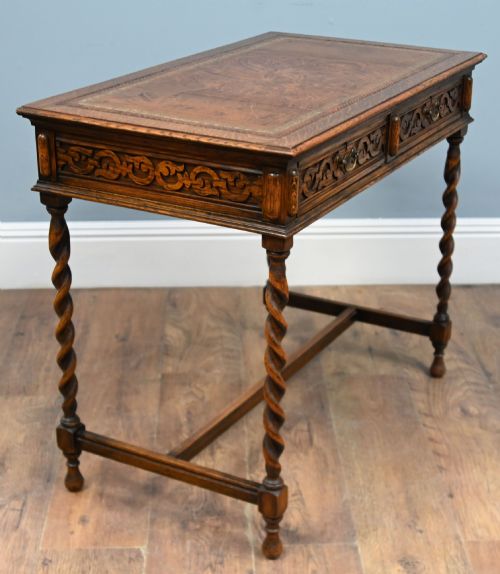
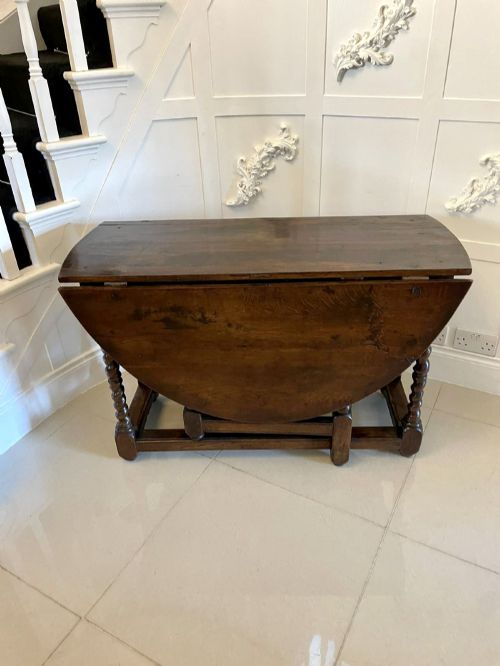
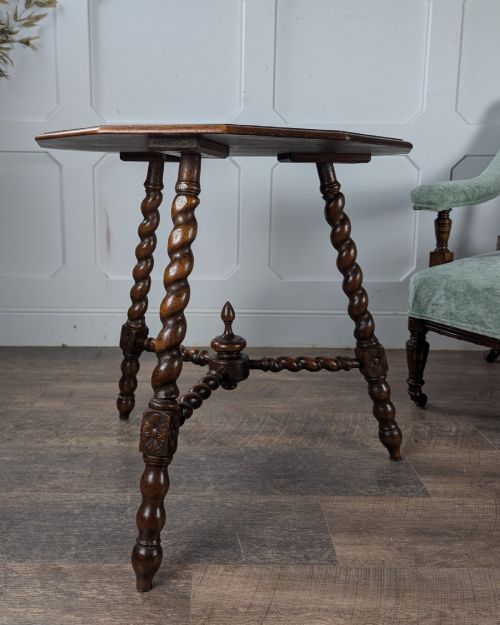
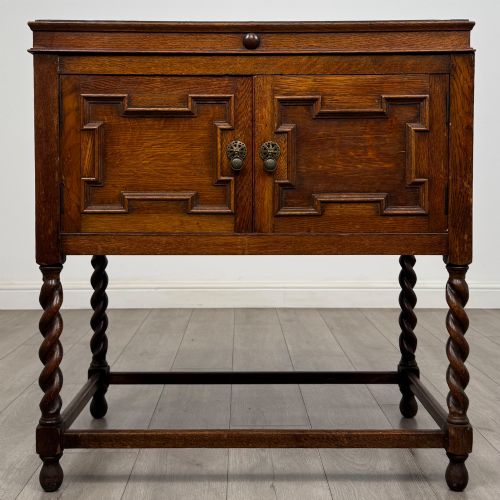
An oak twist leg table spans centuries of cabinet-making, appearing in dining, occasional, and writing formats across this page. Buyers searching for an oak twist leg table will encounter everything from substantial gateleg dining tables to compact side tables and plant stands.
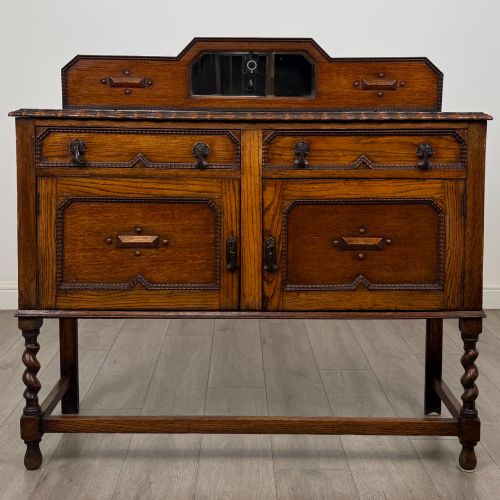
The selection ranges from seventeenth-century origins through Victorian and Edwardian revivals up to nineteen-twenties pieces. Edwardian and early twentieth-century interpretations emerge most frequently in this selection, often combining solid oak construction with prominent spiral turnings.
Judging quality
Excellence in these tables rests upon the crispness of the timber turning and the stability of the frame joints. Superior examples display deep, uniform twist carving and retain a rich, patinated surface on the solid oak.
The structural integrity of drop leaves and gateleg pivots separates fine pieces from simpler utilitarian items. Balanced proportions and thoughtful integration of carved details distinguish the upper tier of revival pieces from standard workshop output.
Oak Twist Leg Table Retail Price Guide 2026
Typical asking prices for oak twist leg table among the pieces listed under this phrase on Sellingantiques today, from the lower quarter to the upper quarter. They describe what is for sale here now, not the wider market.
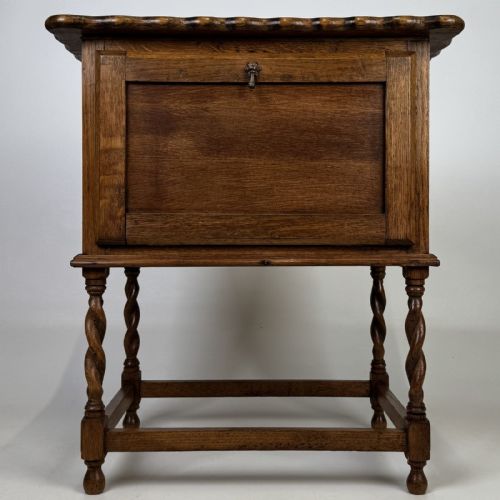
One towering plant stand stands ready to elevate your prized potted fern on a spiral pedestal.
The Oak Twist Leg Table Glossary
- Barley twist
- A spiral turning resembling a twisted column or rope, popular in seventeenth-century furniture and revived during the Victorian and Edwardian eras. This distinctive decorative feature defines the legs of the tables on this page.
- Gateleg table
- A table with hinged leaves supported by legs that swing outward like a gate. This clever mechanism allows a large dining surface to fold into a narrow footprint.
- Jacobean Revival
- A nineteenth and twentieth-century design movement mimicking the heavy, carved oak furniture of the early seventeenth century. Pieces from this style often incorporate geometric mouldings and dark patination.
- Parquetry
- A geometric mosaic of wood pieces used for decorative surface inlay. Late seventeenth-century tables employ this technique on tabletops to create subtle pattern and texture.
- Drop-leaf table
- A table featuring fixed centre sections with hinged flaps on either side. These flaps raise to extend the usable surface area.
Oak Twist Leg Table: Frequently Asked Questions
How do I use an oak twist leg table in a modern room?
These tables adapt well as desks, lamp tables, or compact dining options where timber warmth is required. The sculptural legs provide visual interest that pairs easily with both traditional and contemporary seating.
Placing a side table beside a sofa or using a gateleg format for occasional dining makes practical use of the folding mechanisms. The dark oak tones anchor lighter interior colour schemes effectively.
How do I distinguish a seventeenth century table from a revival piece?
Original seventeenth century examples show distinct hand-tool marks, pegged joints, and timber shrinkage appropriate to great age. Revival pieces from the Victorian and Edwardian periods utilise machine-sawn components and standard twentieth-century fixings.
Examining the underside and drawer construction reveals the technological methods of the era in which the timber was worked.
What is the best way to care for solid oak surfaces?
Regular dusting with a dry, soft cloth maintains the finish without building up greasy residues. Avoid placing timber tables near direct heat sources or strong sunlight to prevent warping and fading.
Applying a traditional beeswax occasionally nourishes the grain and preserves the historic patina of the oak.
Why are drop leaf tables so common in these designs?
Drop leaf configurations allowed households to maximise floor space when dining was finished. The folding mechanism provided large surface areas without permanently occupying the centre of a room.
Cabinet-makers paired this functional flexibility with decorative barley twist legs to create furniture that was both versatile and ornamental.