

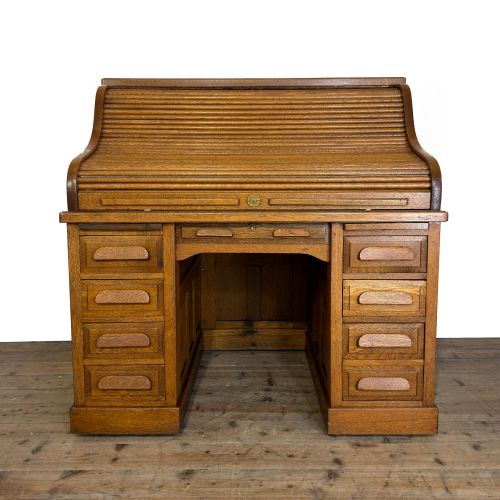
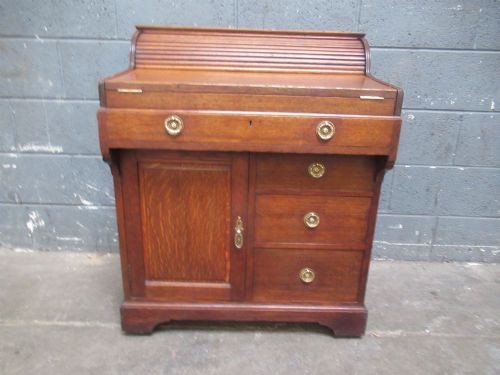
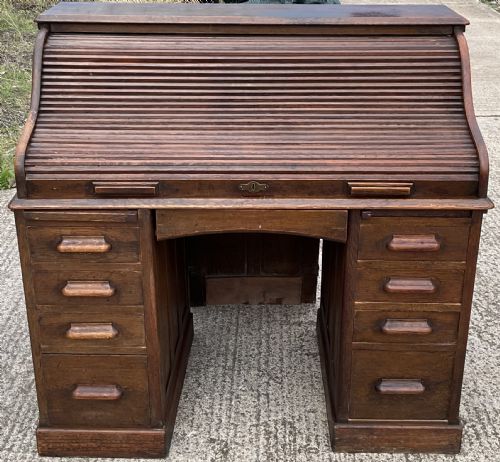
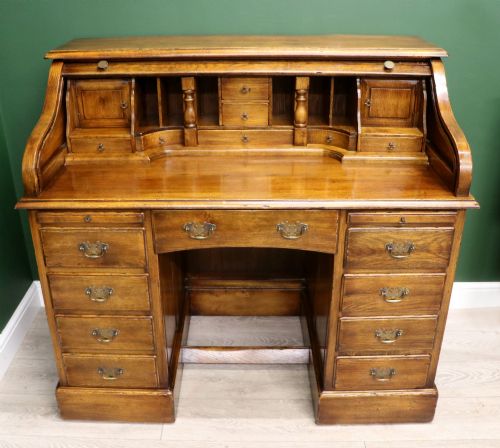
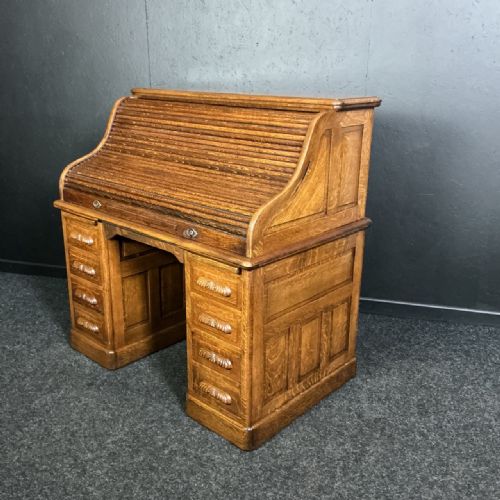


Oak Tambour Bureau
An oak tambour bureau offers a clever slatted writing surface that conceals workspace neatly when closed.
Oak Tambour Bureau
An oak tambour bureau is a fitted desk featuring a slatted wooden shutter that rolls back to reveal pigeonholes and drawers. When you search for an oak tambour bureau, you encounter substantial writing furniture primarily originating from the Victorian and Edwardian eras, alongside pieces from the 1920s and 1930s.
The selection here encompasses standard desks, pedestal formats, and larger bureau bookcases that combine enclosed shelving with a roll-top writing compartment. These pieces serve as practical workstations while bringing traditional timber grain and joinery into modern interiors.
Materials and construction
These items are constructed predominantly from solid oak, sometimes combined with secondary elements such as brass handles, leather writing surfaces, and glass panel doors on bookcase variants. The defining tambour mechanism relies on closely fitted wooden slats glued to a flexible canvas or fabric backing, allowing the shutter to curve smoothly along internal tracks.
Cabinet makers utilised traditional panelled construction methods to build the pedestals and carcases, ensuring stability for the heavy roll-top mechanisms. Exterior surfaces display the natural grain of oak, finished to highlight the timber without obscuring its texture.
Oak Tambour Bureau Retail Price Guide 2026
Typical asking prices for oak tambour bureau among the pieces listed under this phrase on Sellingantiques today, from the lower quarter to the upper quarter. They describe what is for sale here now, not the wider market.
Listings span the Victorian, Edwardian, and interwar periods, utilising solid oak alongside glass, brass, and leather.
Judging quality in construction and design
Quality in these desks is measured by the smoothness of the tambour action and the precision of the slatted track alignment. Superior examples glide without catching, indicating careful initial fitting and minimal warping of the timber over decades of use.
Heavier pedestal configurations and pieces featuring fitted interior stationery compartments demonstrate higher ambition in design and carpentry. The choice of solid oak throughout the carcase and drawers distinguishes well-engineered workshop production from lighter commercial alternatives.
Maples of London and Paris·James Shoolbred and Co
The Oak Tambour Bureau Glossary
- Tambour
- A flexible shutter made from narrow strips of wood attached to canvas, allowing a desktop or cabinet front to curve around a track.
- Pedestal desk
- A heavy freestanding writing table supported by two vertical banks of drawers rather than simple legs.
- Bureau bookcase
- A tall combination piece uniting a lower writing desk with upper shelving enclosed by glazed doors.
- Arts and Crafts
- A design movement focusing on honest construction, visible joinery, and the natural qualities of materials like oak.
Oak Tambour Bureau: Frequently Asked Questions
How does a tambour mechanism work?
A tambour shutter consists of small wooden slats glued side by side onto a strong canvas backing. This flexible mat slides along routed grooves inside the desk sides, curving neatly out of sight when opened.
This clever design allowed Victorian and Edwardian manufacturers to create secure, enclosed workspace without the projecting swing of traditional hinged cabinet doors.
Where do these desks fit best in a home?
These large oak items suit studies, home offices, and living rooms where traditional timber furniture provides a grounding focal point. The enclosed roll top allows users to hide away paperwork instantly at the end of the working day.
Positioning them away from direct heat sources helps prevent the oak timber and internal tambour tracks from drying out and binding.
How do I identify an Edwardian piece?
Edwardian desks often display lighter oak tones and straightforward proportions reflecting late nineteenth and early twentieth-century domestic requirements. Maker labels or stamps inside the drawer linings frequently confirm this period.
Construction details such as machine-sawn drawer components combined with hand-finished joinery help distinguish these pieces from later interwar reproductions.