
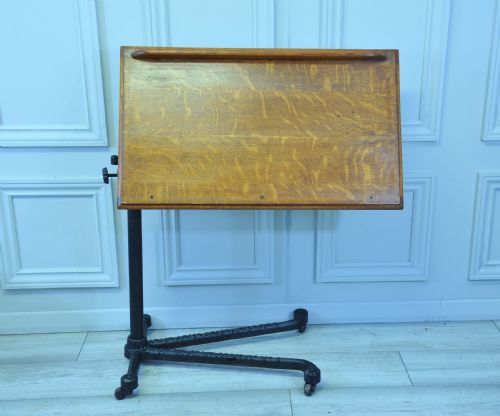


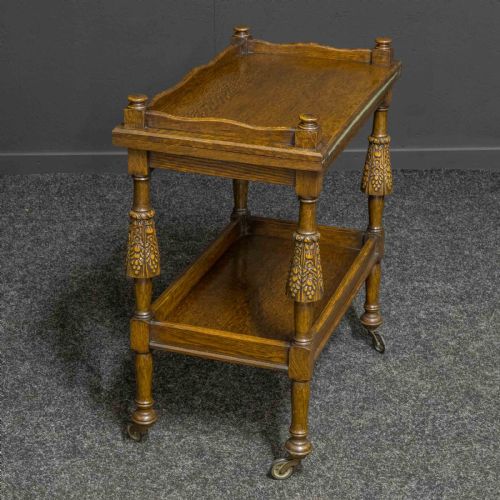


Oak Table on Castors
An oak table on castors provides a sturdy surface easily moved across the floor.
Oak Table on Castors
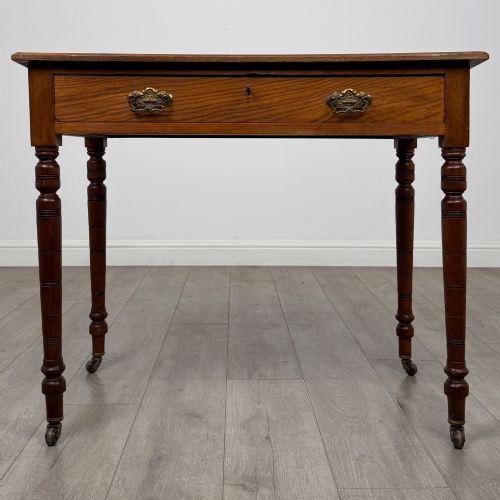
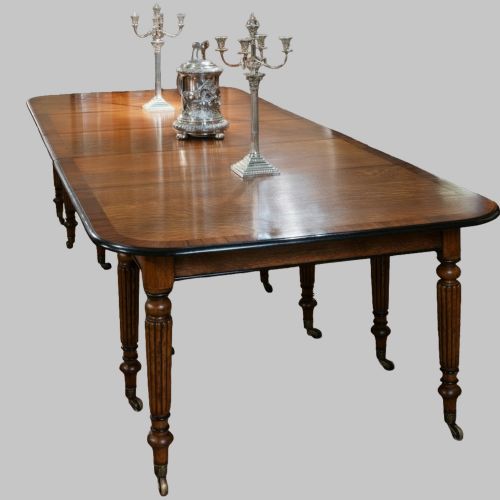
An oak table on castors appears in various domestic forms across several centuries, ranging from compact writing desks and occasional tables to large dining furniture. Buyers seeking an oak table on castors frequently encounter Victorian and Edwardian examples, alongside occasional Regency and Georgian items.
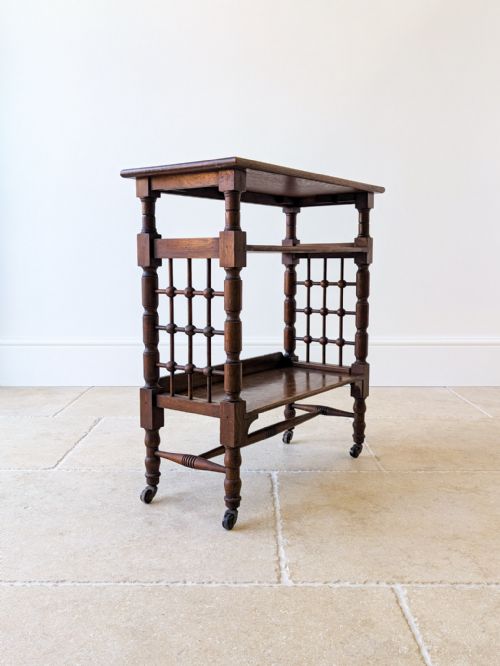
The selection encompasses desks with multiple drawers, tea trolleys, revolving bookcases, and kitchen tables. These functional pieces combine the utility of heavy timber with the mobility afforded by metal wheel fittings at the base of the supports.
Materials and construction
Makers utilised solid oak alongside burr or pollard oak veneer for the primary surfaces, often pairing the timber with beech for internal or secondary structures. Metal components such as iron and brass form the castors, which are fitted to the legs to allow smooth movement.
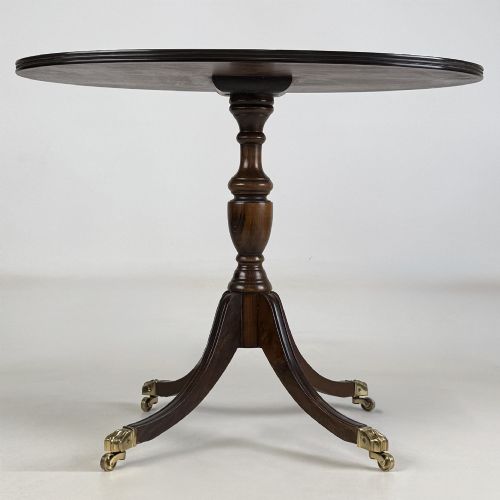
Joinery techniques support the weight of the dense wood, while turned, reeded, or carved legs provide structural stability above the wheeled mounts. Brass paw feet frequently encase the castors on finer Regency and Victorian items.
Listings feature items from the Georgian period up through the Edwardian era, constructed primarily in oak with brass and iron fittings.
Distinctions in quality
Superior examples demonstrate careful selection of timber figure, such as burr or golden oak veneers, matched with well-proportioned turned supports and substantial brass hardware. Lesser items rely on plain timber stock and simpler joinery without decorative carving or specialised leg profiles.
The integration of the castors into the leg assembly affects the overall finish, where flush mountings and original metal fittings elevate the piece above those with later replacements.
Carters Of London·Gillow
The Oak Table on Castors Glossary
- Castor
- A small wheel mounted on a swivel assembly attached to the bottom of a table leg to permit rolling. These fittings commonly incorporate brass or iron.
- Pollard Oak
- Timber taken from a tree that has been pruned close to the trunk, producing a dense, knotty grain pattern. This decorative veneer appears on Regency and Victorian surfaces.
- Reeded
- A decorative moulding consisting of parallel convex strips applied to table legs or columns. This classical detail resembles inverted fluting.
- Dropleaf
- A table top configuration featuring hinged flaps that fold down when not in use. These flaps extend the surface area via supplementary supports.
Oak Table on Castors: Frequently Asked Questions
What periods do these tables come from?
The available selection spans the Georgian, Regency, Victorian, and Edwardian eras, extending into the early twentieth century.
Victorian and Edwardian items appear most frequently in the current listings.
Were all these tables used for dining?
While several pieces function as dining or kitchen tables, many serve alternative domestic purposes.
The inventory includes writing desks, library tables, occasional stands, and tea trolleys.
What woods besides oak are used?
Oak forms the primary structure of these pieces, often highlighted with burr or pollard oak veneers on top surfaces.
Secondary woods like beech appear in the internal framework and lesser supports.
What metals are found on the castors?
The wheel assemblies and mounts utilise brass and iron.
Brass feet frequently encase the lower portion of the wooden supports on polished pieces.