

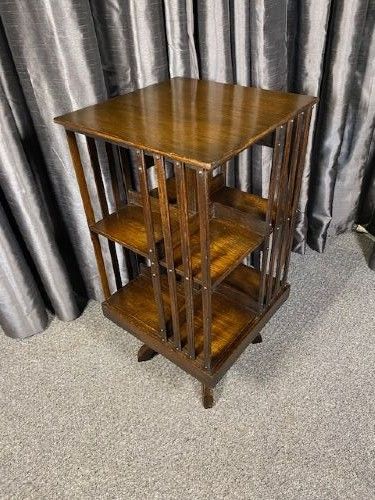


Oak Table Caddy
An oak table caddy is a compact wooden container designed for tabletop storage, offering both practical organisation and period charm.
Oak Table Caddy
When buyers search for an oak table caddy, they seek functional tabletop pieces from the Victorian, Edwardian, and mid-century periods. These items include biscuit boxes, teapoys, and desktop storage units.
The most common forms found in this selection are revolving bookcases and small boxes constructed from solid oak, originating from British and European workshops.
How they were made
Makers utilised solid oak alongside contrasting materials such as silver plate, brass fittings, and iron mechanisms to build these functional tabletop pieces. Lacquer finish and specialised joinery support the structure of boxes and revolving bookcases.
Stylistic influences range from traditional Victorian and Edwardian to Arts and Crafts, Art Nouveau, and Italian Rococo Revival, showing varied surface carving and structural turning.
Oak Table Caddy Retail Price Guide 2026
Typical asking prices for oak table caddy among the pieces listed under this phrase on Sellingantiques today, from the lower quarter to the upper quarter. They describe what is for sale here now, not the wider market.
Spinning a heavy tabletop revolving bookcase reveals the surprisingly satisfying whir of a century-old central pivot mechanism still doing its job.
What varies in quality
The standard of an oak table caddy depends upon the selection of timber grain, the crispness of applied carving, and the integration of metal mounts like silver plate or brass.
Pieces showing refined stylistic detailing, such as Art Nouveau curves or Arts and Crafts hand-working, demonstrate superior workmanship compared to plainer utility items.
The Oak Table Caddy Glossary
- Teapoy
- A small stand or box originally used for holding tea, often fitted with interior compartments. These pieces sit upon tables or possess their own short legs.
- Revolving bookcase
- A compact bookcase designed to spin on a central pivot for easy book selection. These rotating units sit directly on tabletops.
- Biscuit box
- A lidded container intended for storing dry foodstuffs in the living room or dining room. Metal linings often preserve the freshness of the contents.
- Arts and Crafts
- A design movement prioritising traditional craftsmanship and simple forms over mass production. Pieces from this style often display honest construction and minimal ornamentation.
- Silver plate
- A thin layer of silver applied to a base metal object to provide a lustrous finish. This technique offers the appearance of solid silver at a lower manufacturing cost.
Oak Table Caddy: Frequently Asked Questions
What is an oak table caddy used for?
These pieces serve as desktop or tabletop storage units for books, biscuits, or small personal items. Their compact size allows them to sit neatly on larger pieces of furniture.
Historically, specific forms held specialised items like tea leaves or biscuits in domestic entertaining spaces.
How do I date an oak table caddy?
Dating relies on identifying stylistic markers associated with periods like the Victorian era, Edwardian period, or later movements such as Art Nouveau and Arts and Crafts. Hardware, timber selection, and construction methods also provide clues to the decade of manufacture.
Comparing the turned elements and decorative motifs against known historical examples helps narrow down the age.
How do I care for antique oak?
Maintain the timber by dusting regularly with a soft, dry cloth and avoiding placement near direct heat sources or strong sunlight. Proper humidity levels prevent the wood from drying out or splitting.
Occasional application of appropriate wax polish helps nourish the grain without building up heavy residues.