
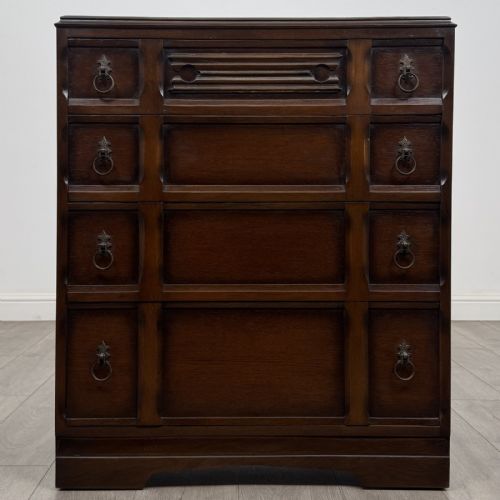
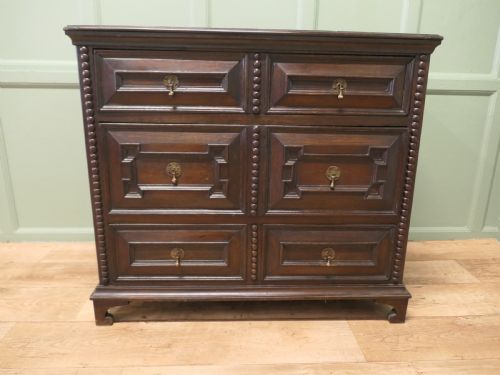
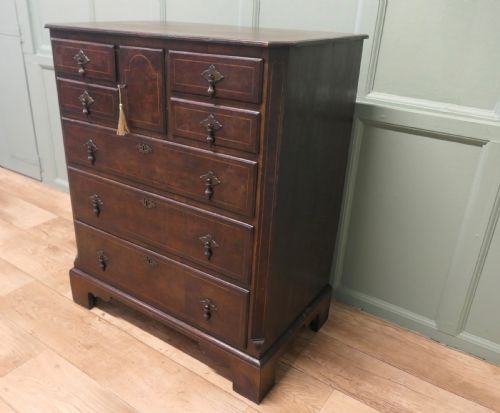
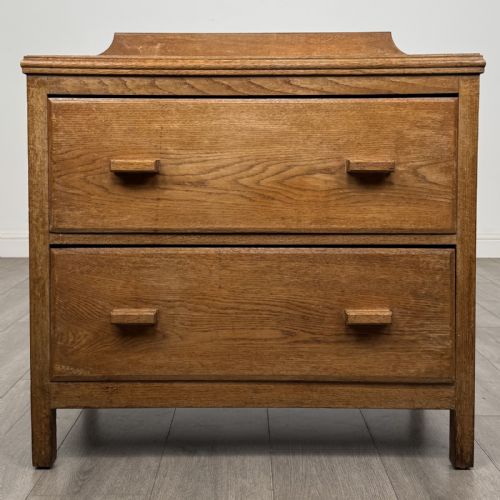
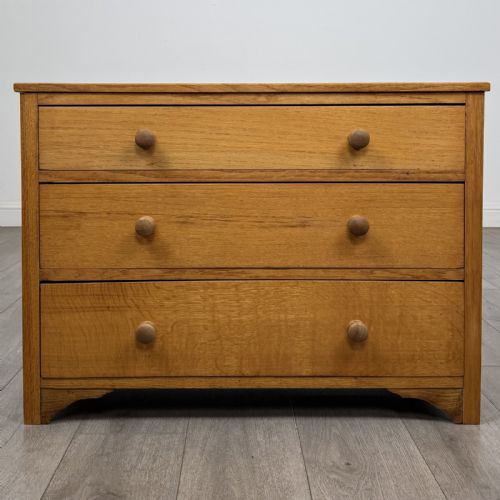
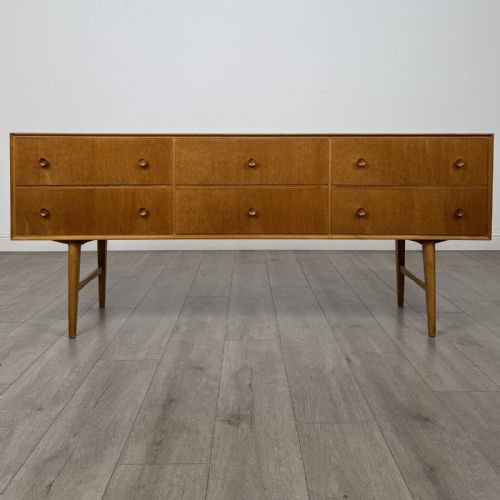
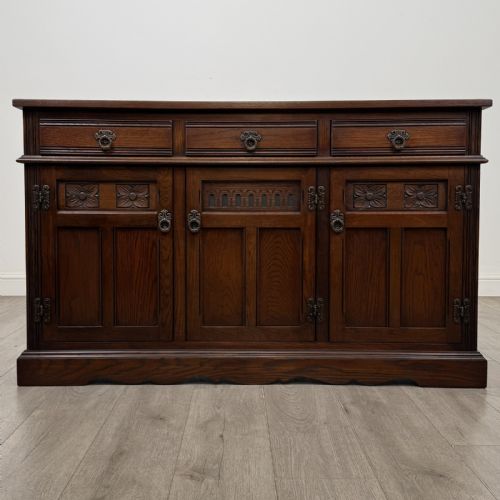
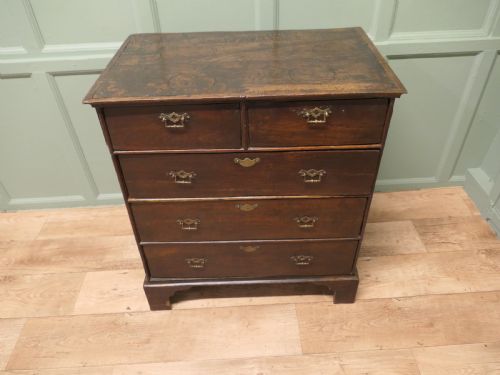
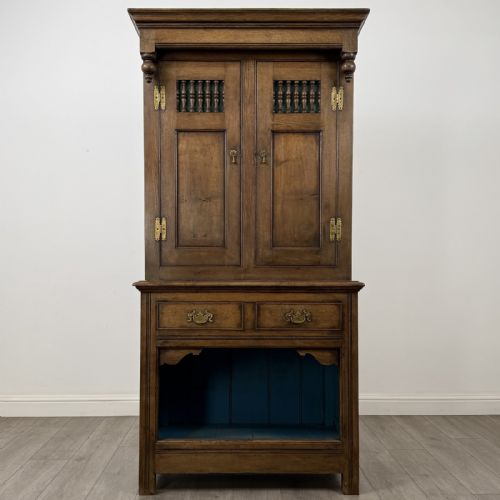
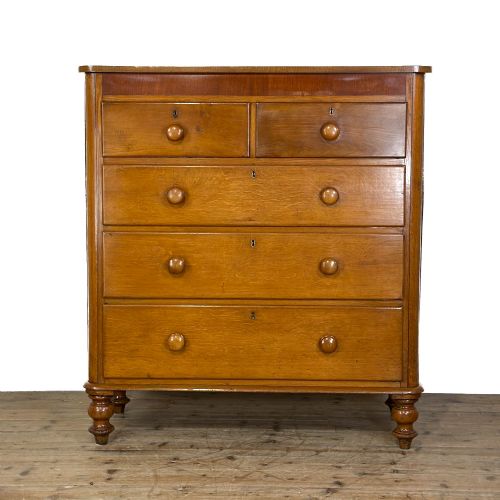
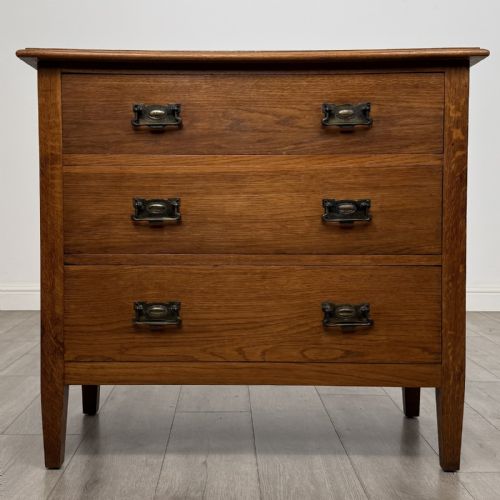
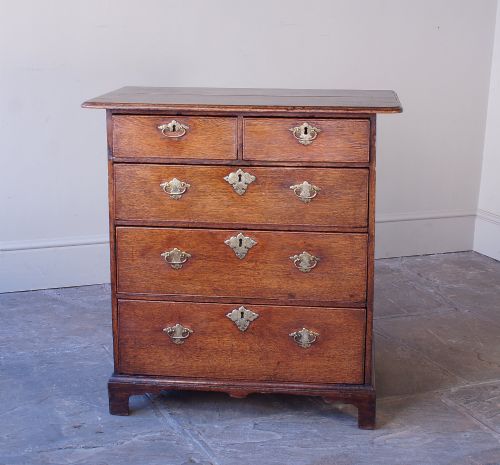
Oak Storage Dresser
An oak storage dresser brings heavy timber utility and centuries of domestic craft directly into a modern room.
Oak Storage Dresser
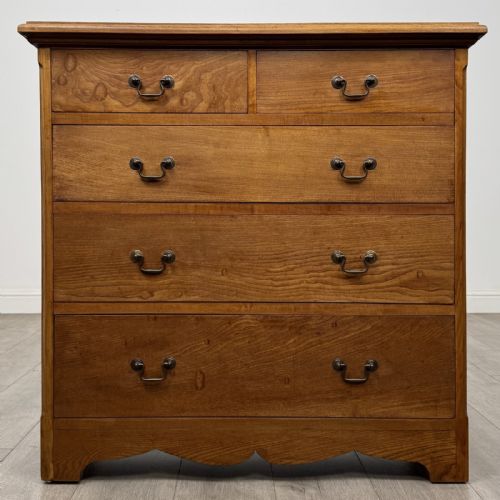
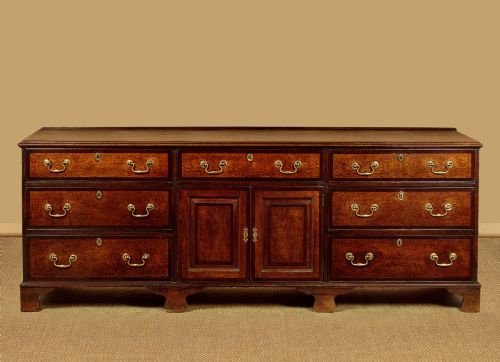
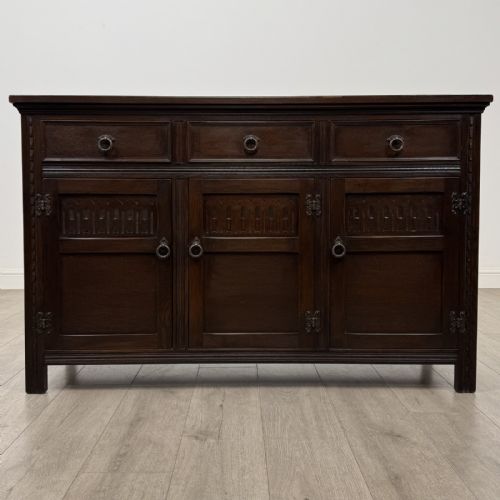
An oak storage dresser combines deep compartments, cupboards and drawer banks to hold household belongings while anchoring a room with dense grain. These pieces range from substantial kitchen dressers and housekeeper's cupboards to low chests of drawers, sideboards and display cabinets.
The versions met most often on this page span the seventeenth, eighteenth, nineteenth and twentieth centuries, taking in Georgian proportions, Edwardian utility and Arts and Crafts or Cotswold School ideals. Buyers encounter regional English country workshop output alongside French enfilades and pieces designed for Liberty.
Function dictates the internal layout, with surface tops meant for display sitting above stacked drawers or enclosed shelving. Whether configured as a court cupboard or a tall chest, the primary purpose remains heavy utilitarian storage delivered through honest timber construction.
Construction and Materials
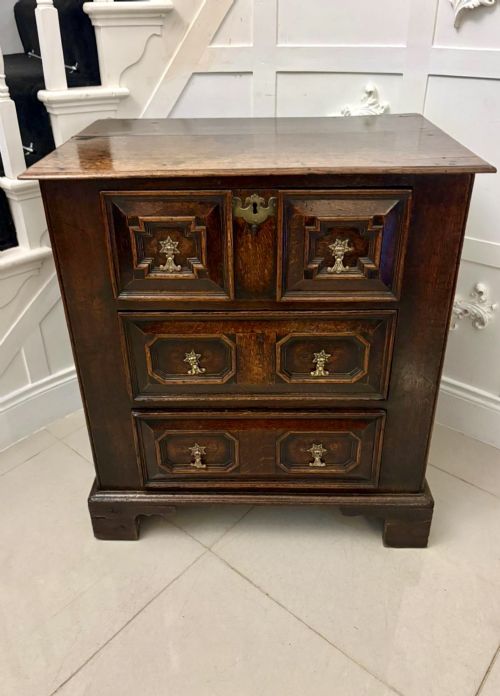
Timbers are dominated by solid oak, frequently paired with secondary woods like walnut or fruitwood inlay, and secured with structural iron, brass handles and leaded glass elements. Makers utilised heavy planks for stability, relying on geometric mouldings, linenfold panels and carved details to break up large expanses of wood.
Surface treatments vary from natural golden and honey tones to limed finishes and dark polished wax applied over centuries of use. Joinery techniques prioritize physical strength, employing pegged tenons and dovetails that allow the dense timber to move naturally with seasonal humidity changes.
Materials recorded across these items include solid oak, walnut, fruitwood inlay, brass, iron, lead and glass.
Judging Quality and Craft
Quality rests in the weight of the timber, the crispness of hand-carved geometric mouldings, and the integrity of the original construction rather than applied surface ornament. Superior examples retain their original brass hardware, uncompromised backboards and deep, unwarped drawer linings that move smoothly within their runners.
The distinction between workshop output lies in the integration of structural elements, where hand-planed panels and tight joints separate vernacular country pieces from finely executed formal furniture. Proportion and restraint in decoration elevate certain items, while later alterations or replacement boards diminish the integrity of early pieces.
Liberty
The Oak Storage Dresser Glossary
- Court cupboard
- A heavy enclosed storage piece with an upper section recessed behind doors, traditional to seventeenth-century English interiors. These items provide deep lower storage beneath decorative upper tiers.
- Enfilade
- A long sideboard or buffet cabinet featuring multiple doors in a row, commonly found in French provincial furniture. This form offers expansive surface area and substantial interior capacity.
- Geometric moulding
- Raised wooden profiling applied in repeating patterns to drawer fronts and door panels, characteristic of seventeenth-century joinery. This technique adds depth and shadow play to flat timber surfaces.
- Linenfold
- A carved wood panel motif imitating vertical folds of tightly woven fabric, popular during the Tudor and later revival periods. It brings tactile texture to cupboard doors and drawer faces.
- Housekeeper's cupboard
- A large standing storage unit historically used for storing linens, dry goods and household provisions. These monumental pieces feature extensive vertical shelving enclosed by heavy panelled doors.
Oak Storage Dresser: Frequently Asked Questions
How do I identify a 17th-century piece?
Seventeenth-century examples display heavy pegged joinery, hand-riven oak boards, and geometric mouldings built entirely without modern mechanical fasteners. The timber shows deep patination developed over centuries of household exposure.
Drawer construction uses hand-cut dovetails or plain nailed sides, and the overall proportions remain squat and utilitarian. Backboards are typically vertical planks rather than thin modern plywood sheets.
Where were these dressers used historically?
These storage pieces served utilitarian roles in kitchens, pantries and grand halls to house ceramics, textiles and dried provisions. Kitchen dressers held everyday tableware on open shelves while locking cupboards kept valuable stores secure.
In larger country houses, housekeeper's cupboards organised household linens and dry goods. Over time, many transitioned into principal living spaces for display and general storage.
What is limed oak?
Limed oak is a wood finishing technique where a white or pale compound is rubbed into the open pores of the grain. This highlights the coarse texture of the timber while lightening its overall colour.
Popularised during the twentieth century, particularly in Art Deco and Cotswold School designs, this finish provides a pale, matte surface that contrasts with traditional dark wax polishes.
How do I care for antique oak furniture?
Maintain antique oak by applying a microcrystalline wax polish sparingly to nourish the timber and protect the surface from moisture. Avoid placing pieces near direct heat sources or in fluctuating sunlight to prevent timber splitting.
Dust regularly with a soft, dry cloth rather than commercial silicone sprays, which can build up and soften historical finishes over time.