
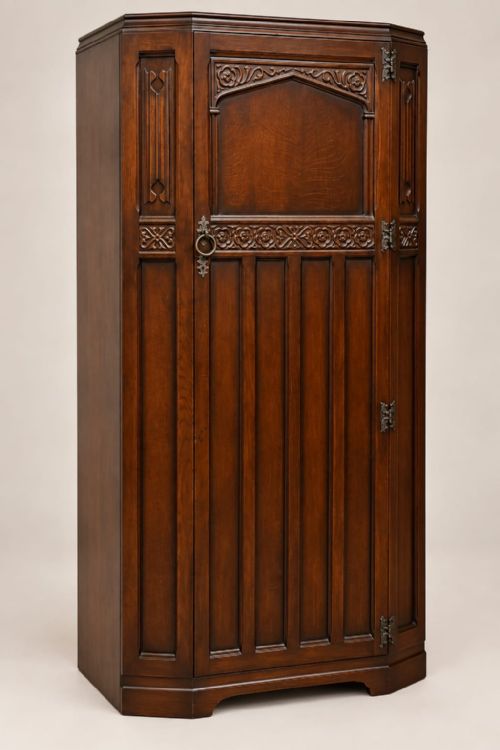
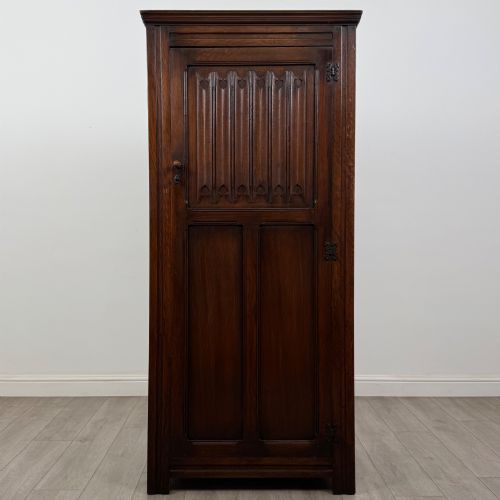
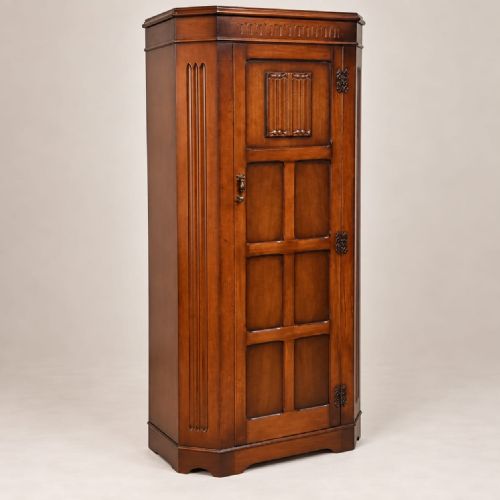
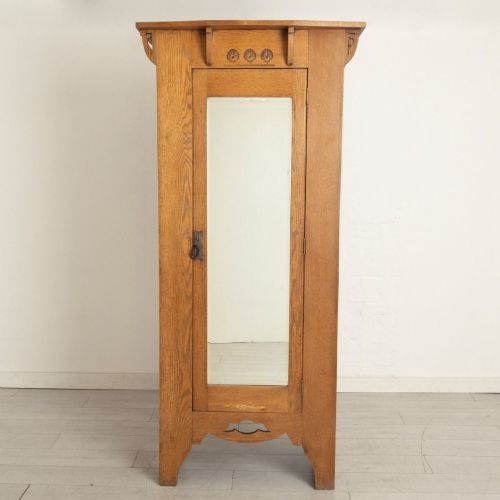

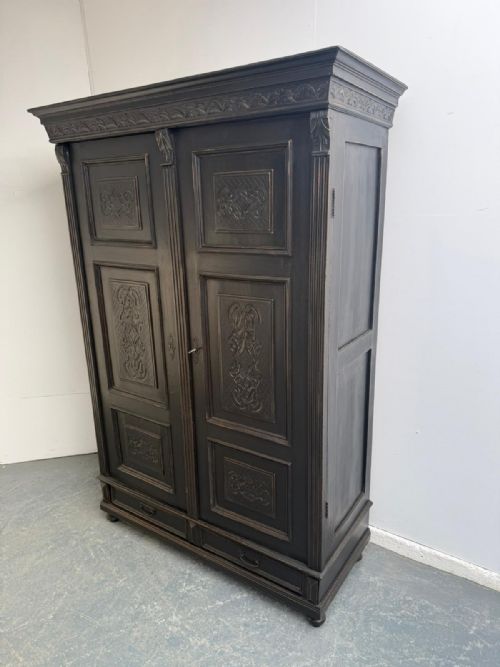


Oak Single Wardrobe
An oak single wardrobe is a compact, single-door piece designed to hold garments efficiently in smaller rooms.
Oak Single Wardrobe
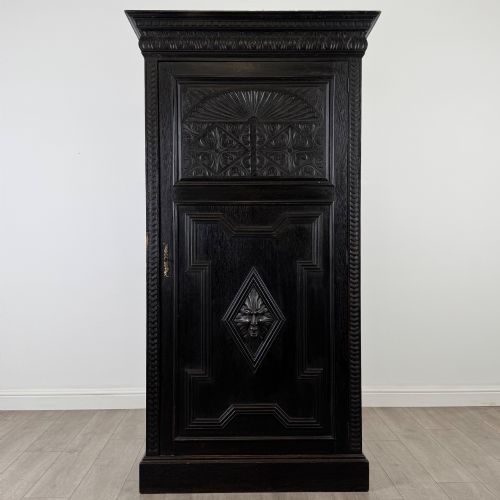
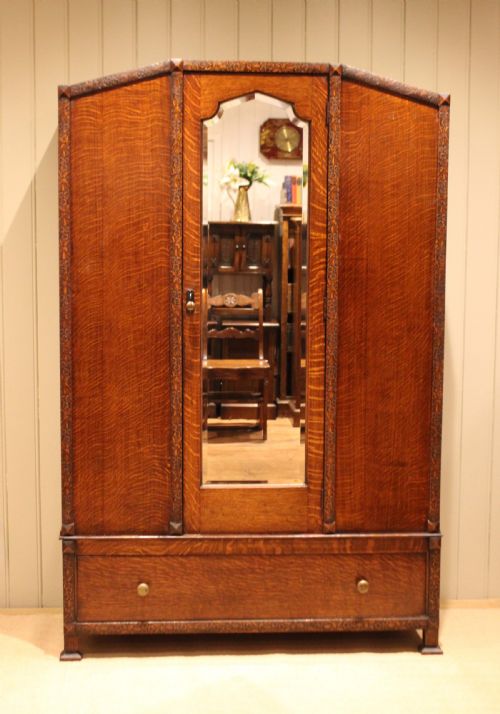
An oak single wardrobe offers hanging space and sometimes lower drawers within a narrow footprint, making it distinct from larger multi-door presses. Buyers searching for an oak single wardrobe encounter formats spanning the Victorian and Edwardian eras, alongside pieces from the 1900s, 1910s, 1920s, and 1930s.
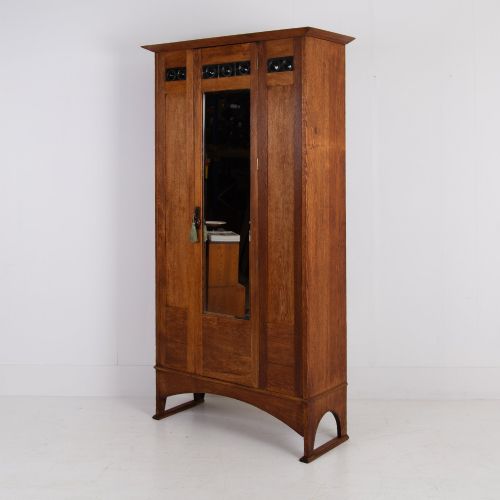
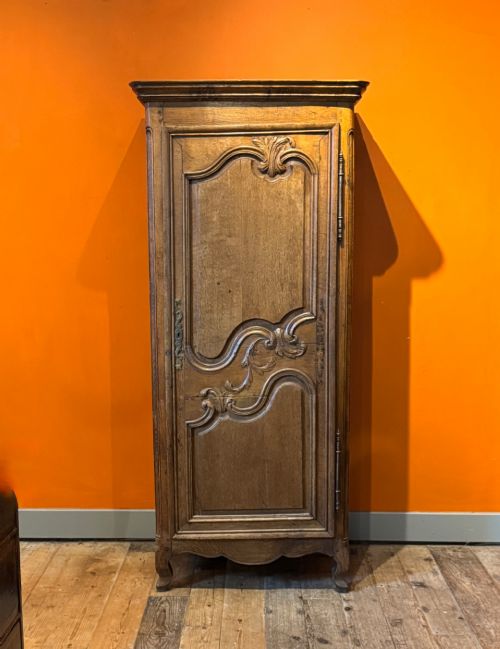
The selections on this page appear as hall robes, compactums, armoires, and standing cupboards. The Edwardian period and the 1920s supply many of the surviving examples, often rendered in solid oak or trimmed with mirrors and brass hardware.
How they were made
Cabinet makers constructed these wardrobes primarily from solid oak, sometimes combining the timber with pine, burr walnut, or painted surfaces. Workshops utilised traditional joinery alongside applied carvings, linen fold panels, and marquetry inlay.
Functional additions included bevelled glass mirror doors, brass handles, and internal iron hanging hooks. Certain pieces received limed finishes or French polishing to alter the appearance of the grain.
Certain narrow wardrobes include discreet hooks inside the door for hanging pocket watches.
What varies in quality
The standard of an oak single wardrobe depends on the crispness of the hand-carved details, the choice of timber figure, and the integrity of the cabinet construction. Pieces bearing maker labels or specific regional attributions demonstrate higher workshop distinction.
Proportion and decorative restraint set certain items apart, from plain golden oak doors to intricate Art Nouveau copper mounts or linen fold panels.
Heals of London·Gillows of Lancaster·Denby and Spinks·Ray and Miles Liverpool
The Oak Single Wardrobe Glossary
- Armoire
- A large standing cupboard or wardrobe used for hanging clothes. French provincial examples often feature carved panel doors and stylistic flourishes.
- Hall robe
- A narrow wardrobe traditionally placed in an entrance hall for outerwear. These pieces typically offer a shallower depth than bedroom wardrobes.
- Linen fold
- A carved wooden panel motif imitating folded fabric. This decorative technique appears frequently on panels from the Jacobean Revival and later periods.
- Compactum
- A fitted wardrobe containing hanging space alongside internal drawers or shelves. It provides multi-functional storage within a single-door footprint.
- Limed oak
- A wood finishing technique that leaves a white pigment in the open pores of the grain. This treatment gained popularity during the Art Deco era.
Oak Single Wardrobe: Frequently Asked Questions
What is an oak single wardrobe?
An oak single wardrobe is a compact clothes storage unit featuring one access door. These pieces provide hanging space and occasionally base drawers within a narrow footprint suited to smaller bedrooms or hallways.
Surviving examples date from the Victorian and Edwardian periods through to the 1930s. They appear in styles ranging from plain golden oak to decorative Arts and Crafts designs.
How do I date an oak single wardrobe?
Dating relies on stylistic markers, construction methods, and hardware. Pieces from the 1900s and 1910s frequently display Arts and Crafts or Art Nouveau influences, while 1920s examples may incorporate linen fold panels or limed finishes.
Victorian pieces often feature heavier carved detailing and darker finishes. Maker labels, where present, offer precise attribution to firms active during these decades.
What is a hall wardrobe?
A hall wardrobe is a shallow single-door cupboard designed for entrance halls and corridors. They served to store coats, hats, and everyday outerwear rather than full wardrobes of clothing.
These pieces share the materials and decorative styles of larger bedroom wardrobes but occupy significantly less floor space.
Did these wardrobes have mirrors?
Many Edwardian and Victorian single wardrobes incorporated bevelled mirror glass into the single door. This feature served a dual purpose of reflecting light and providing a full-length dressing glass in compact rooms.
Frames surrounding the glass often display carved mouldings, inlays, or copper Art Nouveau mounts.