

Oak Server with Cupboards
An oak server with cupboards brings solid timber storage and centuries of craftsmanship straight into a modern dining room.
Oak Server with Cupboards
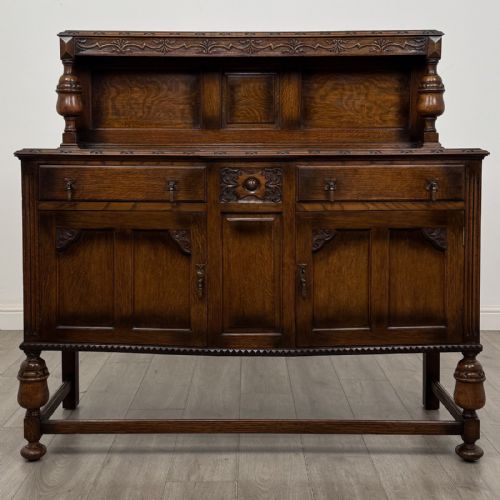
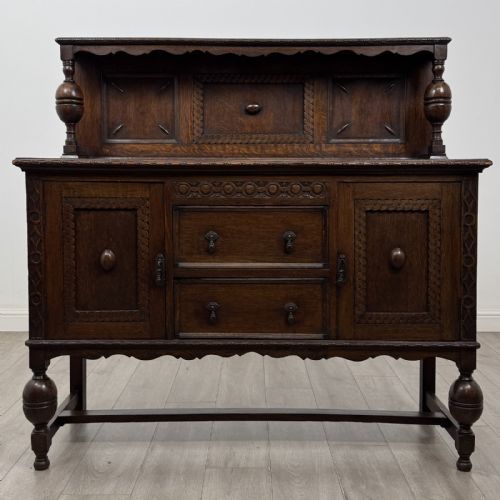
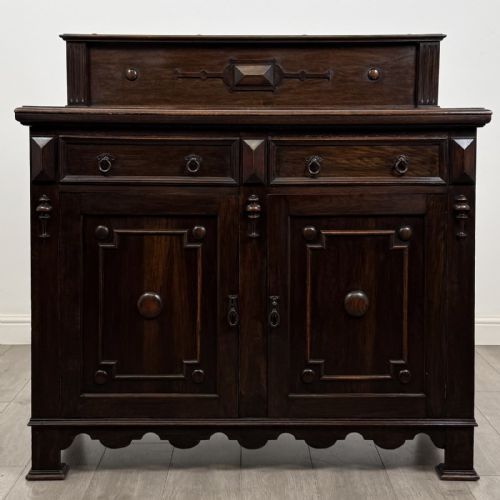
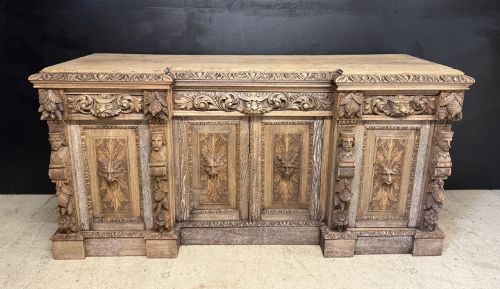
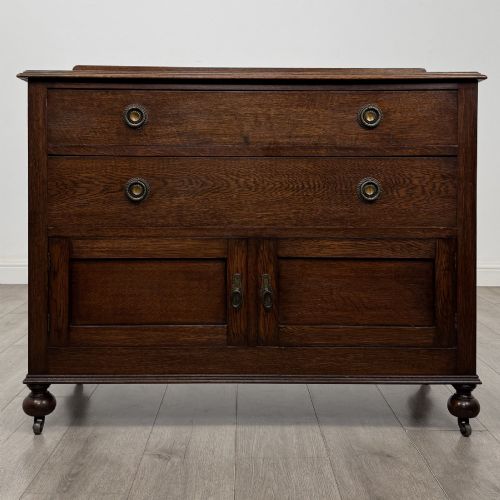
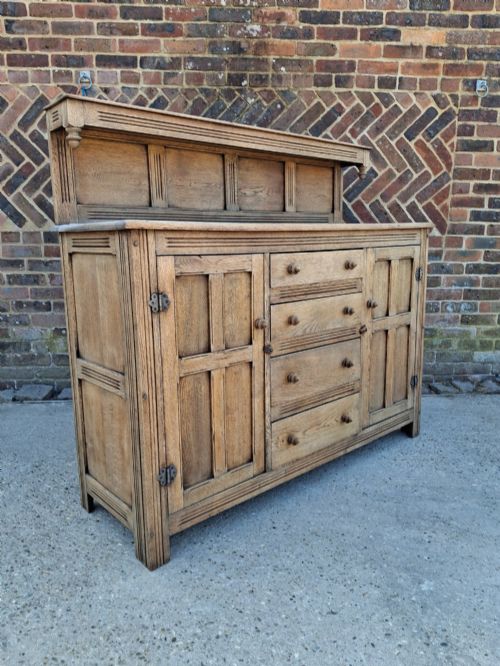
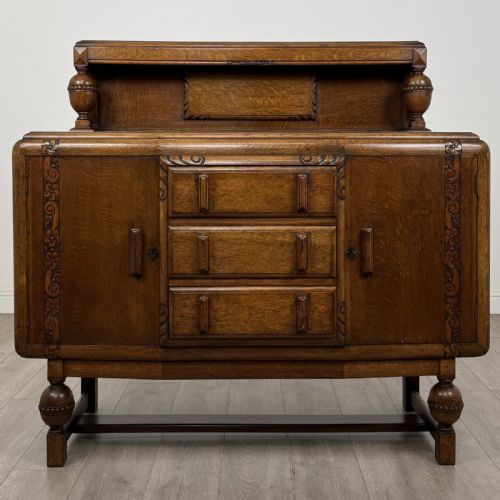
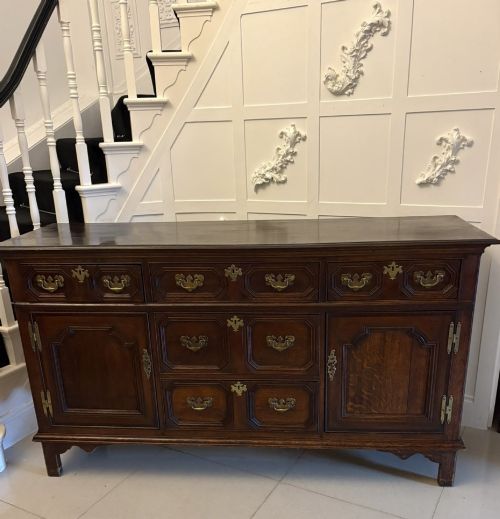
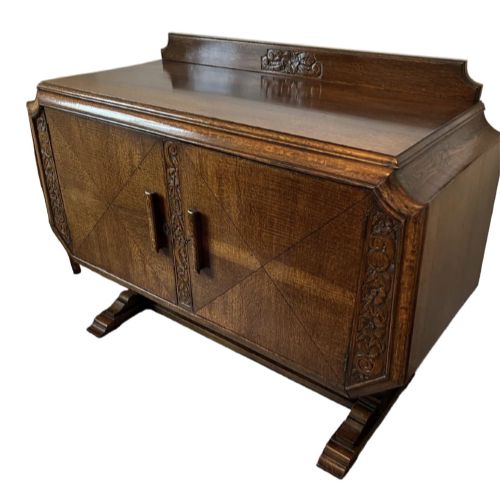
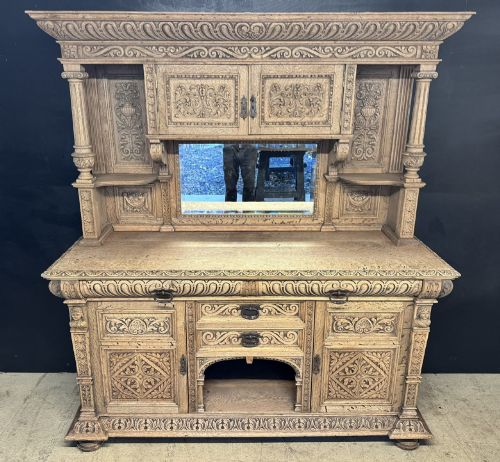
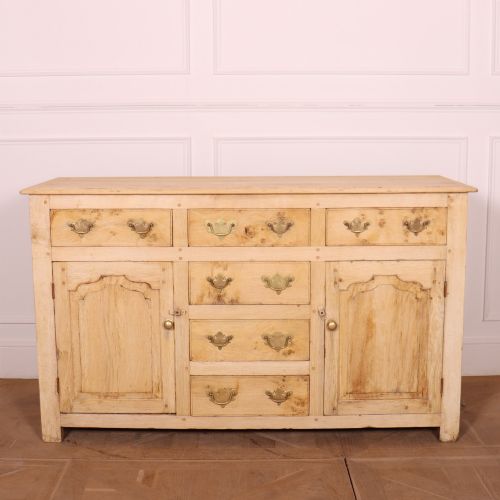
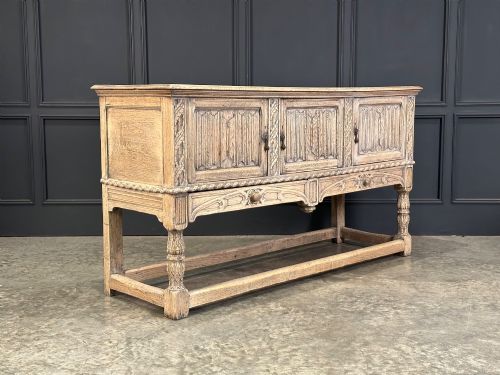
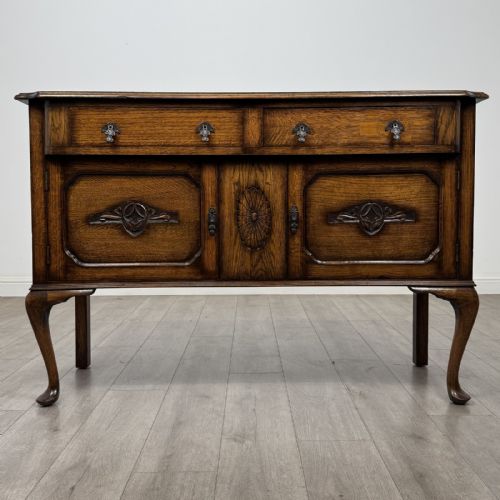
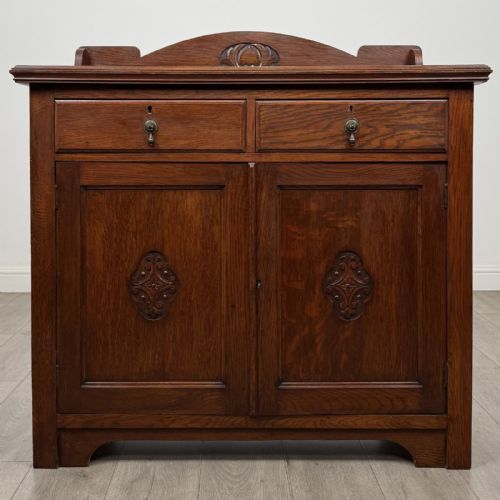
The regional and period variations on this page include Lancashire dresser bases featuring geometric carvings alongside Flemish Renaissance Revival cabinets complete with lion masks. Smaller side cabinets and solid oak cupboards from the nineteen-twenties and thirties also appear, offering compact storage for modern spaces.
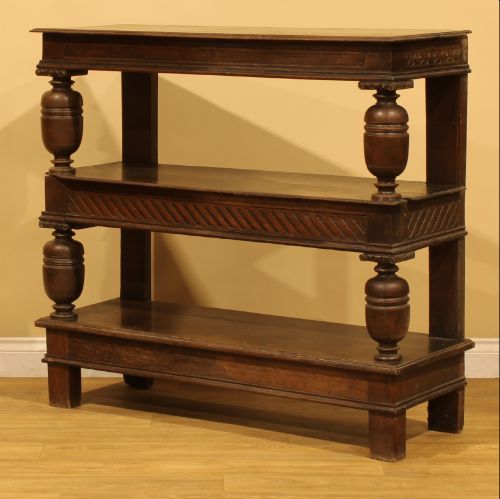
These forms developed to serve practical dining and storage needs in domestic interiors, evolving from early boarded constructions and court cupboards into more elaborate Victorian and revivalist sideboards. The selection here reflects both rural vernacular traditions and sophisticated workshop designs from the Edwardian era.
Materials and construction
Makers utilised solid oak throughout these pieces, often combining it with brass hardware and iron fittings to secure doors and drawers. Glass and mirror glass appear in later cabinet doors and back panels, particularly in revivalist and Arts and Crafts examples.
Joinery techniques rely heavily on traditional framing, panel construction, and hand-carving, visible in the geometric motifs and relief work on eighteenth-century and Victorian surfaces. Carved details such as lion masks and linear patterns demonstrate the manual skill involved in shaping heavy hardwood timbers.
Oak Server with Cupboards Retail Price Guide 2026
Typical asking prices for oak server with cupboards among the pieces listed under this phrase on Sellingantiques today, from the lower quarter to the upper quarter. They describe what is for sale here now, not the wider market.
The listings span multiple centuries, uniting eighteenth-century vernacular dressers with Victorian revival sideboards and twentieth-century Arts and Crafts cabinets.
Factors that distinguish quality
The standard of carving and the selection of timber grain set finer examples apart from simpler utilitarian pieces. Crisp relief work, well-proportioned architectural mouldings, and deeply figured oak boards indicate superior craftsmanship.
The integrity of the construction, including original brass or iron hardware and the stability of panel joints, defines the durability and authenticity of each piece over time.
The Oak Server with Cupboards Glossary
- Dresser base
- A low cabinet or table with drawers and cupboards originally used in the kitchen or dining room for food preparation and storage. They form a sturdy foundation often found in eighteenth-century vernacular furniture.
- Court cupboard
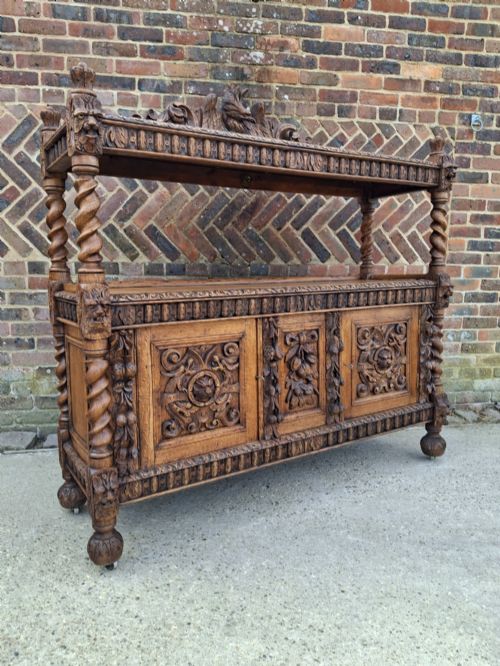
- A traditional enclosed piece of furniture featuring upper and lower tiers of cupboards used for displaying plate and storing valuables. These heavy oak pieces often date to the nineteenth-century revival of earlier styles.
- Flemish Renaissance Revival
- A nineteenth-century style drawing on sixteenth-century Flemish design, characterised by bold relief carvings, architectural columns, and figural motifs such as lion masks. It produced dramatic, highly ornamented oak cabinets.
- Arts and Crafts
- A design movement valuing honest construction, visible hand-craftsmanship, and simple forms inspired by medieval traditions. Pieces in this style often eschew excessive ornament in favour of clean oak surfaces and subtle hardware.
Oak Server with Cupboards: Frequently Asked Questions
How do I care for antique oak?
Keep solid oak furniture away from direct heat sources and dramatic humidity changes to prevent the timber from splitting. Regular dusting with a dry, soft cloth maintains the natural lustre of the wood.
Avoid modern silicone polishes that build up a greasy film over the carved details and historic finishes. Occasional applications of traditional beeswax nourish the grain safely.
Where were these pieces used?
Dining rooms, hallways, and large kitchens served as the primary locations for these cupboards and servers historically. They provided essential storage for dining ceramics, linens, and provisions.
Today, they function equally well as sideboard storage in modern living spaces or as hallway media consoles. Their sturdy construction suits daily household use.
What defines a court cupboard?
A court cupboard is a compact enclosed storage piece, frequently featuring a recessed upper section supported by carved columns or brackets. They evolved from sixteenth-century forms and were revived in the nineteenth century.
The enclosed lower cupboards and upper tiers provided secure storage for household valuables and dry goods. Their architectural presence makes them striking focal points in a room.
How do I distinguish eighteenth-century pieces?
Eighteenth-century dresser bases and cupboards display hand-cut joinery, pegged tenons, and distinct adze marks from manual timber preparation. The wood develops a deep, mellow patina through generations of handling.
Geometric mouldings and simpler structural lines often separate these earlier vernacular examples from the heavier, more heavily carved Victorian revival pieces.