






Oak Rush Carver Chair
An oak rush carver chair brings rustic character to a room, offering sturdy construction and woven seating rooted in centuries of vernacular craftsmanship.
Oak Rush Carver Chair
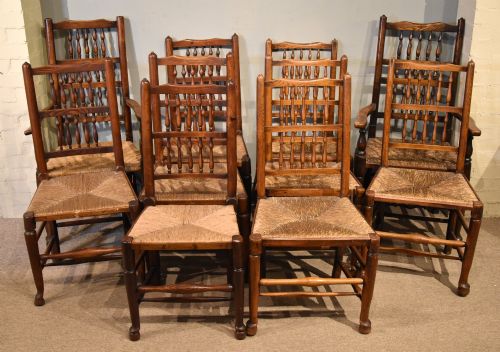
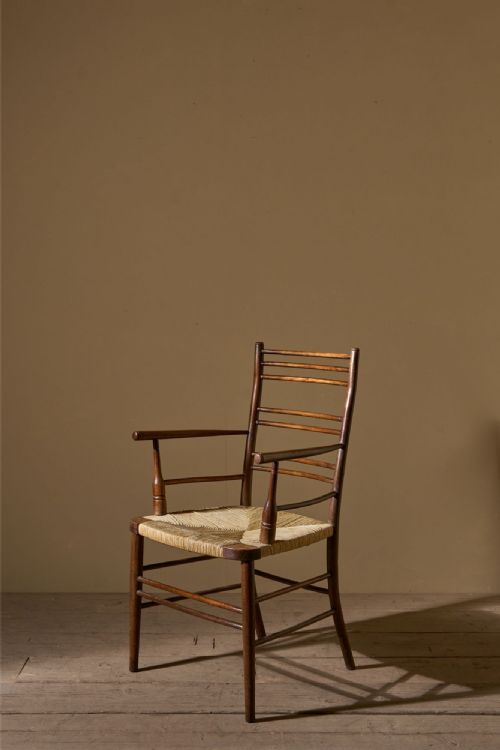
An oak rush carver chair represents traditional country seating, featuring open arms designed to accommodate seated individuals alongside a woven base. When exploring this selection, buyers encounter pieces spanning from the eighteenth century through the twentieth century, reflecting regional vernacular traditions across Britain and France.
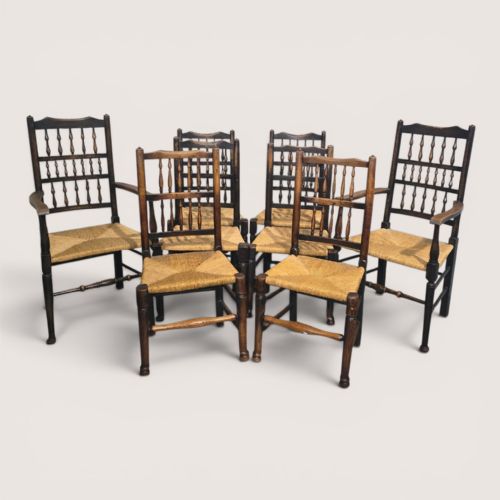
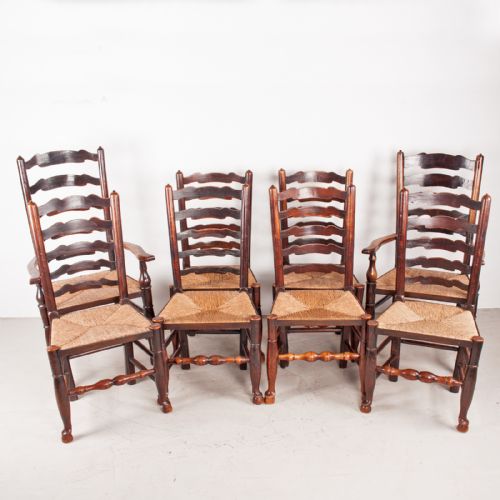
The inventory on this page ranges from simple nineteenth-century farmhouse examples to sophisticated Arts and Crafts designs associated with prominent makers. Ladder-back and spindle-back forms dominate the selection, often appearing singly, in pairs, or within larger harlequin sets suited for dining spaces.
Materials and construction
Makers relied primarily on native timbers, turning to sturdy oak for main frames while incorporating elm, ash, and beech for spindles, legs, and stretchers. These woods were often shaped using traditional greenwood working techniques or turned on lathes to create strong, lightweight structural frameworks.
Seats were meticulously hand-woven from natural marsh rushes, twisted into cord and threaded tightly around the seat rails to form a resilient, flexible surface. Painted finishes occasionally appear alongside bare waxed or polished timber, reflecting regional preferences and changing interior fashions across different decades.
Oak Rush Carver Chair Retail Price Guide 2026
Typical asking prices for oak rush carver chair among the pieces listed under this phrase on Sellingantiques today, from the lower quarter to the upper quarter. They describe what is for sale here now, not the wider market.
Harlequin sets bring together distinct chairs that share a common ladder-back silhouette, creating mismatched charm around the table.
Distinguishing quality
The integrity of the woven rush platform largely dictates the enduring utility of an armchair, with tightly packed, uniform strands representing superior craftsmanship. Original surface patination and minimal structural alteration distinguish untouched regional pieces from heavily restored or later composite items.
Proportion and wood selection reveal the hand of skilled rural joiners or dedicated studio workshops, separating everyday utility seating from ambitious vernacular design. Sturdy joinery without excessive replacement timber ensures that a carver retains its original balance and structural firmness.
Liberty Morris And Co·William Morris·Dicon Nance St Ives Studio·Liberty And Co
The Oak Rush Carver Chair Glossary
- Carver
- An armchair, traditionally placed at the head of a dining table, featuring open wooden arms to accommodate clothing. These chairs match or complement the smaller side chairs in a dining set.
- Rush
- Dried marsh grass utilised for centuries to weave resilient, flexible seating pads. Skilled makers twist the plant material tightly around frame rails to create a supportive surface.
- Ladder-back
- A chair back constructed with multiple horizontal wooden slats, or rungs, set between two upright posts. This traditional regional design provides robust lumbar support.
- Spindle-back
- A style featuring numerous thin, turned vertical wooden rods set into the backrail. These components offer lightweight strength and structural support.
- Vernacular
- Everyday utilitarian furniture built by local tradesmen following regional traditions rather than metropolitan high styles. These items prioritise functional utility and local material availability.
Oak Rush Carver Chair: Frequently Asked Questions
What is an oak rush carver chair?
An oak rush carver chair is a traditional armchair featuring a sturdy wooden frame and a woven rush seat. These seats were built by regional craftsmen for everyday dining and domestic use.
Over time, they evolved from practical farmhouse furniture into celebrated examples of country vernacular and Arts and Crafts design.
How do I use a carver chair?
Carver chairs traditionally sit at the head and foot of a dining table, providing comfortable armrests for hosts and guests. Their robust construction also suits them for use as desk chairs or accent seating in living spaces.
Because they combine open wooden arms with supportive woven seats, they offer a comfortable place for reading or relaxing.
How do I care for a rush seat?
Rush seats require a stable indoor environment away from excessive moisture and direct heat sources, which can make the dried grass brittle. Regular dusting with a soft brush keeps the weave clean and prevents abrasive particles from wearing down the fibres.
Applying occasional light moisture to the underside can help maintain the flexibility of older marsh grass if the room air is particularly dry.
How do I tell different periods apart?
Earlier eighteenth-century pieces often display heavier turned framing and deeper patination acquired through generations of use. Twentieth-century Arts and Crafts examples show simplified, deliberate lines that reflect a conscious revival of historic handcraft methods.
Examining the turning style on spindles and the method of joining the arm supports helps place a piece within its correct historical era.