



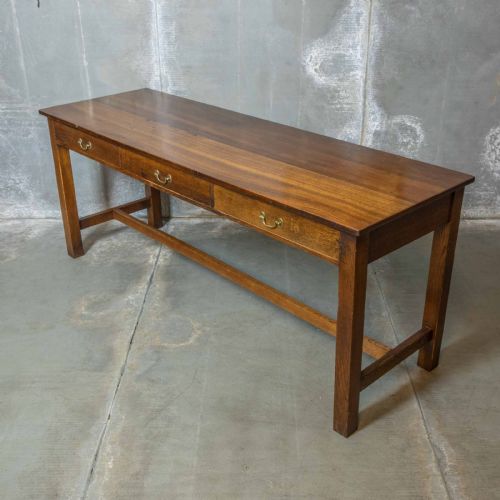
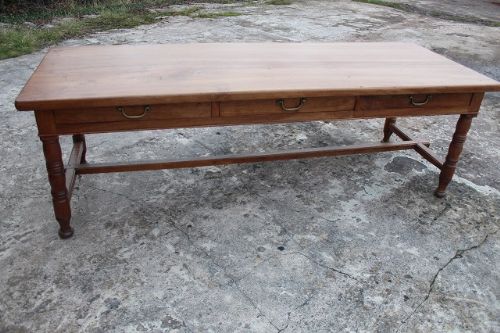


Oak Refectory Table Drawer
An oak refectory table drawer provides robust storage and surface space, anchoring a room with heavy timber construction and practical utility.
Oak Refectory Table Drawer
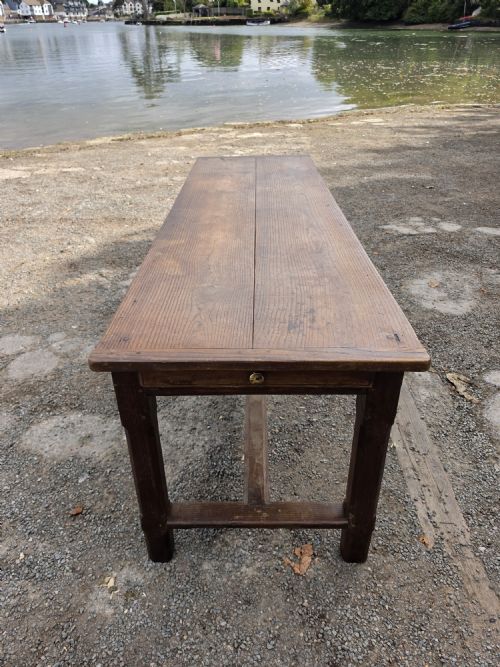
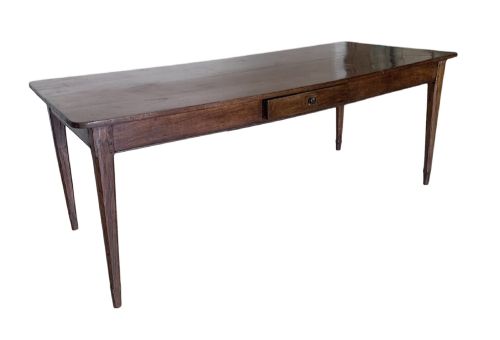
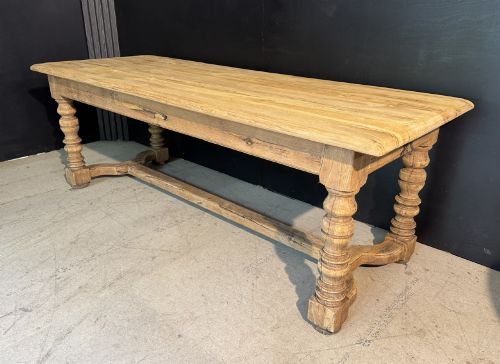
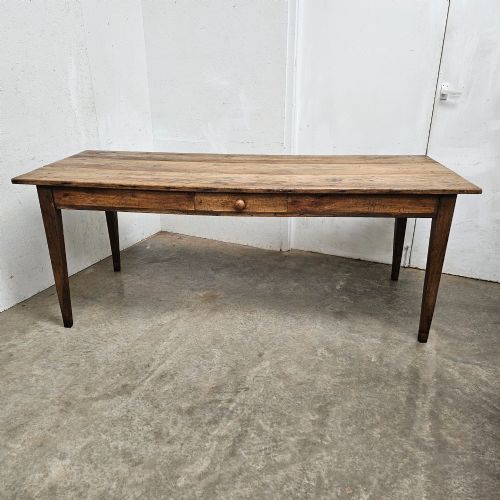
When you search for an oak refectory table drawer, you encounter substantial dining tables and dresser bases equipped with built-in storage. These pieces combine long surface boards with integrated drawers designed for everyday household use.
The selection here draws primarily from nineteenth-century examples and early twentieth-century revivals. You will find French farmhouse tables alongside English country house and Jacobean style designs.
Most entries feature solid oak construction, often accompanied by pine or fruitwood elements. The forms range from simple serving tables to large refectory and monastic dining tables.
Materials and construction
Carpenters built these tables using sturdy timbers, predominantly oak paired with pine and fruitwood for secondary components. Iron and brass hardware frequently appear on handles and drawer pulls.
Joinery methods focused on durability, utilising heavy planks and stable frames to support daily dining and kitchen work. Drawers were integrated directly beneath the top surface to keep utensils and linens close at hand.
Oak Refectory Table Drawer Retail Price Guide 2026
Typical asking prices for oak refectory table drawer among the pieces listed under this phrase on Sellingantiques today, from the lower quarter to the upper quarter. They describe what is for sale here now, not the wider market.
Listings feature oak, pine, iron, brass, and fruitwood across nineteenth-century and early twentieth-century periods.
Assessing craftsmanship and condition
The standard of a piece depends on the integrity of the timber and the honesty of the construction. Solid oak boards show superior durability compared to mixed secondary woods, while tight joinery ensures the table remains stable.
Proportion and surface finish dictate the visual weight of the piece. Tables with well-fitted drawers and balanced proportions demonstrate careful regional craftsmanship rather than hurried assembly.
Rackstraw
The Oak Refectory Table Drawer Glossary
- Refectory table
- A long dining table historically used in communal dining halls. These examples bring that elongated format into domestic spaces.
- Dresser base
- A low cabinet or table featuring multiple drawers and occasionally a lower shelf. They provide substantial storage beneath a flat work surface.
- Drawer leaf
- An extension mechanism where leaves pull out from beneath the main top. This design allows the table surface to expand when needed.
- Bread slide
- A pull-out wooden board integrated beneath the tabletop. Historically used for cooling bread, it provides extra surface area.
Oak Refectory Table Drawer: Frequently Asked Questions
What is an oak refectory table drawer?
An oak refectory table drawer is an integrated storage compartment built into a long dining table or dresser base. These drawers were designed to hold cutlery, linens, or daily kitchen necessities within arm's reach of the dining surface.
Such tables combine heavy timber framing with practical utility. They serve as the central gathering point in rustic farmhouse and country house settings.
How were these tables used historically?
Historically, refectory tables provided communal dining spaces in large halls, monasteries, and large country houses. The addition of drawers offered convenient storage for dining accessories in busy kitchens and dining rooms.
Over time, regional variations emerged across France and England. These adaptations reflected the specific daily needs of rural households and country estates.
How do I live with an antique oak table?
Living with an antique oak table involves embracing the natural movement and developing patina of solid timber. Use mats for hot dishes and coasters to protect the aged surface from moisture rings.
Regular cleaning with a soft cloth keeps the wood nourished. The sturdy construction of these pieces makes them well-suited for daily family meals and heavy kitchen use.
How do I tell periods apart?
Distinguishing periods relies on observing stylistic details and construction methods. Nineteenth-century examples often display regional French or English country characteristics, while early twentieth-century pieces frequently utilise revival styles such as Jacobean.
Examine the hardware, joinery, and secondary woods like pine or fruitwood. These elements help date the piece alongside the overall form and proportions.