




Oak Pedestal Drawers
Solid timber and sensible proportions define oak pedestal drawers, practical writing furniture built to last generations.
Oak Pedestal Drawers
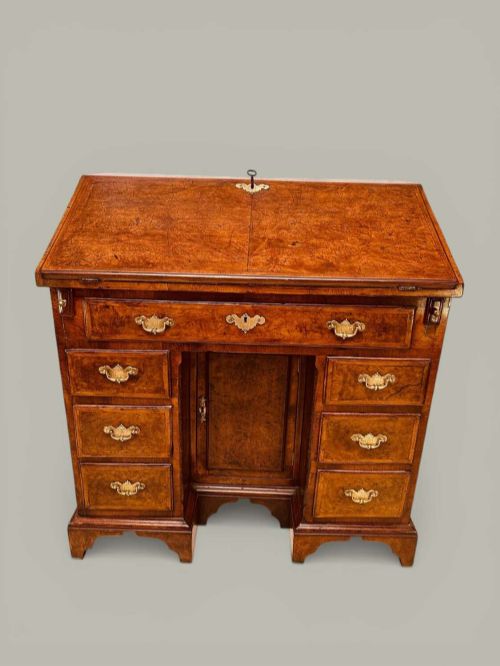
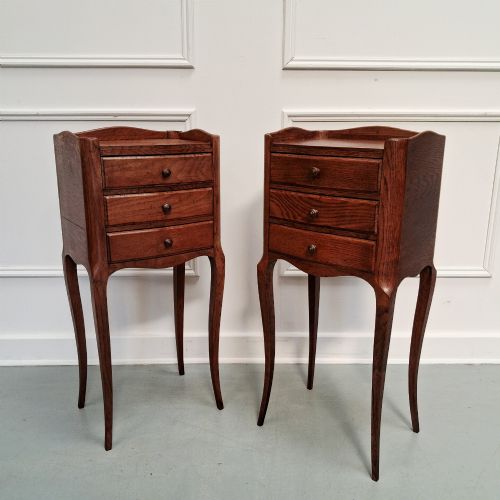
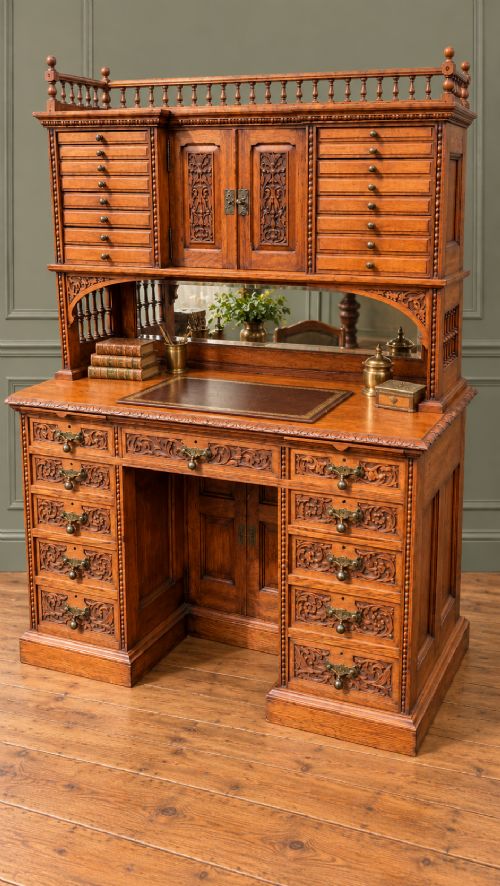
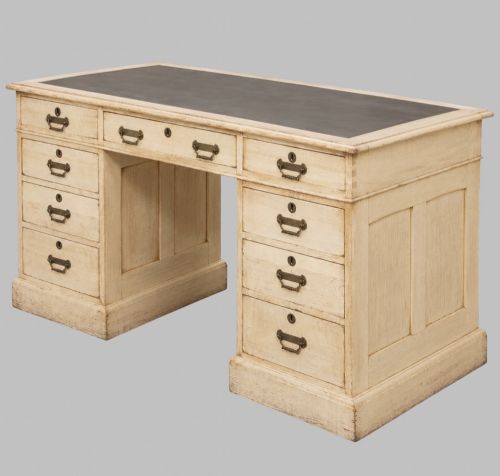
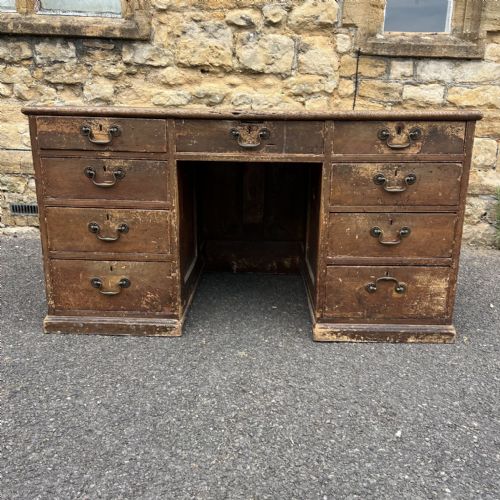
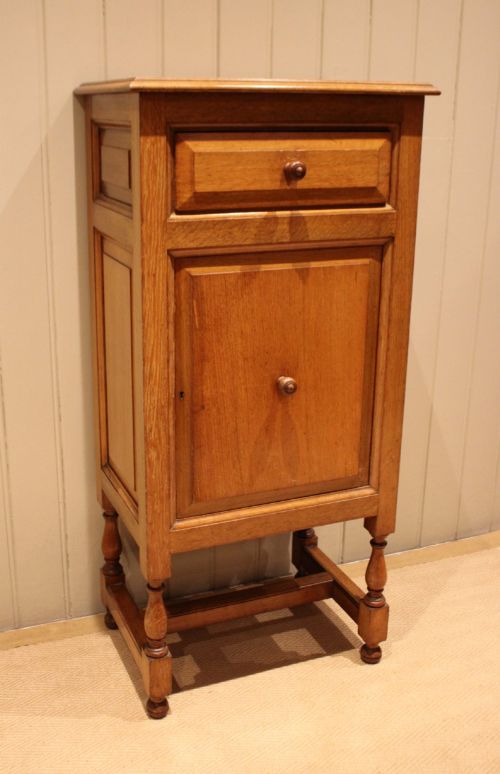
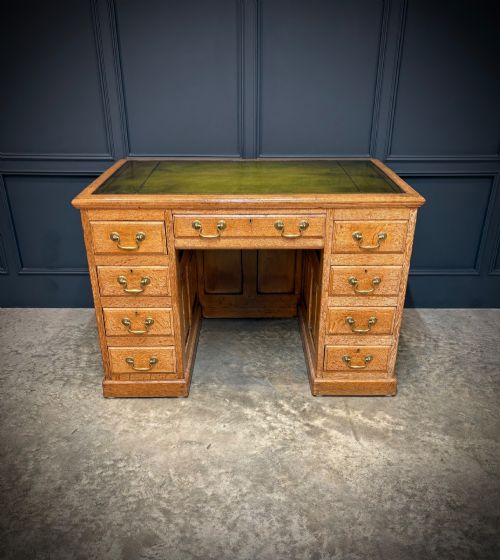
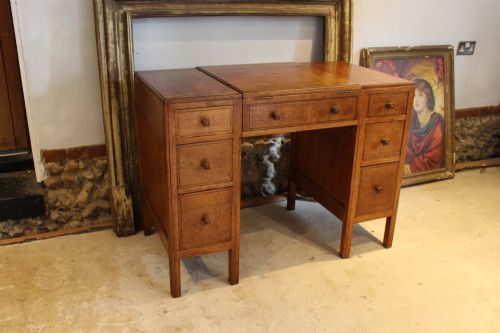
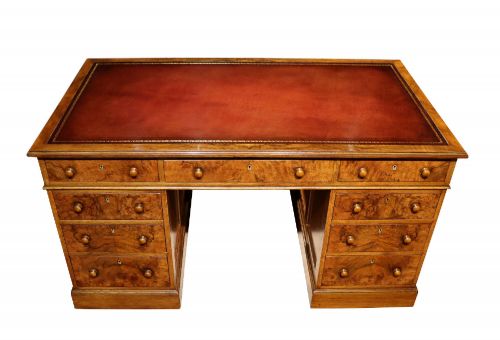
Oak pedestal drawers encompass twin pedestal office desks, kneehole writing tables and smaller bedside chests originating from the nineteenth and early twentieth centuries. These pieces combine flanking stacks of drawers with a central writing surface or workspace, serving both utilitarian and domestic interiors.
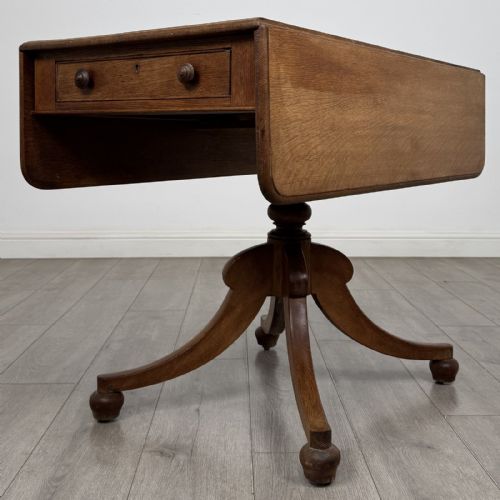
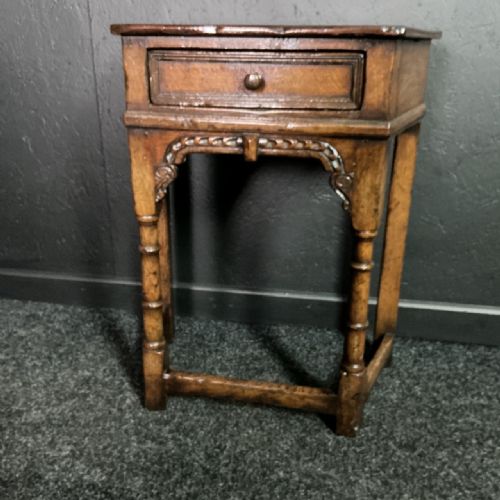
Edwardian and Victorian examples dominate current availability, ranging from modest single-drawer side tables to substantial office desks with extensive compartmentalisation. Regional British workshops and larger London retailers produced these forms to cater to the administrative and study needs of the period.
The selection includes variations such as roll-top mechanisms, leather-lined writing surfaces and French provincial styling alongside traditional British revival designs. Buyers encounter everything from compact bedside chests to heavy partner desks intended for institutional libraries.
Materials and Construction
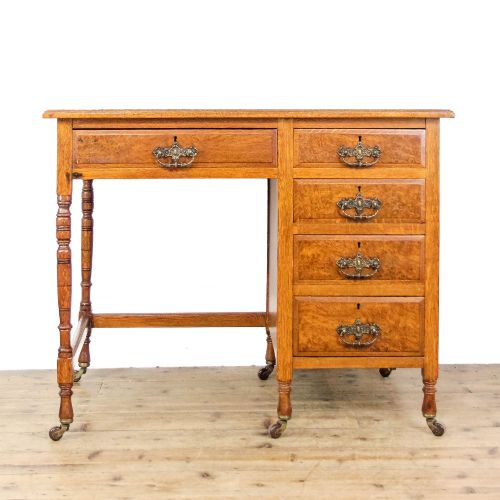
Makers utilised solid oak alongside secondary timbers such as pine for drawer linings and carcases, occasionally incorporating burr walnut or pollard oak for decorative surface veneers. Brass handles, key escutcheons and metal drawer runners provide functional contrast to the heavy timber frames.
Joinery methods rely on hand-cut dovetails for drawer construction and sturdy mortise and tenon joints for the main pedestals and frames. Tooled leather inserts frequently cover the primary writing surfaces, glued directly to timber substrates.
Oak Pedestal Drawers Retail Price Guide 2026
Typical asking prices for oak pedestal drawers among the pieces listed under this phrase on Sellingantiques today, from the lower quarter to the upper quarter. They describe what is for sale here now, not the wider market.
Several desks still hide original brass paper clips and inkwell inserts inside their secret compartments.
Distinctions in Craftsmanship
Superior pieces display thoughtful timber selection, matching grain patterns across drawer fronts and incorporating fine secondary woods for internal structures. Maker signatures, paper labels or stamped drawer linings elevate the standing of a desk by identifying prominent cabinet makers.
Construction integrity separates utilitarian utility furniture from fine cabinet work, particularly in the smoothness of drawer operation and the weight of the solid timber used. Elaborate carving, panelled backs and original brass hardware indicate higher workshops rather than mass production.
Heal & Sons·Thomas Turner·Edwards & Roberts·James Lamb·Maple & Co
The Oak Pedestal Drawers Glossary
- Twin pedestal desk
- A large writing table supported by two separate stacks of drawers that reach the floor.
- Kneehole
- The central recessed space beneath a desk top designed to accommodate the user's legs.
- Dovetail
- A traditional interlocking joint utilised in drawer construction to ensure tensile strength.
- Escutcheon
- A protective metal plate surrounding a keyhole on a cabinet door or drawer front.
- Pollard oak
- Timber derived from trees pruned to promote a dense, gnarled grain pattern used for decorative veneers.
Oak Pedestal Drawers: Frequently Asked Questions
How do I care for antique oak?
Maintain antique oak by applying natural beeswax sparingly and buffing with a soft cloth to nourish the dry timber.
Keep wooden furniture away from direct heat sources and dramatic humidity shifts to prevent warping and splitting.
Are leather desk tops original?
Many Victorian and Edwardian desks retain their original tooled leather inserts, though heavily worn surfaces are frequently replaced.
Replacement leather is typically coloured and gilded by hand to match the period aesthetic of the surrounding woodwork.
How do I identify Victorian oak?
Victorian oak furniture often displays deep colour tones, heavy proportions and distinct medullary rays running through the grain.
Construction details such as hand-cut dovetailing and solid timber backs help distinguish these older pieces from later reproductions.