




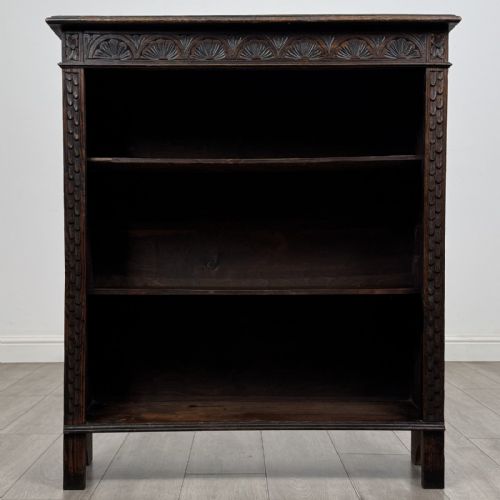
Oak Open Shelf Unit
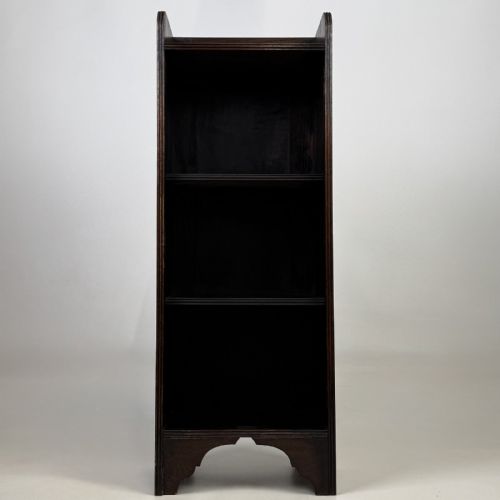
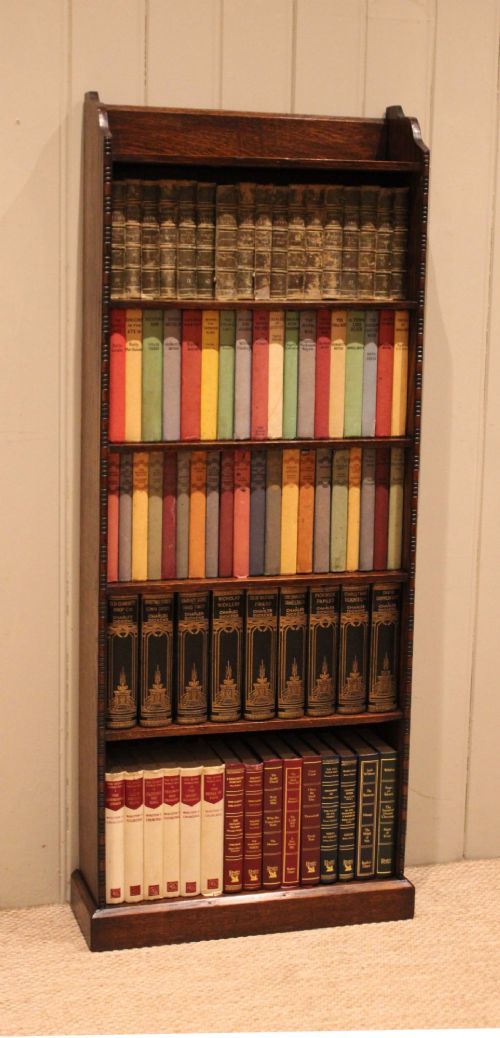
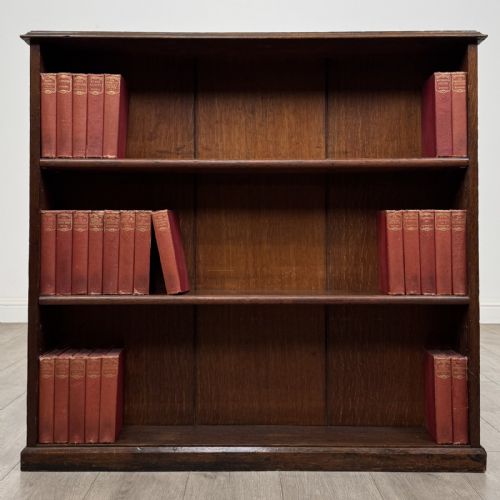
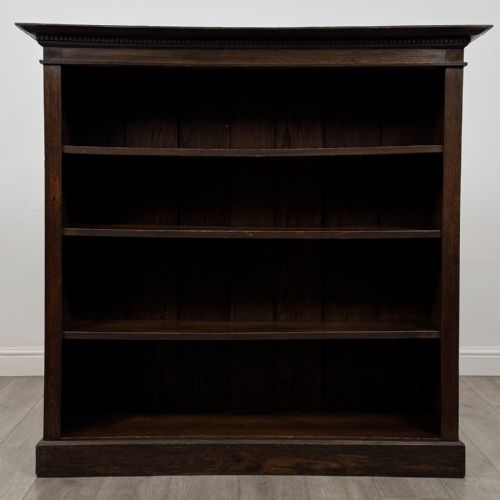
An oak open shelf unit provides accessible storage with straightforward timber construction, taking forms from the Victorian, Edwardian, and Art Deco periods.
Oak Open Shelf Unit
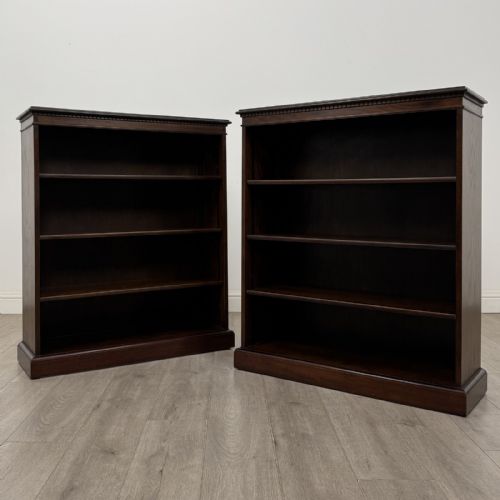
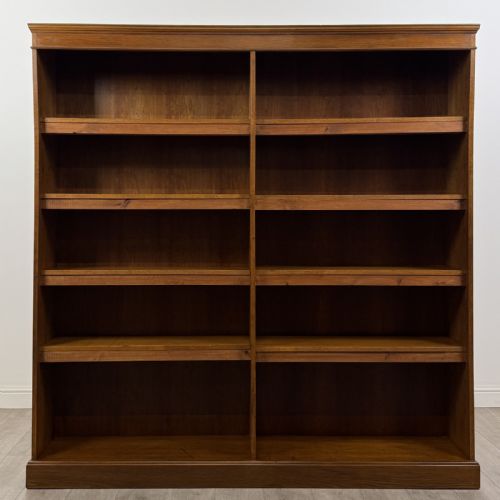
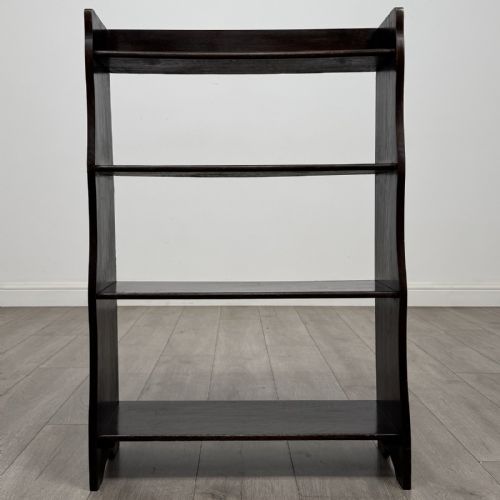
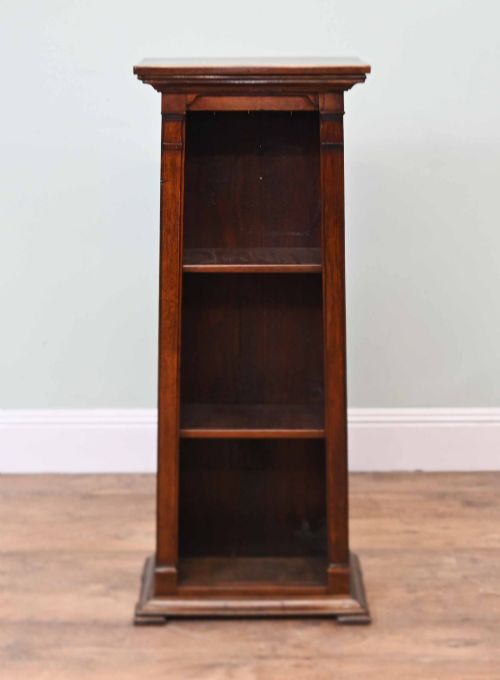
An oak open shelf unit serves primarily as a bookcase, library case, or display shelving, with forms ranging from tall library pieces to low dwarf models and small wall shelves. These items appear across nineteenth-century Victorian and late-nineteenth-century iterations, through Edwardian examples and up to 1930s designs.
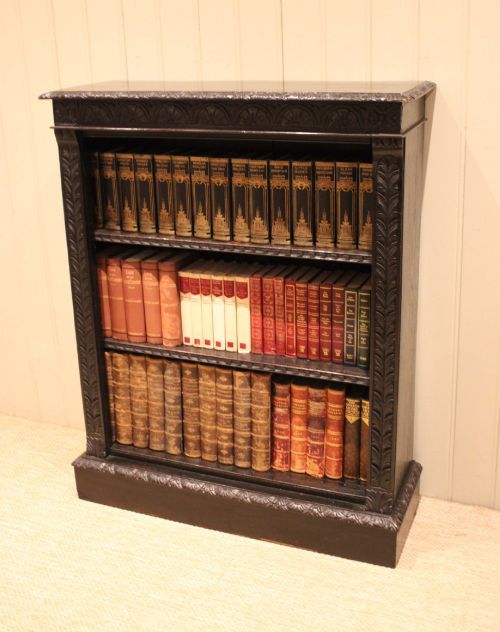
The pieces listed on this page centre heavily on Edwardian and 1920s examples, alongside Victorian, 1930s, and Arts and Crafts styles. Buyers encounter both plain utility versions and decorated pieces featuring carved elements or ebonised details.
How they were made
Makers utilised solid oak, dark oak, golden oak, and ebonised oak, occasionally combining the timber with plywood panels or brass and metal hardware. Construction methods accommodated adjustable shelves, beaded edges, and open backs to suit domestic and library requirements.
Stylistic execution spans Victorian and Gothic revivals, English Country utility, Arts and Crafts workmanship, and geometric Art Deco lines. Carving, leather tops, and waterfall tiers appear on select regional and workshop pieces.
Oak Open Shelf Unit Retail Price Guide 2026
Typical asking prices for oak open shelf unit among the pieces listed under this phrase on Sellingantiques today, from the lower quarter to the upper quarter. They describe what is for sale here now, not the wider market.
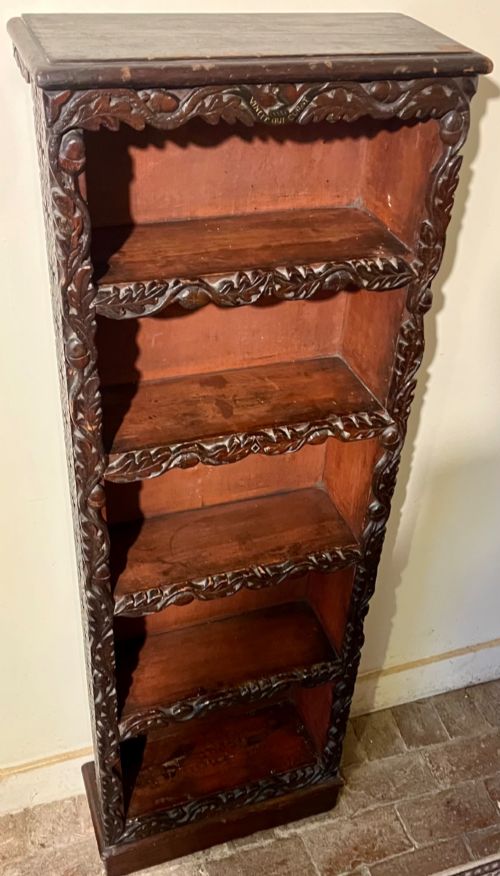
Green man carvings occasionally peer out from dark oak panels, keeping watch over centuries of accumulated reading.
What varies in quality
Quality separates plain functional shelving from pieces displaying deliberate stylistic ambition, such as hand-carved ornamentation, green man motifs, or distinct Arts and Crafts joinery. The selection of golden or dark oak timber grain also dictates visual presence.
Heals
The Oak Open Shelf Unit Glossary
- Dwarf bookcase
- A low open shelving unit designed to sit beneath window height, keeping floor space visually clear. These low pieces frequently feature adjustable shelves.
- Arts and Crafts
- A design movement prioritising visible construction, honest materials, and simple oak forms. Pieces often display understated chamfered edges and pegged joints.
- Ebonised oak
- Timber treated to resemble ebony, creating a dark, uniform surface finish. This treatment appears on Victorian carved panels and decorative mouldings.
- Waterfall bookcase
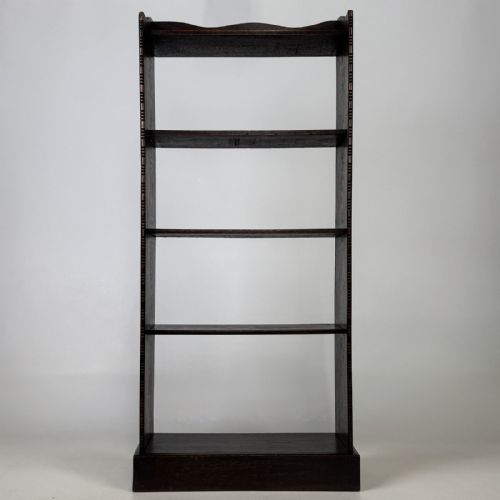
- A shelving unit with tiers that step back progressively from bottom to top. This form appears in Edwardian and later twentieth-century iterations.
- Adjustable shelves
- Shelving supported by movable pins or rack tracks, allowing height customisation. This mechanism is common in nineteenth and early twentieth-century library units.
Oak Open Shelf Unit: Frequently Asked Questions
What periods do these shelf units date from?
The pieces span from the late nineteenth century through the Edwardian era and into the 1930s. Victorian, Arts and Crafts, and Art Deco styles represent the main aesthetic phases.
Most items originate from the early decades of the twentieth century. Construction details and timber tones typically reflect their specific decade of manufacture.
Are the shelves adjustable?
Many of the bookcases and shelving units include adjustable shelves to accommodate varying book sizes. This feature appears frequently in both tall library cases and lower dwarf models.
Fixed shelving also occurs, particularly in simpler utility pieces and certain Arts and Crafts designs. Checking the specific description confirms the internal configuration.
What materials are used besides oak?
While oak forms the primary structure in standard, golden, dark, or ebonised finishes, secondary materials also appear. Brass and metal fittings occur on hardware and structural elements.
Plywood sometimes forms the backing boards in later twentieth-century examples. Leather tops occasionally feature on specific 1930s desk-adjacent pieces.
How do I identify an Arts and Crafts unit?
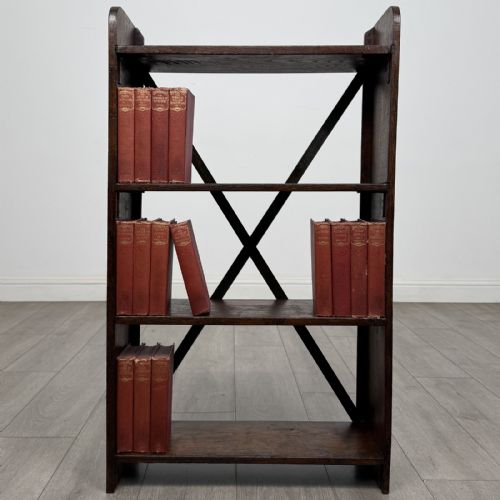
Arts and Crafts pieces emphasise plain timber grain, straightforward joinery, and functional proportions. They often feature five-shelf open fronts or simple rectilinear frames without heavy ornamentation.
Some examples carry workshop attributions or display the characteristic hand-finished details associated with the movement. The aesthetic avoids excessive Victorian revival carving in favour of structural honesty.