


Oak Mirrored Armoire
An oak mirrored armoire offers substantial bedroom storage while anchoring a room with rich timber and reflecting light.
Oak Mirrored Armoire
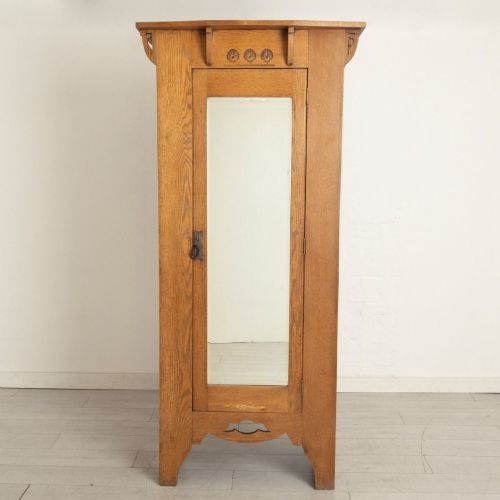
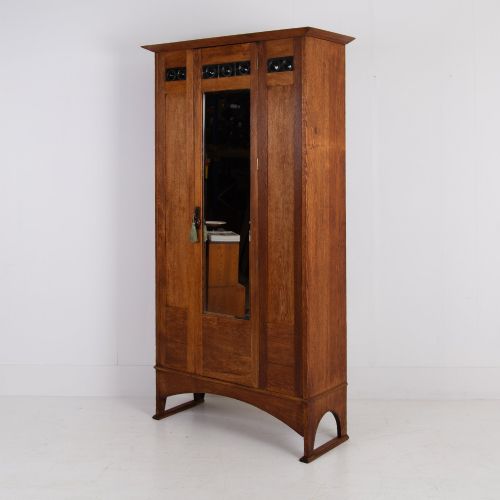
An oak mirrored armoire is a large freestanding wardrobe designed for bedroom use, combining timber panelling with glass door plates. These pieces emerge across periods from the eighteenth century through the Edwardian era, the Victorian period, and into the nineteen-twenties and nineteen-thirties.
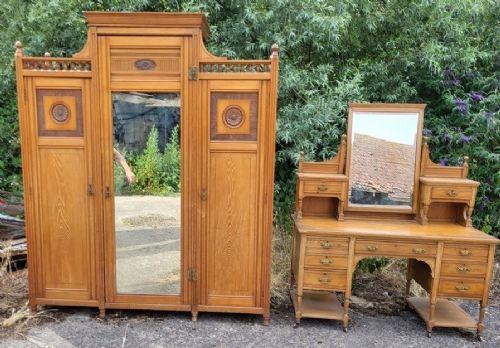
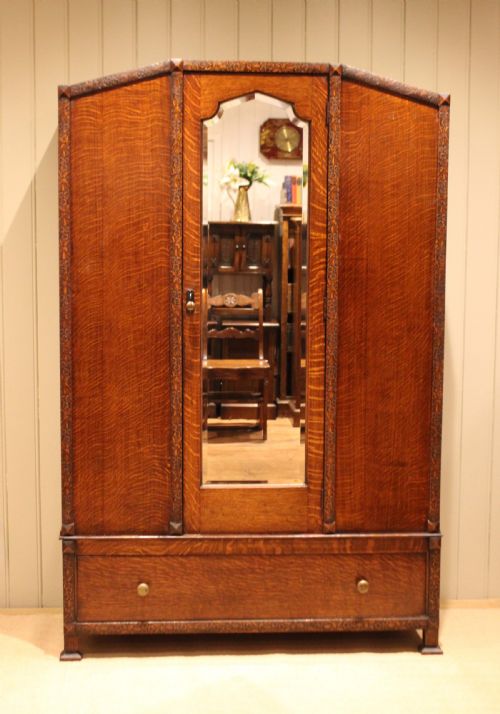
The versions most commonly met on this page date from the Edwardian period and around nineteen-twenty, often taking the form of triple or single wardrobes rather than miniature furniture or wall cabinets. Makers applied styles ranging from Arts and Crafts and Art Deco to French Provincial, French Country, and Jacobean Revival.
Buyers look for these items to provide functional hanging space and shelving while adding architectural presence to a bedroom or hallway. The integration of mirror glass distinguishes them from standard timber wardrobes by brightening interior spaces.
What separates the best examples
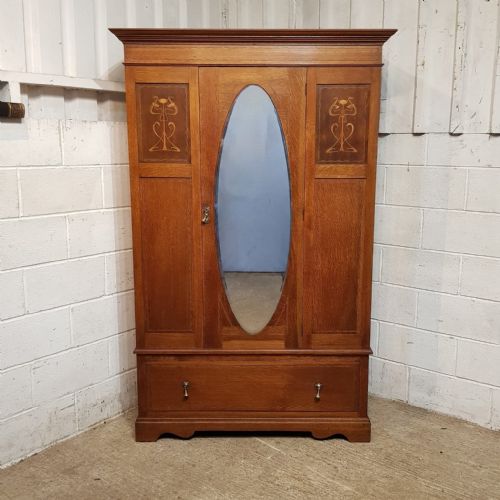
Quality in an oak mirrored armoire rests on the crispness of hand carving, the selection of figured timber such as pollard oak, and the integration of marquetry or inlay. Superior pieces display thoughtful proportions across triple door or breakfront layouts, where timber grain aligns harmoniously.
The refinement of brass hardware and the retention of original bevelled mirror glass distinguish finer workshops from standard production. Construction integrity in the joints and panel work ensures the heavy doors hang truly without sagging.
One miniature compactum wardrobe survives on this page, proving that even monumental furniture sometimes came in pocket-sized editions.
Shapland & Petter·Maple & Co·Heals·Gillows of Lancaster·Arnott & Co
The Oak Mirrored Armoire Glossary
- Armoire
- A large wardrobe or cupboard, traditionally of French origin. These pieces provide deep hanging space and internal shelving.
- Pollard oak
- Oak timber taken from trees that have been pollarded, producing highly figured, clustered grain patterns. Cabinet makers used this veneer for decorative door panels.
- Triple wardrobe
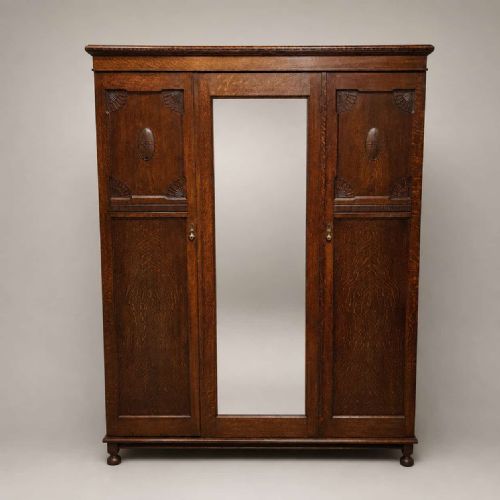
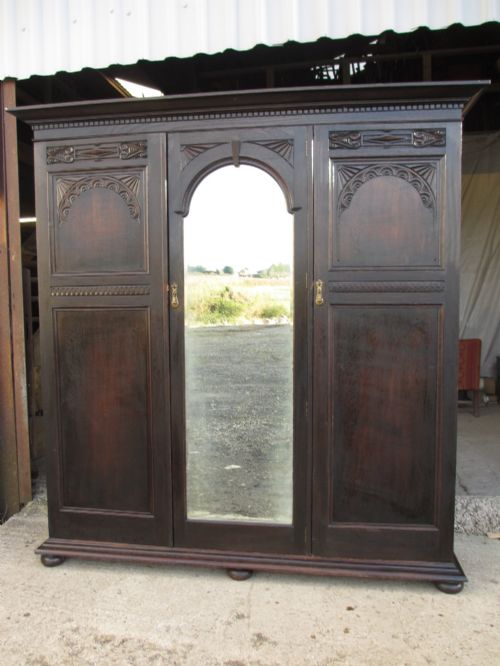
- A large three-section wardrobe, frequently featuring a central mirrored door flanked by panelled wooden doors. They offer extensive storage capacity for bedrooms.
- Breakfront
- A piece of furniture whose central section projects forward from the flanking wings. This configuration adds architectural depth to large armoires.
- Limed oak
- Oak treated with a finish that leaves a white or pale pigment in the grain. This technique gained popularity during the Art Deco period.
Oak Mirrored Armoire: Frequently Asked Questions
How do I fit an oak mirrored armoire into a modern bedroom?
Measure your ceiling height and floor space carefully, as these wardrobes are exceptionally heavy and tall. Position them opposite a window to maximise the light reflected by the mirror plate.
Ensure the floor is level so the large doors swing freely on their hinges without binding against the frame.
How do I distinguish Edwardian pieces from Art Deco examples?
Edwardian wardrobes often feature rich carved details, cornice mouldings, and traditional Arts and Crafts or Art Nouveau brass handles. They lean towards darker oak finishes and organic motifs.
Art Deco examples from the nineteen-twenties and nineteen-thirties favour cleaner geometric lines, limed oak finishes, and subtle marquetry over heavy carving.
What is the difference between an armoire and a gentlemen's wardrobe?
An armoire generally provides open hanging space behind full-length doors, sometimes with mirrored panels. They were designed primarily for garments that require vertical length.
A gentlemen's wardrobe often includes a combination of hanging space, interior drawers, and smaller compartments tailored for folded shirts and accessories.