




Oak Mantel Shelf
An oak mantel shelf search brings up substantial timber clock cases and mirrors designed to anchor a fireplace or room.
Oak Mantel Shelf
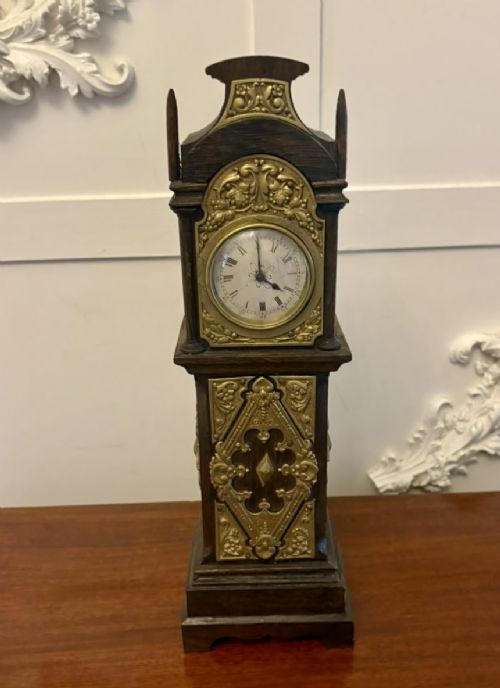
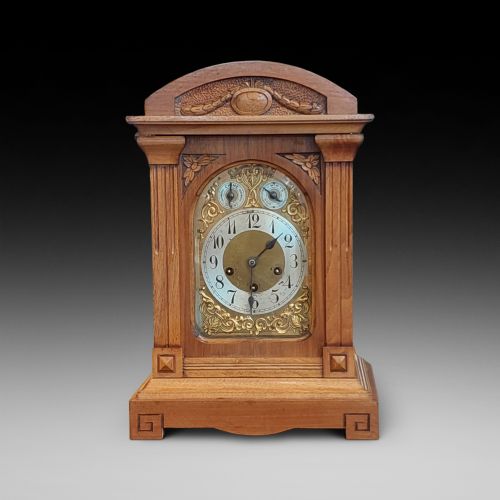
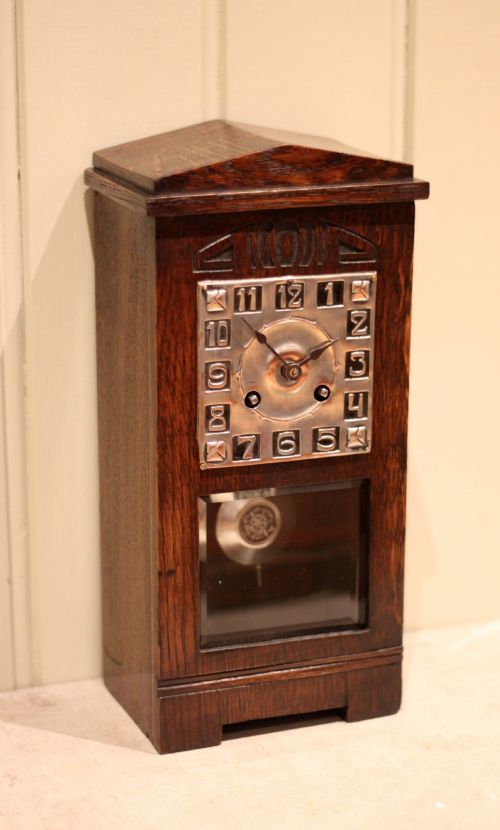
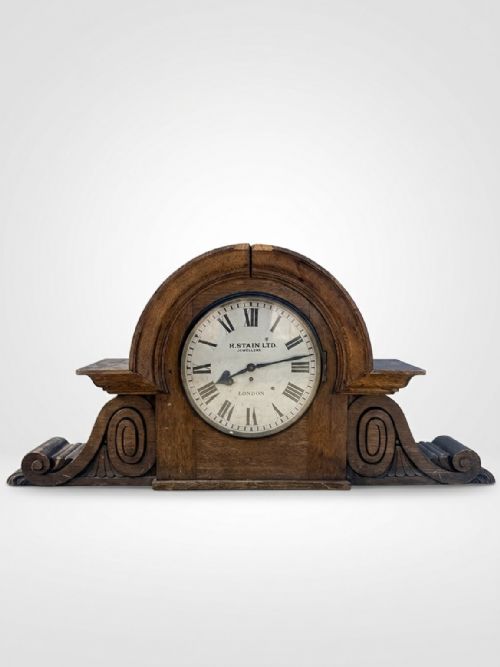
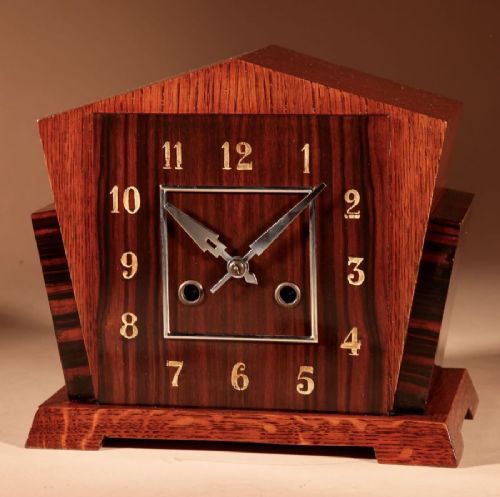
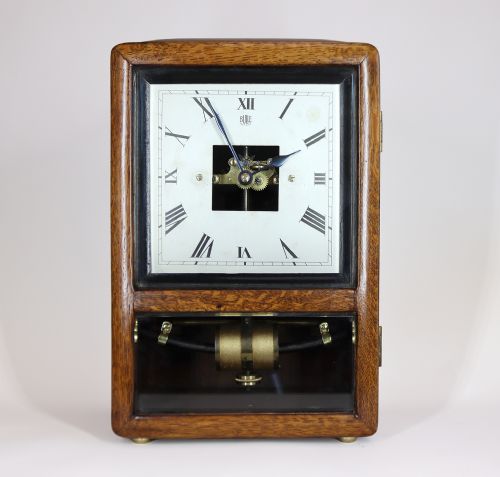
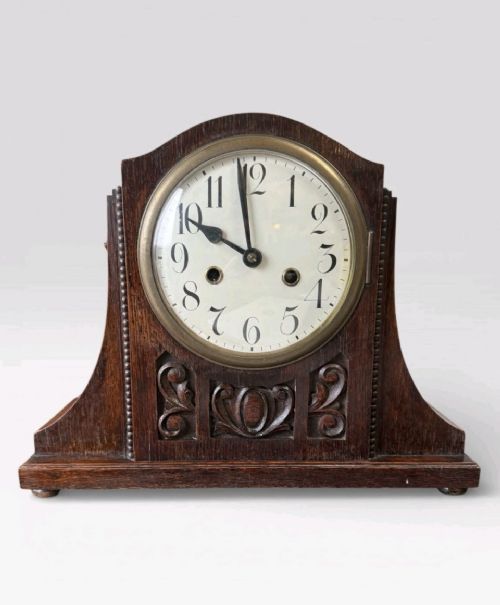
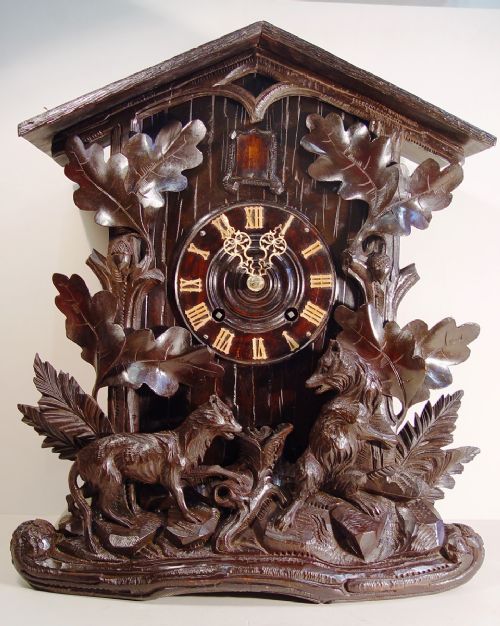
An oak mantel shelf search uncovers a dense grouping of wooden mantel clocks, bracket clocks, and mirrors spanning the nineteenth and twentieth centuries. The domestic timepieces and wall pieces appear in forms ranging from compact Edwardian balloon shapes to geometric Art Deco designs and heavily carved Black Forest and Victorian specimens.
The assortment relies heavily on oak as a primary framing material, occasionally paired with contrasting veneers like Macassar ebony or brass mounts. These functional objects served to adorn drawing rooms and offices, holding a central place on domestic chimneypieces.
Buyers will most frequently encounter sturdy oak clock cases reflecting Arts and Crafts simplicity, Edwardian inlay work, or the striking linear patterns of Amsterdam School Art Deco. Each piece offers a tangible link to historical interior ornamentation and domestic timekeeping.
What varies in quality
Quality rests in the crispness of the timber carving, the selection of figured oak and exotic veneers, and the sophistication of the internal movement. Well-executed bracket clocks with twin fusee movements or signed dials represent a higher standard of craftsmanship than simpler mass-produced timepieces.
The integrity of the timber housing, the subtlety of any inlaid details, and the overall architectural proportion distinguish finer examples from plain utilitarian boxes.
Oak Mantel Shelf Retail Price Guide 2026
Typical asking prices for oak mantel shelf among the pieces listed under this phrase on Sellingantiques today, from the lower quarter to the upper quarter. They describe what is for sale here now, not the wider market.
The documented styles range from Victorian Gothic and Black Forest to Arts and Crafts, Edwardian, and Amsterdam School Art Deco.
Jas Whitelaw of Edinburgh·Pennington of Camberwell London·DeLa Salle And Christie London·Pfeilkreuz Junghans·Beha
The Oak Mantel Shelf Glossary
- Twin fusee
- A mechanical movement using conical drums and chains to maintain even power as the mainspring unwinds. This system ensures greater timekeeping accuracy in high-grade bracket clocks.
- Bracket clock
- A portable household clock originally designed to sit on a wall bracket or table. These substantial pieces often feature elaborate wooden cases and precise mechanical movements.
- Macassar ebony
- A dense exotic timber with distinctive dark brown and yellowish stripes. Makers used it sparingly as a contrasting veneer on geometric clock cases.
Oak Mantel Shelf: Frequently Asked Questions
How do I date an oak clock case?
Examine the stylistic cues, such as Edwardian inlay work, Arts and Crafts simplicity, or geometric Art Deco lines. The integration of materials like brass, chrome, or Macassar ebony also points toward specific manufacturing decades.
Compare the construction methods and any visible mechanical signatures against known production periods ranging from the Victorian era through the mid-twentieth century.
What is a twin fusee movement?
A twin fusee mechanism uses conical pulleys and chains to equalize the pulling force of the mainspring as it loses tension. This complex arrangement provides steady power to the gear train for improved accuracy.
You will typically find this superior engineering in higher-end nineteenth-century bracket and table clocks.
How do I care for antique oak clock cases?
Keep wooden clock cases away from direct sunlight and fluctuating heat sources to prevent timber splitting or veneer lifting. Gentle dusting with a dry cloth maintains the finish without stripping natural oils.
Avoid using modern liquid polishes that can build up a cloudy residue over carved details and inlaid surfaces.
Where were these clocks displayed?
These timepieces and decorative items sat prominently on mantelpieces above domestic fireplaces, serving as both functional timekeepers and focal points for the room. Their sturdy oak bases provided stability on slate or marble ledges.
Some larger bracket and grandfather table clocks occupied prominent positions on entrance hall tables or dedicated wall brackets.